River Plate: The Legacy of Argentina's Most Successful Football Club
Club Atlético River Plate stands as a titan of South American sports. Based in Buenos Aires, the club has carved out a reputation for excellence, not only as a dominant force in the Argentine Primera División but as a global ambassador for football. With a history spanning over 120 years, River Plate has consistently produced world-class talent and maintained a standard of success that places them at the top of historical statistical tables.
The club's prestige is reflected in its standing; they are ranked first in the all-time Argentine Primera División table for points, matches played, and win percentage. Furthermore, they hold the top spot in the historical table of the Copa Libertadores, the premier club competition in South America. Their global influence was formally recognized in 2000 when they were placed ninth in the FIFA Club of the Century poll.
Key Facts
- Founded: May 25, 1901.
- Stadium: Estadio Mâs Monumental (Capacity: 85,018).
- Nickname: Los Millonarios (The Millionaires).
- Historical Standing: Ranked 1st in all-time Argentine Primera División and Copa Libertadores tables.
- Membership: Over 350,000 members as of late 2023.
- Attendance: Highest average home attendance of any association football club globally in 2023 (84,567).
A Century of Triumph: Club History

River Plate officially affiliated with the Argentine Football Association in 1905, beginning their journey in the third division. Their ascent was rapid; by December 13, 1908, the club secured promotion to the first division. This milestone was marked by a dramatic series of events where an initial 2–1 victory over Racing Club was declared null because supporters stormed the pitch to celebrate. In the subsequent replay, River Plate emphatically won 7–0 to seal their promotion.
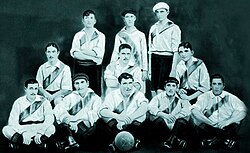
The early 20th century saw the club establish its winning culture, capturing its first domestic title (Copa de Competencia Jockey Club) and first international trophy (Copa de Competencia Chevallier Boutell) in 1914.
![The first known logo of River Plate, dated 1914, follows an Art Nouveau style.[27]](/images/5e/5c/5e5c0bba4f0ae2ba722d21bce31801900566c39d00050fb30bfb832172872168.webp)
The club's famous nickname, Los Millonarios, emerged in the early 1930s. This was a result of the club's willingness to spend significant sums on talent, most notably the acquisitions of winger Carlos Peucelle for $10,000 in 1931 and Bernabé Ferreyra for $35,000 in 1932.
The Fortress: Estadio Mâs Monumental
The heart of the club is the Estadio Antonio Liberti, widely known as El Monumental. Located in the Belgrano neighborhood of Buenos Aires and inaugurated on May 25, 1938, the stadium is one of the most iconic venues in world football. Following renovations completed in 2025, it now hosts 85,018 spectators and is known as Mâs Monumental for sponsorship purposes. It also serves as the primary home for the Argentina national football team.
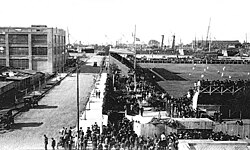
The club's support is legendary. In 2023, River Plate recorded the highest average home attendance of any football club in the world, selling out 48 consecutive home matches.
Legendary Figures and Management
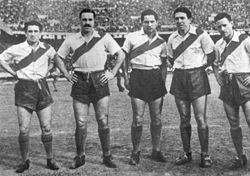
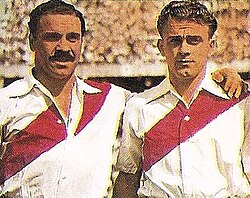
River Plate has been a cradle for some of the greatest players in football history. Figures such as Alfredo Di Stéfano and José Manuel Moreno are ranked among the 50 best South American players of the 20th century. The club also boasted the famous "La Máquina" (The Machine) attacking line in the 1940s.
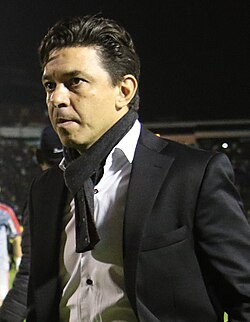
On the sidelines, Marcelo Gallardo stands as the most successful manager in the club's history. During his tenure (2014–2022), he secured 14 titles, including two Copa Libertadores (2015, 2018) and a Copa Sudamericana (2014), often defeating archrivals Boca Juniors in the process.
Other influential managers include Ramón Díaz, the most successful in domestic competition with six Primera División titles, and José María Minella, who led the team to seven league championships.
Beyond Football: A Multi-Sport Institution
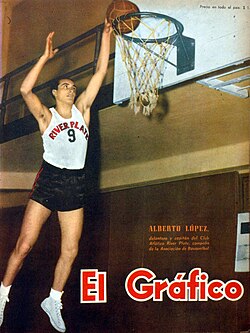
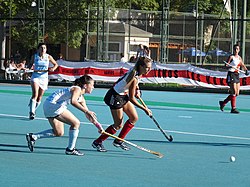
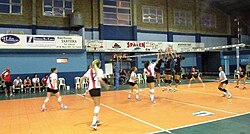
While football is the primary focus, River Plate is a comprehensive sports club. Their basketball team has a rich history, including players who won gold at the first FIBA World Championship in 1950. The club also maintains competitive teams in field hockey, futsal, handball, swimming, tennis, and volleyball.
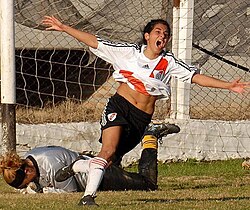
The women's football team has been particularly successful, winning the national championship 11 times, including a dominant run of five consecutive titles from 1993 to 1997.
Club Overview Summary
| Category | Detail |
|---|---|
| Full Name | Club Atlético River Plate |
| Founded | May 25, 1901 |
| Home Ground | Estadio Mâs Monumental |
| Current Manager | Pablo Longoria |
| Head Coach | Eduardo Coudet |
| Primary League | Liga Profesional |
Frequently Asked Questions
Why is River Plate called "Los Millonarios"?
The nickname was earned in the early 1930s after the club paid record-breaking transfer fees for players Carlos Peucelle ($10,000) and Bernabé Ferreyra ($35,000).
Who is the most successful manager in River Plate's history?
Marcelo Gallardo is the most successful manager, having won 14 titles, including significant international trophies like the Copa Libertadores.
What is the capacity of the Mâs Monumental stadium?
Following renovations completed in 2025, the stadium has a capacity of 85,018 spectators.
Does River Plate compete in sports other than football?
Yes, River Plate is a multi-sport club with teams in basketball, volleyball, field hockey, futsal, handball, swimming, and tennis.
How does River Plate rank in Argentine football history?
River Plate is ranked first in the all-time Argentine Primera División table based on total points, matches played, and win percentage.