The Science of Rootstocks: Enhancing Plant Growth and Resilience
In the world of horticulture, creating the perfect plant often requires a combination of strengths. While a specific variety of apple or grape may produce delicious fruit, it might lack the hardy root system needed to survive in certain soils or resist devastating pests. This is where the practice of grafting—the process of joining two different plant tissues so they grow as one—becomes essential. At the heart of this process is the rootstock.
What is a Rootstock?
A rootstock is the lower portion of a grafted plant, typically consisting of a well-developed root system and a stem (or sometimes just a stump). Its primary role is to provide the foundation for the plant, anchoring it in the ground and absorbing water and essential minerals from the soil. In some instances, such as with berries and grapes, rootstocks are established as cuttings in nursery conditions before being planted in the field.
The upper part of the plant, which is grafted onto the rootstock, is called the scion. The scion is selected for the characteristics the grower desires above ground, such as the quality of the fruit, decorative flowers, or photosynthetic efficiency. After a few weeks, the tissues of the scion and rootstock fuse together. Over time, they form a single biological unit, though they remain genetically distinct.
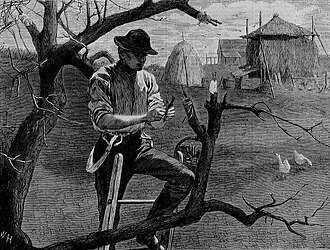
The Strategic Advantages of Using Rootstocks
Rootstocks are most commonly used with fruiting trees and plants that do not "breed true" from seed (meaning the offspring do not always share the same traits as the parent). By selecting a specific rootstock, growers can manipulate several key factors:
- Soil Adaptation: Rootstocks are chosen based on their ability to thrive in specific soil conditions, including pH levels, salinity, mineral content, and sandiness.
- Disease and Pest Resistance: Certain rootstocks are naturally resistant to soil-borne pathogens, nematodes, and insects.
- Vigour and Size: Rootstocks can control the overall size of the tree, its precocity (the age at which it first begins to bear fruit), and the size of the fruit produced.
- Environmental Resilience: Some varieties are selected specifically for their ability to withstand drought or extreme winter cold.
Advanced Grafting Techniques
Grafting can be complex. In some cases, growers use "serial grafting," where a closely related scion is grafted to the rootstock first, and then a less related scion is grafted onto that. Some growers create "family trees," where multiple different fruit cultivars are grafted onto a single rootstock, allowing one tree to produce several different types of fruit.
Rootstocks in Commercial Agriculture
The Case of Grapevines and Phylloxera
In viticulture, rootstocks are critical for protecting vines from phylloxera, a microscopic aphid that attacks the roots of grapevines. A notable historical example is the AxR1 rootstock (a cross between Vitis vinifera and Vitis rupestris). Once widely used in California, AxR1 was eventually found to be susceptible to phylloxera. When the pest struck in the 1980s, it caused devastating financial losses in Napa and Sonoma, requiring the replanting of most vineyards.
Apple Rootstocks and Size Control
In apple production, rootstocks are the primary tool for determining tree size. This is categorized into four benchmarks: standard (largest), semi-standard, semi-dwarf, and dwarf (smallest). Modern commercial orchards favor dwarf rootstocks because they allow for higher planting density and increased yields per acre.
Different regions have developed specialized series of apple rootstocks:
- England: The East Malling Research Station developed the "M" series (such as the common M9 and M26) and the "MM" (Malling-Merton) series. For example, MM111 is highly vigorous and winter-hardy, while M9 is a well-known dwarfing rootstock that requires permanent staking.
- United States: Cornell AgriTech and the USDA-ARS developed the Geneva (G) series, focusing on various size percentages and resistance traits.
- Canada: Research stations have produced varieties like O.3 and the SJM series, some of which are noted for low suckering tendencies (the growth of shoots from the rootstock).
Summary of Common Apple Rootstock Series
The following table summarizes the primary rootstock series used in apple production across different regions.
| Region | Series/Name | Key Characteristics | Common Examples |
|---|---|---|---|
| England | M Series | Varies from dwarfing to semi-standard; often requires staking. | M9, M26, M7 |
| England | MM Series | Malling-Merton; ranges from productive/hardy to vigorous. | MM106, MM111 |
| USA | Geneva (G) | Developed for specific size percentages and disease resistance. | G11, G41, G210 |
| Canada | O.3 / SJM | Focus on yield efficiency and low suckering. | O.3A, SJM127, SJM44 |
Key Facts
- Rootstock vs. Scion: The rootstock provides the root system and soil interaction, while the scion provides the fruit and foliage.
- Genetic Composition: A grafted plant consists of two genetically different plants fused into one.
- Size Control: Dwarf rootstocks are used in modern apple orchards to increase planting density and efficiency.
- Phylloxera Protection: Commercial grapevines are typically grafted onto resistant rootstocks to prevent root destruction by phylloxera.
- Soil Matching: Rootstocks are selected based on specific soil data, including pH, salinity, and pathogen load.
Frequently Asked Questions
What happens if the rootstock and scion are not compatible?
For grafting to be successful, the rootstock and scion should be closely related. If they are not compatible, the tissues will not fuse properly, and the plant will likely fail to grow or die shortly after grafting.
Can one tree grow different types of fruit?
Yes. Through serial grafting or the creation of "family trees," multiple scions of different cultivars can be grafted onto a single rootstock, allowing one tree to produce various types of fruit.
Why do some apple rootstocks require staking?
Dwarfing rootstocks, such as the M9, often have smaller or less robust root systems that cannot support the weight of the tree on their own, making permanent staking necessary for stability.
What is "suckering" in rootstocks?
Suckering occurs when the rootstock produces its own shoots above the graft union. This is often undesirable for producers as it diverts energy away from the scion's fruit production.
How do growers choose the right rootstock for their land?
Growers analyze their soil's pH, mineral content, water availability, and the presence of nematodes or pathogens. They then match these conditions to the known strengths of specific rootstock cultivars.