Plant Propagation: Essential Techniques for Growing New Life
At its core, plant propagation is the process of creating new plants from various sources, such as seeds, cuttings, or other plant parts. Whether occurring through natural biological cycles or through human-led horticultural practices, propagation is the fundamental mechanism that allows plant life to expand and persist. From the vast scale of agriculture and forestry to the delicate work of herbal medicine and plant breeding, the ability to multiply plant species is vital to human survival and ecological health.
The term itself finds its roots in the Old French propagacion, meaning "offshoot" or "offspring," and the Latin propagationem, which refers to an extension or enlargement. In modern terms, it describes the act of producing a new plant from a parent plant.
Key Facts
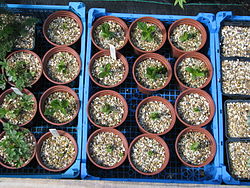
- Sexual propagation involves seeds and spores, resulting in genetic recombination.
- Asexual propagation creates clones that are genetically identical to the parent.
- Vegetative propagation uses parts like stems, roots, or leaves to grow new plants.
- Heated propagators provide the warmth and humidity necessary for successful germination.
- Apomixis is a unique form of asexual reproduction where seeds are produced without fertilization.
Methods of Plant Reproduction
Horticulturists generally categorize propagation into two primary methods: sexual and asexual. Each serves different purposes in breeding and cultivation.
Sexual Propagation
Sexual propagation relies on seeds and spores. Because this process involves genetic recombination, the resulting offspring may exhibit different characteristics than their parent plants. This genetic diversity is a cornerstone of plant breeding.
However, sexual propagation can be complex. Some species require specific environmental triggers to germinate, such as cold treatments. For instance, many plants native to Australia, southern Africa, and the American West require the presence of smoke or fire to initiate germination. Additionally, some trees may take many years to reach maturity before they are capable of producing seeds at all.
Asexual and Vegetative Propagation
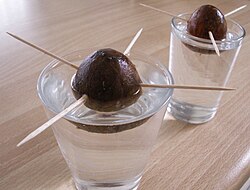
Asexual propagation involves using material from a single parent to produce offspring. Because there is no exchange of genetic material, these methods almost always produce plants that are genetically identical to the parent. This is often referred to as cloning.
Common techniques for vegetative propagation include:
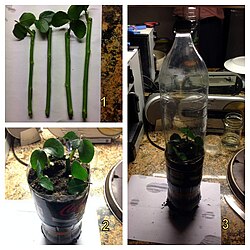
- Cuttings: Using pieces of stems or leaves to grow new roots.
- Grafting and Bud Grafting: Joining different plant parts together, a method widely used in fruit tree production.
- Division: Separating a plant into distinct sections.
- Layering: Encouraging roots to form on a stem while it is still attached to the parent.
- Other methods: Including micropropagation (tissue culture), offsets, stolons (runners), and using storage organs like bulbs, corms, tubers, and rhizomes.
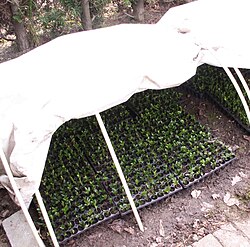
It is important to distinguish between vegetative propagation and apomixis. While apomixis is a form of asexual reproduction where seeds are produced without fertilization, it is technically distinct from vegetative propagation because it still utilizes the seed mechanism.
Tools for Controlled Growth
To increase success rates, especially in colder climates or during winter months, gardeners use specialized equipment to manage the environment.
Heated Propagators
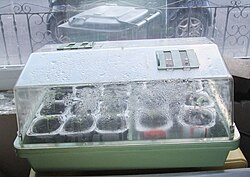
A heated propagator is a device designed to maintain a warm, damp environment. These tools provide bottom heat and high humidity, both of which are essential for seed germination and helping cuttings establish roots. For example, plants like peppers and sweet peas often require temperatures around 15°C to germinate successfully. Many models include ventilating holes to help gardeners regulate temperature and prevent excessive condensation.
Seedling Heat Mats
For more targeted heating, gardeners use seedling heat mats. These are often electric rubber mats with insulated heating coils embedded inside, similar to underfloor heating. Some versions feature a metal cage to allow planters to be placed on top safely without fire risks. When used under a loose plastic cover, these mats create a miniature greenhouse effect, allowing for consistent, predictable growth even in extreme cold.
Summary of Propagation Methods
| Method | Source Material | Genetic Outcome | Common Examples |
|---|---|---|---|
| Sexual | Seeds or Spores | Genetic variation (different from parent) | Most flowering plants and trees |
| Asexual (Vegetative) | Stems, Roots, Leaves | Identical to parent (clones) | Grafting, cuttings, division |
| Apomixis | Asexual Seeds | Identical to parent | Certain specialized species |
Frequently Asked Questions
Why do some seeds need smoke to germinate?
Certain plant species, particularly those from Australia and parts of Africa, have evolved to require the chemical signals from smoke or the heat from fire to trigger their germination process.
What is the main difference between sexual and asexual propagation?
Sexual propagation involves seeds and results in genetic diversity, meaning offspring may differ from parents. Asexual propagation uses vegetative parts to create clones that are genetically identical to the parent.
How does a heated propagator help plants grow?
A heated propagator provides consistent bottom heat and high humidity, which are critical for successful seed germination and helping cuttings develop roots.
Can I propagate plants without electricity?
Yes, non-electric propagators, such as simple seed trays with clear plastic lids, can be used. However, they lack the regulated warmth of electric models, which may lead to slower or less consistent growth.
What is grafting?
Grafting is an asexual propagation technique where parts from two different plants are joined together to grow as one, a method frequently used in the cultivation of fruit trees.