Understanding Bulbs: The Science of Underground Storage
When spring arrives and colorful flowers begin to peek through the soil, much of the magic is actually happening beneath the surface. Many of these plants rely on bulbs—specialized underground structures designed to store energy and ensure survival during periods of dormancy. While gardeners often use the term "bulb" to describe a wide variety of flowering plants, in botany, a bulb is a very specific type of short underground stem equipped with fleshy leaves or leaf bases.
The Anatomy of a Bulb
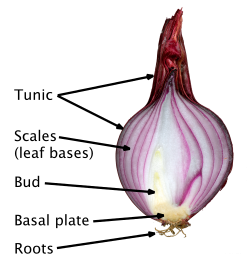
A bulb is more than just a lump of organic matter; it is a highly organized survival tool. At the very center lies a vegetative shoot, which will eventually grow into the plant's stem and leaves. The base of the bulb is a reduced stem known as a basal plate. From the underside of this plate, roots emerge to anchor the plant, while new stems and leaves grow from the upper side.
The fleshy parts of the bulb are actually modified leaf bases, often called scales. Rather than supporting traditional leaves, these scales are packed with food reserves that allow the plant to endure adverse environmental conditions. To understand how these layers are organized, one can look at a longitudinal section through a bulb to see the internal arrangement of the shoot and scales.
Tunicate vs. Non-tunicate Bulbs
Botanists generally categorize bulbs into two main types based on their protective outer layers: tunicate and non-tunicate. Tunicate bulbs are characterized by having dry, membranous outer scales that act as a protective "tunic" for the fleshy scales underneath. Common examples of tunicate bulbs include species in the genera Allium (onions and garlic), Hippeastrum (amaryllis), Narcissus (daffodils), and Tulipa (tulips).
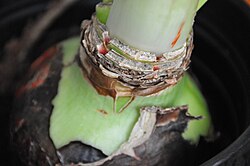
In contrast, non-tunicate bulbs lack this protective dry covering. Instead, they have looser scales that are not encased in a membrane. Species such as Lilium (lilies) and Fritillaria fall into this category.
| Feature | Tunicate Bulbs | Non-tunicate Bulbs |
|---|---|---|
| Outer Layer | Dry, membranous scales (tunic) | No protective tunic |
| Scale Structure | Continuous fleshy lamina | Looser, separate scales |
| Common Examples | Allium, Tulipa, Narcissus | Lilium, Fritillaria |
The Biological Life Cycle
Bulbous plants follow a rhythmic cycle of vegetative and reproductive growth. During the vegetative stage, the bulb focuses on growing to a sufficient size to support flowering. This is followed by the reproductive stage, when the plant produces flowers. This transition is often triggered by environmental changes, such as the shift from a cold winter to the warmth of spring.
Once the flowering period concludes, the plant enters a critical foliage period that typically lasts about six weeks. During this time, the plant uses sunlight and soil nutrients to recharge the bulb, storing the energy required to set flowers for the following year. Gardeners should note that if a bulb is dug up before this foliage period is complete, it may fail to bloom the next year, though it should eventually return to a normal flowering cycle in subsequent seasons.
Geophytes and Plant Classification
Plants that utilize underground storage organs—including bulbs, tubers, and corms—are collectively known as geophytes. While many people assume all bulbous plants are related, they actually belong to various botanical families. Most true bulbs are monocotyledons (plants that emerge from a single embryonic leaf), including members of the Amaryllidaceae (amaryllis family), Liliaceae (lily family), and Iridaceae (iris family).
Interestingly, the vast majority of bulb-forming plants are monocots, with one notable exception: a few species in the genus Oxalis are eudicots (plants that emerge from two embryonic leaves).pseudobulbs, which are above-ground storage organs that superficially resemble true bulbs but serve a different biological function.
Bulbils and Propagation
In some species, plants produce smaller versions of themselves known as bulbils (also called bulblets, bulbets, or bulbels). These small bulbs can be used to propagate larger plants. Some bulbils are classified as renewal bulbs if they form to replace the original bulb, while increase bulbs develop on the leaves or on small underground stems connected to the parent bulb.
Different plants use bulbils in unique ways. For instance, the tiger lily (Lilium lancifolium) produces bulbils in its leaf axils, while some members of the onion family, such as garlic (Allium sativum), can form bulbils in their flower heads. In some cases, this occurs through apomixis, a form of asexual reproduction. The "tree onion" (Allium × proliferum) is a famous example, producing clusters of small onions that are large enough for pickling.
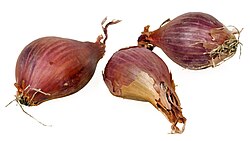
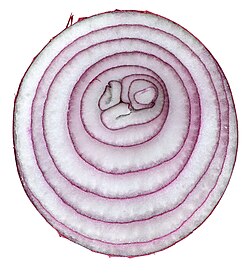
Even certain ferns, such as the hen-and-chicken fern, utilize this strategy by producing bulbils at the tips of their fronds. When observing an onion, a cross section of the bulb can reveal how these specialized structures are packed with the nutrients necessary for this complex life cycle.
Key Facts
- Bulbs are specialized underground stems used for food storage during dormancy.
- Tunicate bulbs have a protective, dry, membranous outer layer.
- Non-tunicate bulbs lack a protective tunic and have looser scales.
- Most bulbous plants are monocotyledons.
- The foliage period is essential for storing energy for next year's flowers.
- Bulbils are small bulbs used for plant propagation.
Frequently Asked Questions
What is the difference between a bulb and a geophyte?
A geophyte is a broad category of plants that store nutrients in underground organs. A bulb is one specific type of underground storage organ, alongside others like tubers and corms.
Why do some bulbs fail to bloom the following year?
If a bulb is dug up before its foliage period is finished, it will not have had enough time to absorb the nutrients and energy required to produce flowers for the next season.
What are tunicate bulbs?
Tunicate bulbs are a type of bulb that features a protective, dry, membranous outer layer known as a tunic, which covers the fleshy scales inside.
What is a bulbil?
A bulbil, or bulblet, is a small bulb that can develop from a larger plant, often used as a method of propagation or as a way to replace an aging original bulb.
Are all bulb-forming plants monocots?
Nearly all true bulbs are monocotyledons, but there are rare exceptions, such as certain species of Oxalis, which are eudicots.