Romanian Culture and History: From Medieval Principalities to Modernity
The cultural landscape of Romania is a rich tapestry woven from Latin roots, Byzantine influences, and a resilient spirit of independence. From the early formation of medieval voievodates (small states) to its emergence as a modern European nation, Romania has consistently bridged the gap between Eastern and Western civilizations.
The Middle Ages: Foundations of a Nation
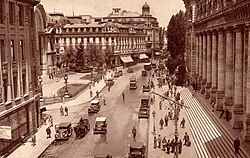
Until the 14th century, the territory was divided into small states. By the mid-1300s, the principalities of Wallachia and Moldavia emerged south and east of the Carpathian Mountains. These regions became vital commercial hubs, frequented by Greek, Venetian, Genovese, Armenian, Saxon, and Polish merchants, which integrated them into the broader European cultural evolution.
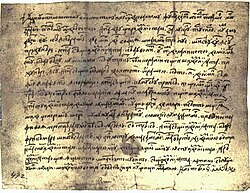
Early literary efforts were primarily religious. The first printed book in Wallachia (1508) was a Slavonic prayer book, followed by the first Romanian-language catechism in Transylvania in 1544. A landmark in linguistic history is Neacșu's letter from 1521, the oldest surviving document written in Romanian.
The 17th century saw a rise in non-religious texts, most notably Grigore Ureche's Letopisețul Țărîi Moldovei (The Chronicles of the land of Moldavia). This era also produced the Bucharest Bible (1688), the first translated and printed Romanian Bible, and the first metrical psalter by Dosoftei in 1673.
Dimitrie Cantemir, a Moldavian prince and polymath, further elevated Romanian scholarship. His works, including Descriptio Moldaviae and the first critical history of Romania, were recognized across Western Europe, with some published in Latin, English, French, and German.
The Classical Age and the Struggle for Identity
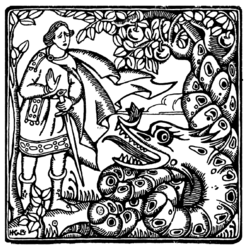
In Transylvania, Romanians formed the majority but were classified as a "tolerated nation" by Austrian leadership. This sparked the Transylvanian School (Școala Ardeleană) at the end of the 18th century. This movement emphasized the Roman origins of the people and transitioned the written language from the Cyrillic script to a modern Latin-based alphabet.
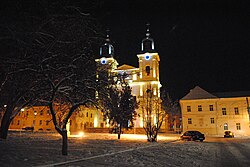
Between 1711 and 1821, Wallachia and Moldavia were governed by Phanariote Hospodars (Greek administrators appointed by the Ottomans), leading to a strong Greek influence. This period eventually culminated in the 1821 uprising led by Tudor Vladimirescu, which sought to restore native princes to the thrones.
The mid-19th century was a turning point. The 1848 revolutions produced a new intellectual elite, including Mihail Kogălniceanu and Vasile Alecsandri. The 1859 union of Moldavia and Wallachia consolidated Romanian culture, leading to the establishment of universities in Iași and Bucharest.
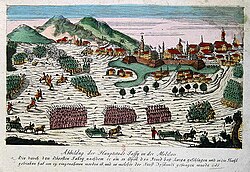
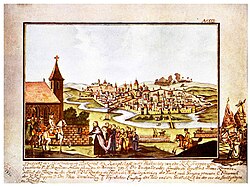
Under King Carol I, the arts flourished. The literary society Junimea, founded by Titu Maiorescu, became the cradle for Romania's greatest literary figures: the poet Mihai Eminescu, storyteller Ion Creangă, and playwright Ion Luca Caragiale.
The Golden Age of International Affirmation
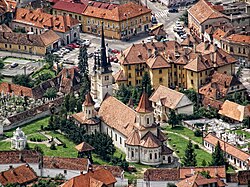
The first half of the 20th century is widely regarded as the Golden Age, where Romanian talent gained global recognition. In the visual arts, Constantin Brâncuși revolutionized sculpture as a pioneer of abstraction. In music, George Enescu and pianist Dinu Lipatti achieved world fame.
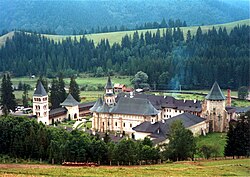
Scientific achievements also peaked during this era. Nicolae Paulescu contributed to the discovery of insulin, while Victor Babeș became a pioneer in bacteriology. In history, Nicolae Iorga stood as a titan of scholarship, publishing over 1,250 books.
Culture Under Communism and the Diaspora
The Communist regime implemented a paradoxical cultural policy. While books were heavily censored and printed on low-quality paper, the state promoted mass literacy. The Biblioteca pentru Toţi ("The Library for Everyone") published over 5,000 titles, with print runs often exceeding 50,000 copies to ensure accessibility in every village.
Cinema also grew under state funding, particularly at the Buftea studios, where director Sergiu Nicolaescu became a prolific figure. However, the regime's hostility toward the bourgeoisie led to a significant diaspora. Intellectuals like playwright Eugen Ionescu (creator of the Theatre of the Absurd), historian Mircea Eliade, and philosopher Emil Cioran were forced into exile and labeled traitors, unable to return until after 1989.
Despite the political climate, Romanians continued to excel globally. George Emil Palade won the 1974 Nobel Prize in Physiology or Medicine, and Elie Wiesel received the Nobel Peace Prize in 1986.
Post-1989 Evolution and Modernity

The fall of communism in 1989 triggered an explosion of previously censored literature. While many early publishing houses failed due to market saturation, others like Humanitas and Polirom thrived by adopting professional market policies.
Modern Romanian cinema has seen a resurgence through the "New Wave," with directors like Cristian Mungiu and Corneliu Porumboiu gaining acclaim at festivals in Cannes and Paris. Additionally, Romania has become a hub for international film productions due to its cost-effectiveness and high-quality studios.
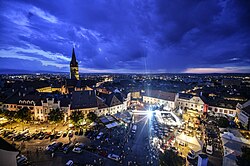
Today, the country is known for vibrant cultural events, including the George Enescu Classical Music Festival and the Sibiu Theatre Festival. In 2007, Sibiu served as the European Capital of Culture.
Key Facts

- Oldest Document: Neacșu's letter (1521) is the earliest known Romanian text.
- Alphabet Shift: The Transylvanian School led the transition from Cyrillic to the Latin alphabet.
- Literary Giants: Mihai Eminescu is regarded as the national poet of Romania and Moldova.
- Global Icons: Constantin Brâncuși (sculpture) and George Enescu (music) are the most internationally recognized artists.
- Nobel Laureates: George Emil Palade (Medicine, 1974) and Elie Wiesel (Peace, 1986).
- Cultural Hubs: Sibiu is a major center for theatre and was the 2007 European Capital of Culture.
| Era | Key Focus | Notable Figures/Events |
|---|---|---|
| Middle Ages | State formation & Religious texts | Dimitrie Cantemir, Bucharest Bible |
| Classical Age | National identity & Union | Transylvanian School, Mihai Eminescu |
| Golden Age | International affirmation | Constantin Brâncuși, George Enescu |
| Communist Era | Mass education & Censorship | Sergiu Nicolaescu, The Diaspora |
| Post-1989 | Market liberalization & New Wave | Cristian Mungiu, Humanitas Publishing |
Frequently Asked Questions





What was the Transylvanian School?
The Transylvanian School (Școala Ardeleană) was an 18th-century emancipation movement that emphasized the Roman origins of the Romanian people and advocated for equal political rights and the adoption of the Latin alphabet.
Who are the most influential figures of the Romanian diaspora?
The most prominent figures include playwright Eugen Ionescu, religious historian Mircea Eliade, and philosopher Emil Cioran, all of whom achieved immense success in France but were repudiated by the communist regime.
How did the Romanian alphabet change over time?
Romanian was originally written using a version of the Cyrillic alphabet (Old Church Slavonic). This was gradually replaced by the Latin alphabet, a transition championed by the Transylvanian School and formalized in the 19th century.
What is the significance of the Junimea society?
Founded in 1863 by Titu Maiorescu, Junimea was a critical literary society that published Convorbiri Literare, the journal where Romania's greatest writers, such as Mihai Eminescu and Ion Luca Caragiale, published their works.
What characterizes the "New Wave" of Romanian cinema?
The modern era of Romanian film is characterized by international acclaim at festivals like Cannes, led by directors such as Cristian Mungiu and Corneliu Porumboiu, often focusing on stark, realistic narratives.