Boyars: The Evolution of the Romanian Landowning Elite
The history of the boyars is the story of the rise and fall of the Romanian aristocracy. From their origins in communal village structures to their role as powerful political brokers under the Ottoman-influenced Phanariote regime, the boyars shaped the social and economic landscape of Wallachia and Moldavia for centuries. Their journey reflects a transition from military service and land stewardship to a class defined by luxury, political intrigue, and eventually, economic obsolescence.
Origins of the Boyar Class
In the Middle Ages, Romanian society was organized around the obște, autonomous communities characterized by a mix of private and common land ownership using an open field system. However, by the 14th and 15th centuries, private ownership began to increase, creating social stratification within these communities.
The formal feudal domain emerged primarily through the danii (donations) system. The Hospodar (the supreme ruler of the land) granted entire villages to military servants, effectively usurping the property rights of the obște. By the 16th century, most remaining free villages were forcibly seized by boyars. Many peasants, driven by hunger, debt, high taxes, and foreign invasions, were forced into serfdom.
While some boyars were part of the court or military elite, others emerged from within the villages. These "countryside boyars" were typically leaders of the obște, known as knyaz, who became landlords after swearing fealty to the Hospodar.
The Feudal Era: Power and Privilege
During the feudal period, the economic system was based on land rent. Peasants paid rent to both the Hospodar and the boyar who owned the land. In exchange for their status, boyars were generally exempt from paying taxes or rents to the Hospodar.
Boyars collected a percentage of the peasants' produce—initially one-tenth, known as dijmă—and required a set number of days of unpaid labor, referred to as corvée (locally called clacă or robotă). It is important to note that not all landlords were boyars; classes such as the cneji or judeci in Wallachia and nemeși in Moldavia owned land but lacked the tax-exempt status of the boyars.
Court Offices and Governance
Many boyars held official court positions known as dregătorie. Key roles included:
- Vistier: The treasurer.
- Stolnic: The pantler.
- Vornic: The concierge.
- Logofăt: The chancellor.
Over time, these positions became highly coveted not only for their influence in government but also for the significant incomes they generated.
The Balance of Power
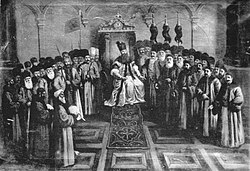
While the Romanian system shared similarities with Western feudalism, the power balance differed. The Hospodar held absolute authority and could demote, behead, or confiscate the wealth of even the most powerful boyar. Conversely, the great boyar families controlled the election of the Hospodar, often forming alliances that led to political instability.
The Phanariote Era
The Phanariote regime began in Moldavia in 1711 and Wallachia in 1716. This era saw an influx of Greeks from the Phanar district of Constantinople, who were clients of the Phanariote Hospodars. These newcomers were assimilated into the boyar class, often marrying into local families to consolidate their power.
During this period, official functions were often bought as financial investments. While Greeks held many high offices, the role of treasurer (vistier) remained largely in the hands of local boyars due to their expertise in tax collection. Those who failed to secure an official function became mazili, or "fallen boyars," though they retained some fiscal privileges.
Social Inflation and Land Monopoly
To maximize revenue, Hospodars sold boyar titles to wealthy merchants, leading to an inflation of the class. The official register of boyars was known as the Arhondologia. By the 18th century, boyars owned more than half of the land in Wallachia and Moldavia. For example, an 1803 census in Moldavia revealed that boyars owned 927 out of 1,711 villages and market towns.
Culture and Consumption
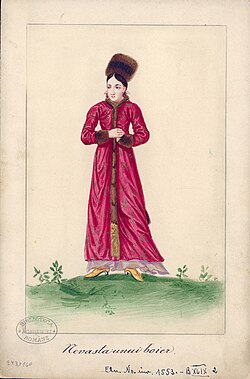
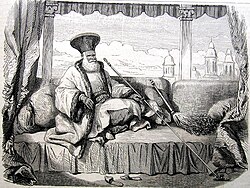
The boyars adopted Turkish-inspired fashion, replacing the turban with a large işlic (hat). This era was marked by conspicuous consumption, with vast sums spent on jewelry, carriages, and luxury furniture, creating a stark contrast with the poverty of the Romanian peasantry.
Western influence began to seep in during the early 19th century. In 1806, Safta Ypsilanti, the wife of the Hospodar in Iași, began adopting French fashion. While women transitioned to Western styles early, men did not do so until the 1840s.
Transition to Modern Romania
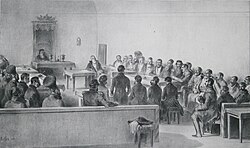
By the mid-19th century, the term "boyar" shifted from denoting nobility to simply meaning a "large landowner." The 1864 Constitution (the Statut) under Alexandru Ioan Cuza abolished legal privileges and official ranks.
Despite the loss of legal status, approximately 2,000 large landowners continued to control over 3 million hectares—roughly 38% of all arable land. Many of these landowners abandoned the management of their estates, living instead in Bucharest or Western European cities like Paris and Rome. They leased their land to arendași (leaseholders), a practice that, combined with heavy mortgaging and a lack of agricultural interest, eventually led to the dissolution of the boyar class.
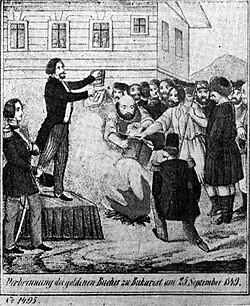
Key Facts
- Origins: Emerged from the obște (communal communities) through the danii (donation) system.
- Economic Base: Based on land ownership and the collection of dijmă (one-tenth produce) and clacă (unpaid labor).
- Political Power: While the Hospodar was supreme, great boyar families controlled the election of the ruler.
- Phanariote Influence: Greek clients from Constantinople integrated into the class between 1711 and 1821.
- Land Monopoly: By 1803, boyars owned over half of the villages and market towns in Moldavia.
- Legal End: Official ranks and privileges were abolished by Cuza's 1864 Constitution.
| Category | Key Characteristics | Economic/Legal Status |
|---|---|---|
| Upper Boyars (Vlastelin) | High court officials; military obligations | Tax-exempt; high land ownership |
| Lower Boyars | Minor officials or landowners | Tax-exempt; vulnerable to financial ruin |
| Mazili | "Fallen boyars" without official functions | Retained some fiscal privileges |
| Cneji / Nemeși | Landlords without boyar titles | Not tax-exempt |
Frequently Asked Questions
What was the difference between a boyar and a nemeș?
The primary difference was legal privilege. While both were landlords, boyars were exempt from paying taxes and rents to the Hospodar, whereas the nemeși (in Moldavia) and cneji/judeci (in Wallachia) were not.
How did the Phanariote era change the boyar class?
The Phanariote era introduced Greek officials from Constantinople into the Romanian nobility. It also led to the commercialization of boyar titles, as the Hospodars sold ranks to wealthy merchants to increase state revenue.
What were the main duties of a boyar to the Hospodar?
Upper boyars were required to provide a specific number of warriors proportional to the number of villages they owned. Many also served in administrative roles (dregătorie) such as treasurer or chancellor.
Why did the boyar class eventually decline?
The decline was caused by the abolition of legal privileges in 1864, a lack of interest in active agricultural management, and financial instability resulting from mortgaging estates to fund luxurious lifestyles in Western Europe.
What was the 'Arhondologia'?
The Arhondologia was the official title register kept by the princely courts of Bucharest and Iași, which listed all recognized members of the boyar class.