Cluj-Napoca: The Treasure City of Transylvania
Known affectionately as the Treasure City (Orașul Comoară in Romanian; Kincses Város in Hungarian), Cluj-Napoca serves as the vibrant county seat of Cluj County in Romania. Blending a deep Roman heritage with a thriving modern identity, it is a center of education, culture, and economic growth in the heart of Transylvania.
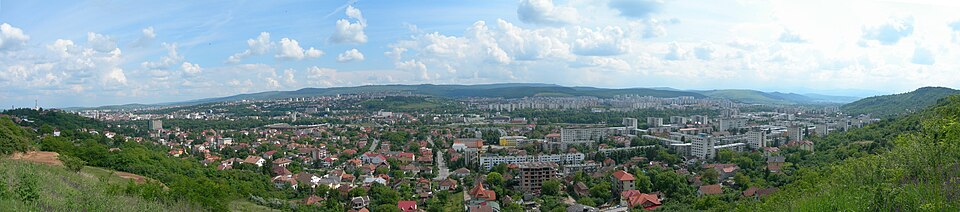
The city's identity is a tapestry of diverse influences, from its origins as the Roman settlement of Napoca to its role as a major academic hub today. With a population of 286,598 in the municipality and a larger metropolitan area, it stands as one of Romania's most influential urban centers.
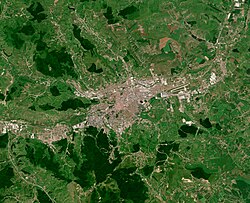
Key Facts
!["Claudiopolis, Coloswar vulgo Clausenburg, Transilvaniæ civitas primaria". Gravure[a] of Cluj by Georg Houfnagel (1617)](/images/97/33/97337d382f4dceca17959677b7671811807e8431bf7473cbc1894d0451f822c2.jpg)
- Official Name: Cluj-Napoca
- Nickname: Treasure City
- First Official Record: 1213 (as Clus)
- Elevation: 340 meters (1,120 ft)
- Major Institution: Babeș-Bolyai University
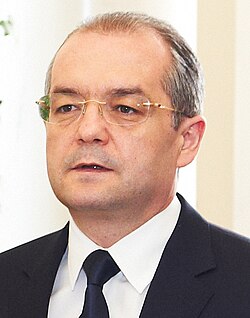
- Current Mayor: Emil Boc (since 2012)
History and Evolution
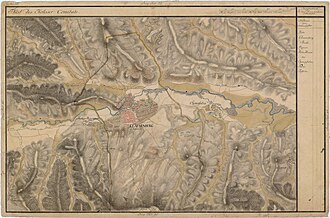
From Roman Napoca to the Middle Ages
The city's roots trace back to the Roman Empire, where it was known as Napoca. Evidence of this era persists in historical fragments, such as the Tabula Peutingeriana, which marks the city's location in Roman Dacia.
![Napoca on the Roman Dacia fragment of the 1st–4th century AD Tabula Peutingeriana (upper centre)[30]](/images/be/91/be9101e352dff099973f479e87628ee58dca194379435983d0d81e8a8ae7308e.png)
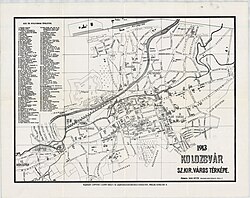
By the Middle Ages, the city evolved into a significant trade and religious center. The first official record of the city as "Clus" dates back to 1213. Throughout the 16th to 18th centuries, it grew as a primary city of Transylvania, serving as a hub for printing and religious scholarship.

Modern Development and the 20th Century
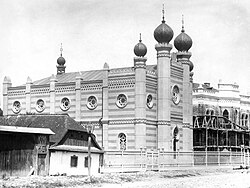
The 19th and 20th centuries brought rapid urbanization and architectural diversification. The city witnessed significant shifts in demographics and governance, particularly during the 1989 revolution and the subsequent transition to a modern democratic state. Today, the city is governed by a local council led by the National Liberal Party (PNL).
Geography and Climate
Cluj-Napoca is situated in a region characterized by a temperate climate. It experiences distinct seasons, with cold winters and warm summers. The city's average annual precipitation is approximately 620.4 mm, with the highest rainfall typically occurring in June.
| Metric | Winter (Jan) | Summer (Jul) | Annual Average |
|---|---|---|---|
| Mean Daily Max Temp (°C) | 0.9 | 26.7 | 14.9 |
| Mean Daily Min Temp (°C) | -5.2 | 14.2 | 4.8 |
| Average Precipitation (mm) | 27.3 | 87.2 | 620.4 |
| Sunshine Hours | 70.2 | 265.7 | 2,016.3 |
Cultural and Architectural Landmarks
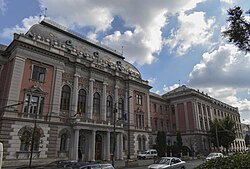
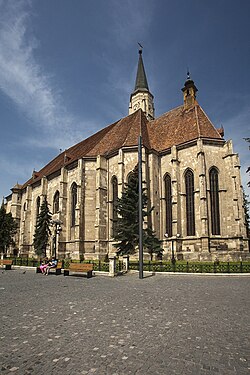
Historic Architecture
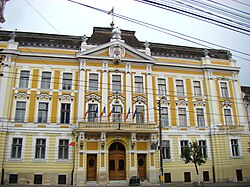
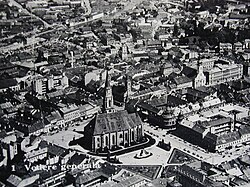
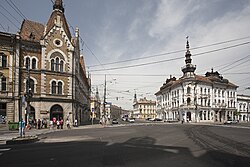
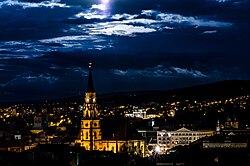
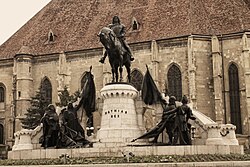
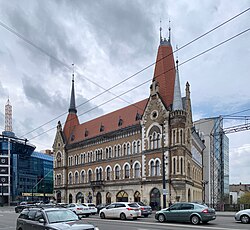
The city's skyline is dominated by St. Michael's Church, the largest Gothic-style church in the city. Other notable historic sites include the Matthias Corvinus House and the Széki Palace, reflecting the city's rich aristocratic and royal history.
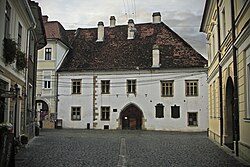
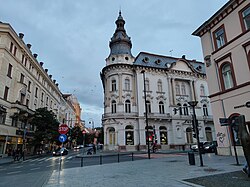
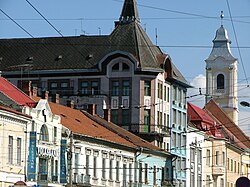
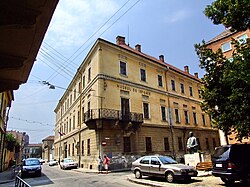
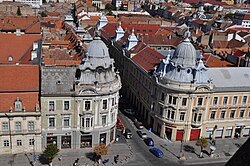
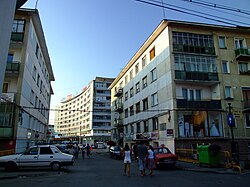
The city center is characterized by symmetrical 19th-century streets like Iuliu Maniu Street and the historic Matthias Corvinus Alley, which leads to the birthplace of the King of Hungary.
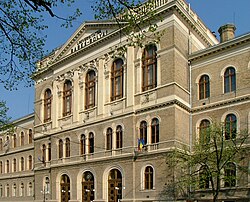
Modernity and Education
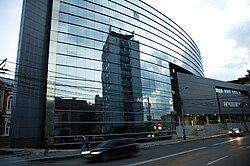
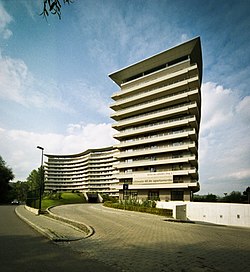
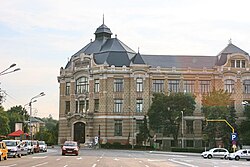
Cluj-Napoca is widely recognized as a university town, anchored by the prestigious Babeș-Bolyai University. This academic focus has fueled the city's growth into a technology and business hub, evidenced by contemporary structures like the City Business Center, often called the "biscuit building."
City Life and Infrastructure
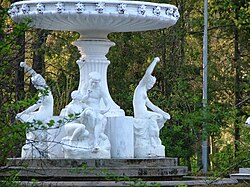
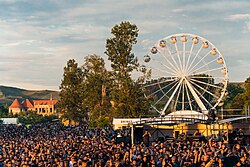
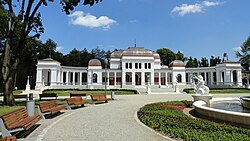
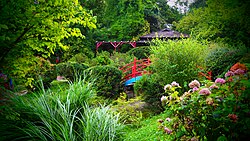
The city offers a high quality of life with extensive green spaces, including the Central Park and the local botanical garden featuring a Japanese garden. For entertainment, the city hosts the Electric Castle Festival and the Transilvania International Film Festival.
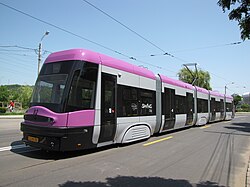
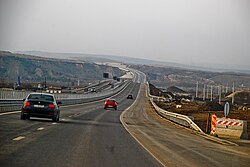
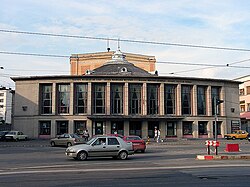
Transport infrastructure is well-developed, featuring a network of trams—including modern PESA Swing models—and the A3 motorway, which connects the city to the wider national road network.
Frequently Asked Questions
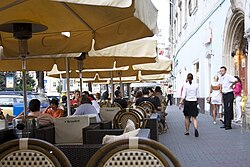
![Eroilor Avenue, the largest and most expensive commercial street[citation needed]](/images/80/6e/806eec8ee5498d9898d4a461e629dc008ec000d003a2b145e15c351cbaa07f31.jpg)
Why is Cluj-Napoca called the Treasure City?
The nickname "Treasure City" (Orașul Comoară) refers to the city's wealth of cultural, historical, and academic assets, as well as its long-standing role as a regional center of excellence in Transylvania.
What is the significance of Babeș-Bolyai University?
Babeș-Bolyai University is one of the most important educational institutions in Romania, contributing significantly to the city's reputation as a hub for research, innovation, and youth culture.
What are the must-visit architectural sites in the city?
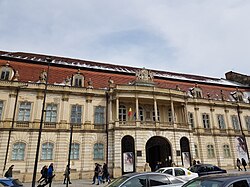
Visitors should prioritize St. Michael's Church for its Gothic architecture, the Matthias Corvinus House, and the various palaces such as the Széki Palace and Bánffy Palace.
How is the city connected to other regions?
Cluj-Napoca is well-connected via the Cluj-Napoca International Airport, a comprehensive rail network, and the A3 motorway, making it a primary gateway to the Transylvania region.