Arad: A Historic Gateway Between Crișana and Banat
Located at the border of the Crișana and Banat regions, Arad serves as the capital of Arad County and stands as the 12th largest city in Romania. With a population of 145,078 as of 2021, it is a vital urban center in Western Romania, trailing only Timișoara and Oradea in size within the region. The city is defined by its strategic position along the Mureș River, a location that has shaped its destiny from the Roman era to the modern day.
Key Facts
- Population: 145,078 (2021 Census).
- Geography: Situated at an elevation of 117 meters at the intersection of Crișana and Banat.
- Historical Significance: Former center of an Ottoman eyalet and a key stronghold during the Hungarian Revolution of 1848.
- Economic Legacy: Once the most important economic center in Transylvania (1937) and a pioneer in automotive production.
- Sports Pride: Home to UTA Arad, one of Romania's most successful football clubs.
A Journey Through History
The roots of Arad stretch back to antiquity. Between 101 and 102 AD, Roman troops conquered Dacian settlements in the Micălaca district. During the Second Dacian War (105–106), Emperor Trajan expanded Roman Dacia north of the Mureș River, leading to the construction of the Castra of Aradul Nou, which housed the Legio IV Flavia Felix. For centuries, the area remained a hub of commercial exchange between Dacian, Sarmatian, and Roman populations.
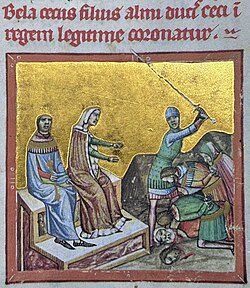
The city first appears in written records in the 11th century. A notable event occurred in 1131 during an assembly near Arad, where Queen Helena ordered the execution of nobles who had advised the blinding of her husband, King Béla II. This period saw the redistribution of wealth to the Arad Chapter.
Throughout the Middle Ages and the early modern period, Arad's strategic value led to frequent changes in sovereignty. The Mongol invasion of 1241 highlighted the need for stronger defenses, resulting in the construction of stone fortresses at Șoimoș, Șiria, and Dezna. The Ottoman Empire seized the region in 1551, establishing Arad as an eyalet center (a high-level administrative division) from 1660 until 1697. The city was eventually captured by Austrian forces and the Serbian Militia, falling under the rule of the Habsburg monarchy after the Peace of Karlowitz in 1699.
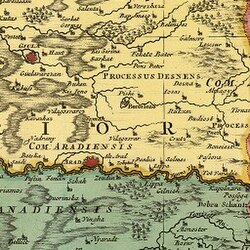
In the 18th century, Arad evolved into a multicultural hub. By 1720, the population consisted of Romanian, Serbian, and Hungarian families. The Jewish community also established roots here starting in 1717 with Isac Elias, eventually growing to over 10,000 people before World War II. A new fortress, built in the Vauban-Tenaille style between 1763 and 1783, became a focal point of the 1848 Hungarian Revolution, serving as the headquarters for Lajos Kossuth and Artúr Görgey.
Industrial and Economic Evolution
Arad was a pioneer of modernization in the region. Between 1909 and 1914, the city produced motorcars through MARTA (Magyar Automobil Részvény Társaság Arad), a subsidiary of Austro-Daimler. In 1921, MARTA merged with the Weitzer Wagon Factory to form Astra Arad. The city also boasted early technological milestones, such as the electrification of the Arad-Podgoria Narrow Railway between 1911 and 1913, which became Romania's first electrical railway in 1920.
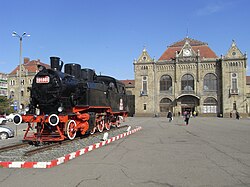
By 1937, Arad had ascended to become the fourth most important economic center in Romania and the primary economic hub of Transylvania.
Architectural and Cultural Landmarks
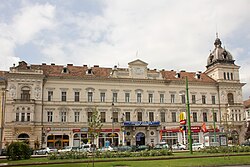
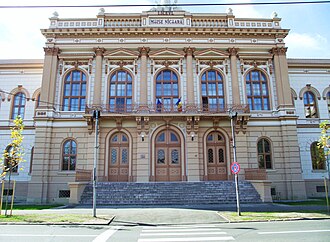
The city's skyline is a testament to its diverse history, featuring a blend of Renaissance, Neoclassical, and Secession styles. The Administrative Palace (1872–1874) and the Ioan Slavici Classical Theatre (1874) represent the city's commitment to high art and governance.
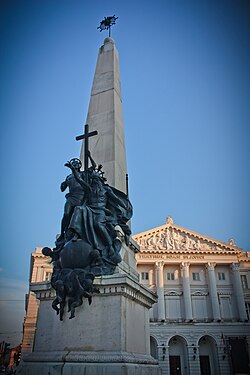
Visitors can explore the eclectic Neumann Palace (1891) or the Bohuș Palace (1910), the latter being the first building in Arad to utilize reinforced concrete. The city also preserves unique historic structures like the "House with Cannon Balls," which still bears seventeen projectiles from the 1848–1849 conflicts.
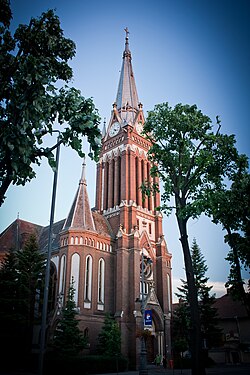
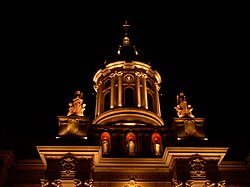
Religious architecture is equally diverse. The Red Church, a Neo-Gothic masterpiece built in 1906, stands alongside the Byzantine-style Holy Trinity Cathedral and the Baroque-influenced "Birth of Saint John the Baptist" Cathedral.
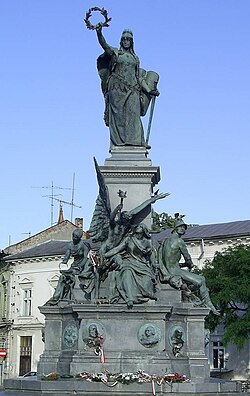
For those seeking monuments, the Statue of Liberty (1890) commemorates the Hungarian revolutionary army, while the Arch of Triumph (2004) honors the heroes of the 1848–1849 Romanian Revolution.
Education, Sports, and Nature
Arad is a center of higher learning, hosting the public Aurel Vlaicu University and the private Vasile Goldiș Western University. Culturally, the city is renowned for its State Theater and its International Underground Theater Festival.
In the realm of sports, UTA Arad is a legendary football club. Founded in 1945, it has won six Romanian Championships and two Romanian Cups, making it the most successful non-Bucharest team in the country. Its most famous international feat was eliminating the defending European champions, Feyenoord, in the 1970–71 season.
Beyond the city limits, nature enthusiasts can visit the Mureș Floodplain Natural Park, the Miniș-Măderat Vineyard, or the Moneasa resort.
City Overview Summary
| Category | Details |
|---|---|
| Administrative Status | Capital of Arad County, Romania |
| Population (2021) | 145,078 |
| Area | 46.18 km² |
| Elevation | 117 m |
| Key Industries | Historically Automotive (MARTA/Astra), Trade, Education |
| Major Landmarks | Arad Fortress, Red Church, Ioan Slavici Theatre |
Frequently Asked Questions
What is the historical significance of the Arad Fortress?
The fortress was a critical military site, particularly during the Hungarian Revolution of 1848, where it served as the headquarters for Lajos Kossuth. It also has a darker history as an internment camp during World War I, where approximately 4,000 Serb detainees died.
Which football team is most famous in Arad?
UTA Arad is the city's most prominent team. It is one of the most successful clubs in Romania, having won six national championships and achieving a historic victory over Feyenoord in the 1970–71 European Champions Cup.
What are the most notable architectural styles found in Arad?
Arad features a rich variety of styles, including Renaissance (Administrative Palace), Neoclassical (National Bank Palace), Neo-Gothic (The Red Church), and the Vienna Secession (Bohuș and Szantay Palaces).
How has the population of Arad changed over time?
The population grew steadily from 35,556 in 1880 to a peak of 190,114 in 1992. However, it has since declined to 145,078 in 2021 due to internal migration to larger cities and suburbanization.
What was MARTA in the context of Arad's economy?
MARTA (Magyar Automobil Részvény Társaság Arad) was a subsidiary of Austro-Daimler that produced motorcars in Arad between 1909 and 1914, marking the city's early role as an industrial pioneer.