Subotica: A Multicultural Hub of Central Europe
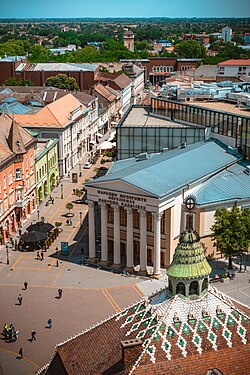
Located in the heart of the Pannonian Basin, Subotica is a city defined by its rich tapestry of ethnicities, languages, and architectural styles. As the administrative center of the North Bačka District in the autonomous province of Vojvodina, Serbia, it serves as a vital gateway between Serbia and Hungary. Once the largest city in Vojvodina, it remains a significant cultural and economic center, blending Central European elegance with a diverse Balkan spirit.
The city is renowned for its unique demographic composition, where Serbian, Hungarian, Croatian, and Bunjevac cultures coexist. This diversity is mirrored in the city's official languages and its stunning cityscape, which features some of the finest examples of fin de siècle (end of the century) architecture in the region.
Key Facts
- Location: Northernmost city in Serbia, situated 10 km from the Hungarian border.
- Population: 88,752 in the city proper; 123,952 in the administrative area (2022 census).
- Languages: Serbian, Hungarian, Croatian, and Bunjevac.
- Geography: Located in the Pannonian Basin at an elevation of 109 meters.
- Architecture: Famous for its Art Nouveau and Hungarian Secession styles.
A Journey Through History
Early Settlements and Medieval Roots
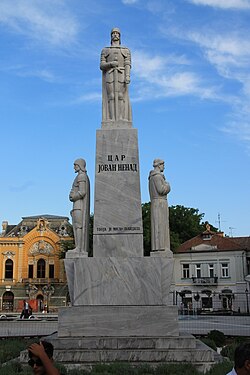
The region's early history is marked by the presence of the Obotrites, a Slavic subgroup. Between the 9th and 11th centuries, the area saw the influence of the Principality of Lower Pannonia, Great Moravia, and the Bulgarian Empire. Subotica grew in prominence during the 13th century as refugees from Tatar invasions settled there. By 1391, it was recorded as a small town within the Kingdom of Hungary and later came under the ownership of the influential Hunyadi family.
Ottoman and Habsburg Influence
From 1542 to 1686, the city was ruled by the Ottoman Empire, during which it was known as Sobotka. This period saw an influx of Orthodox Serbian colonists. Following the Ottoman retreat, the region was settled by Catholic Dalmatas, known today as Bunjevci.
Under the Habsburg Monarchy, Subotica transitioned from a garrison town to a market town, receiving its civil charter in 1743. The 19th century brought rapid growth and demographic shifts, as the city attracted Hungarians and Jews, expanding its population and cultural diversity.
The Golden Age and Modern Era
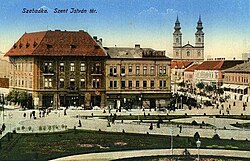
The establishment of the Dual Monarchy of Austria-Hungary in 1867 ushered in a "golden age." The city modernized rapidly with the introduction of a railway in 1869 and an electrical power plant in 1896. This era left a lasting mark on the city's aesthetics, characterized by the Hungarian Secession (a regional variant of Art Nouveau) style.
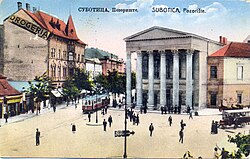
Throughout the 20th century, Subotica navigated the transitions of the Yugoslav era and eventually became part of modern Serbia, maintaining its status as a multicultural crossroads.
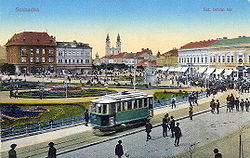
Cityscape and Cultural Landmarks
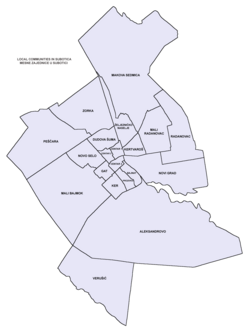
Architectural Treasures
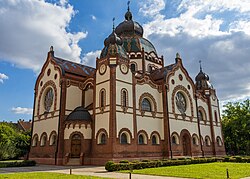
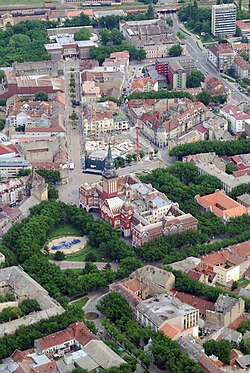
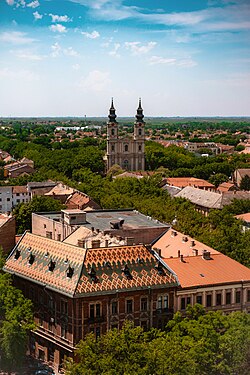
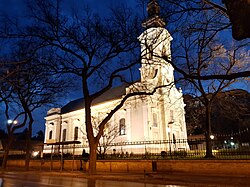
Subotica's architecture is a testament to its diverse heritage. The Subotica Synagogue, built in 1902, is one of the largest and most striking Art Nouveau buildings in Europe. Other notable religious sites include the Roman Catholic Cathedral of Saint Teresa of Avila (1797), the Franciscan friary (1723), and the Eastern Orthodox Church of the Ascension.
The city's administrative and cultural heart is centered around the City Hall and the National Theatre. While the original 1854 theatre was demolished in 2007, it has been a focus of restoration efforts to preserve the city's cultural legacy.
Nature and Recreation
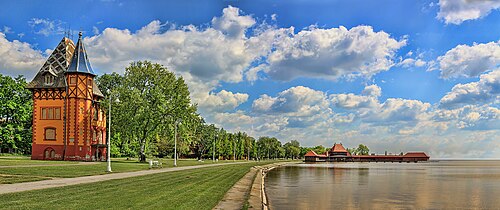
Beyond the urban center, Lake Palić serves as a premier recreational spot, attracting visitors for its natural beauty and leisure facilities. To the north, the Subotička Peščara sand dunes offer a unique ecological landscape along the border with Hungary.
Demographics and Society
Subotica is a mosaic of ethnicities and faiths. According to the 2022 census, Serbs and Hungarians form the largest groups, followed by Croats and Bunjevci. This pluralism extends to religion, with Catholicism and Eastern Orthodoxy being the most prominent faiths.
| Ethnicity | City Proper Share | Administrative Area Share |
|---|---|---|
| Serbs | 34.3% | 30.8% |
| Hungarians | 26.2% | 30% |
| Croats | 7.4% | 8.4% |
| Bunjevci | 6.5% | 7.3% |
| Roma | 3% | 2.7% |
Infrastructure and Education
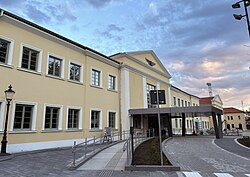
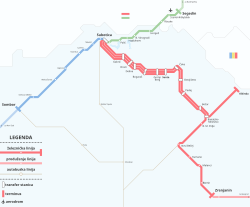
The city is well-connected via the A1 motorway, linking it to Belgrade and Novi Sad to the south and Szeged, Hungary, to the north. The Budapest–Belgrade railway is a critical artery for European transit, though it has undergone significant reconstruction in recent years.
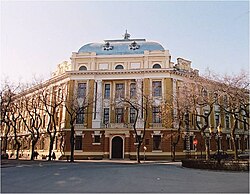
Education is a cornerstone of the community, featuring the Teacher Training Faculty in the Hungarian Language and the historic Teachers' College, founded in 1689—the oldest of its kind in the region. The "Svetozar Marković" gymnasium remains a key secondary institution for the city's youth.
Frequently Asked Questions
What is the most famous architectural style in Subotica?
Subotica is most famous for its Art Nouveau and Hungarian Secession architecture, most notably seen in the Subotica Synagogue and the City Hall.
Which languages are spoken in Subotica?
The city is multilingual, with Serbian, Hungarian, Croatian, and Bunjevac all serving as official languages.
What is Lake Palić?
Lake Palić is a popular recreational lake located in the immediate vicinity of Subotica, known for its beauty and tourism appeal.
How is Subotica connected to other European cities?
Subotica is connected via the A1 motorway and the Budapest–Belgrade railway, providing direct links to major cities in Serbia and Hungary.
What is the historical significance of the Teachers' College?
Founded in 1689, the Teachers' College in Subotica is the oldest college in the country and the wider region.