Timișoara: The Multicultural Heart of Banat
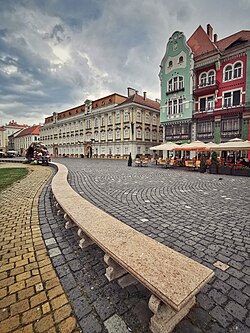
Known affectionately as Mica Vienă (Little Vienna), the City of Roses, and the Garden City, Timișoara is a vibrant municipality in western Romania. Serving as the seat of Timiș County, it is a city where Central European elegance meets a rich, multicultural history. From its strategic fortifications to its status as a modern economic hub, Timișoara stands as a testament to resilience and diversity.
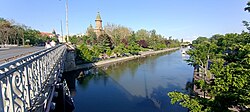
The city's identity is deeply tied to its geography and its role as a crossroads of empires. Situated at an elevation of 90 meters, it is defined by the presence of the Bega Canal and an abundance of green spaces that have earned it its floral nicknames.
Key Facts
- Status: 4th largest city in Romania by population.
- Economy: Highest standard of living nationwide (53rd in Europe) and highest average income in Romania after Bucharest.
- Culture: Served as the 2023 European Capital of Culture.
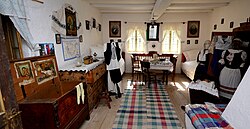
- Demographics: A historically diverse population including Romanians, Hungarians, Serbs, and Germans.
- Climate: Temperate oceanic climate (Cfb) with an average annual precipitation of 604.4 mm.
A Journey Through History
Early Eras and Ottoman Rule
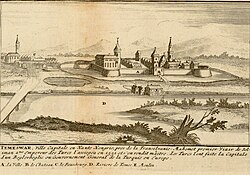
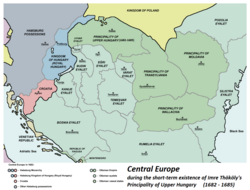
The first official record of the city dates back to 1212 as castrum regium Themes. For over a century and a half, from 1552 to 1716, Timișoara was under Ottoman rule, a period marked by the presence of mosques and minarets that defined the city's skyline.
Habsburg Influence and the 19th Century
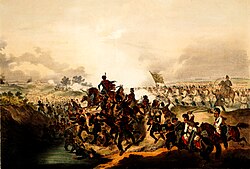
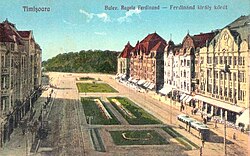
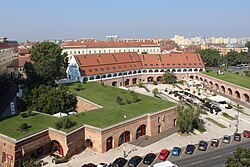
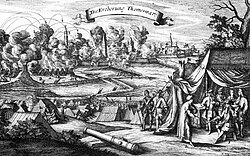
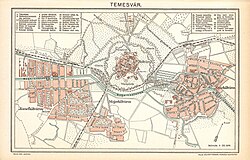
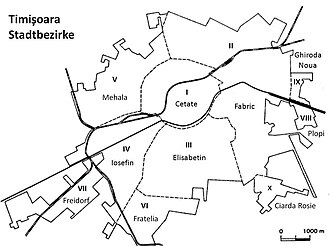
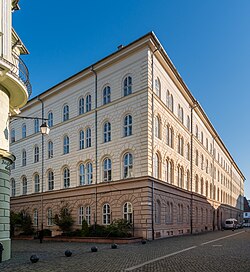
The trajectory of the city changed drastically after the Siege of 1716, when it came under Habsburg rule. This era introduced the structured urban planning and architectural styles that evoke Vienna. The city grew through the establishment of distinct districts, such as Cetate (the fortress center) and Fabric.
Modern Era and the 20th Century
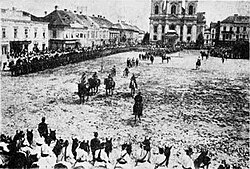
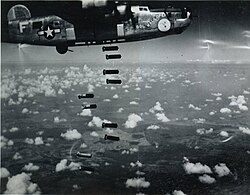
The 20th century brought significant political shifts. Following World War I, Romanian troops entered the city on August 3, 1919. The city later endured the hardships of World War II, including Allied bombing raids in 1944, and the restrictive regime of Nicolae Ceaușescu, which saw a massive influx of labor from across Romania to fuel industrialization.
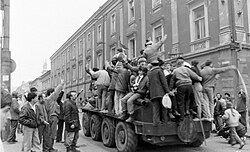
Timișoara played a pivotal role in the 1989 Revolution, where protesters on Emanoil Ungureanu Street helped spark the fall of communism in Romania.
Geography and Urban Structure
Climate and Nature
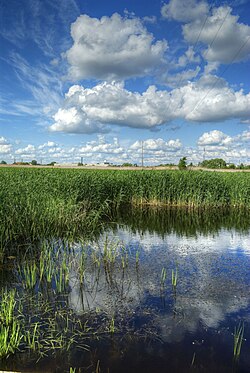
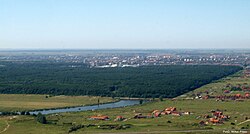
Timișoara experiences a temperate climate. Recent data (1991–2020) shows a mean daily maximum of 17.6°C and a record high of 41.1°C. The city is blessed with natural landmarks like the Green Forest and Dumbrăvița Lake, providing a lungs-of-the-city effect for its residents.
Administrative Districts
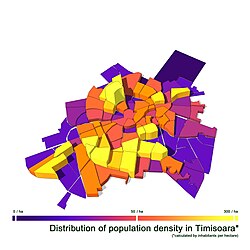
The city is organized into several historical and modern districts. The core is the Cetate (Innerstadt), established in 1717, followed by Fabric and Iosefin in 1744. Other notable areas include Elisabetin, Mehala, and Fratelia.
![The Iosefin Water Tower, a restored industrial landmark and cultural center[279][280]](/images/d2/d4/d2d41f15e7a7a76a9ef1bc2de52437a035f4202fa3b1784692552e43c1832f9a.jpg)
Economy, Education, and Infrastructure
Economic Powerhouse
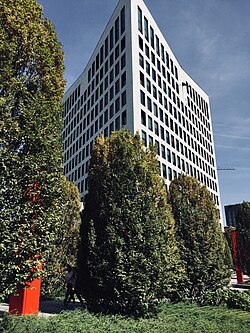
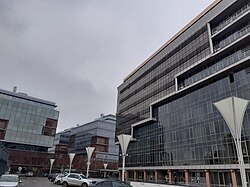
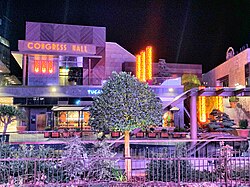
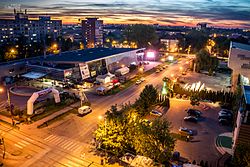
Timișoara is one of Romania's most prosperous cities. It boasts a strong industrial sector—highlighted by the Timișoreana Brewery, the first in the country—and a rapidly growing IT&C and office sector. Modern developments like Iulius Town and AFI Park signify the city's shift toward a service-oriented economy.
![Timișoreana Brewery, the first brewery established on the current territory of Romania.[146]](/images/8f/bc/8fbcc8d09f272c5508b2330e4d8f1ce54f11c09f509cb4689bd0da29236b2ca9.jpg)
![Map of net wages in Romania (lei) at the end of 2024 and changes since 2015, by county. Timiș County has the highest average income in the country after Bucharest, and Timișoara has the highest standard of living nationwide (53rd in Europe).[139]](/images/e4/72/e47289c7601d55d47919b84fcc735dbf9b51d00d3c26fcde2542cc6a077e472f.jpg)
Education and Healthcare
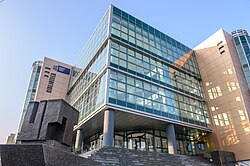
The city is a center for higher learning and research, featuring the Victor Babeș University of Medicine and Pharmacy and the Polytechnic University. Healthcare is anchored by the Pius Brînzeu County Emergency Clinical Hospital, a first-class competence facility.
Transport and Connectivity
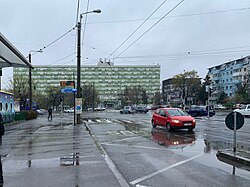
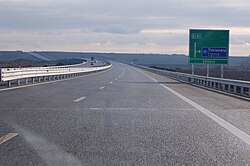
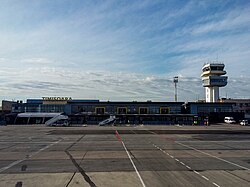
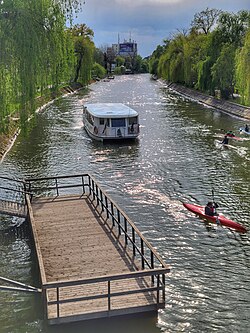
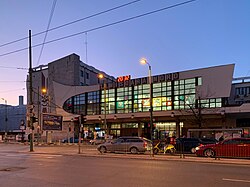
Timișoara is a critical logistics hub. It is connected via the A1 motorway and European routes E70 and E671. Air travel is facilitated by the Traian Vuia International Airport, while the Bega Canal offers unique water transport options via vaporettos and kayaks.
Culture and Architecture
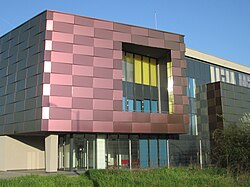
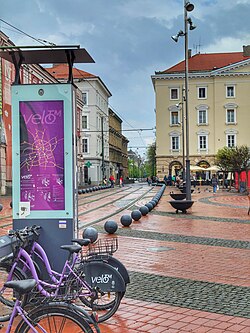
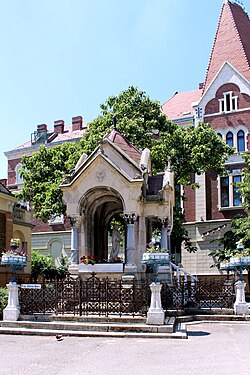
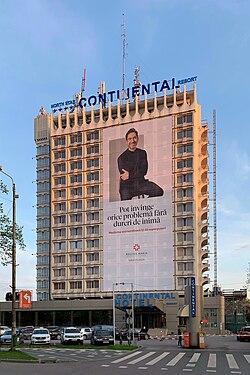
The city's architecture is a blend of styles, from the Secessionist gates of Queen Marie Park to Neo-Romanian buildings and modern high-rises like the Continental Hotel. Cultural landmarks include the Romanian National Opera, the German State Theatre, and the Huniade Castle, which houses the National Museum of Banat.
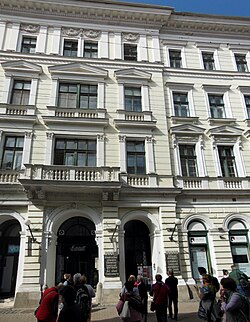
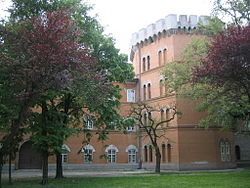
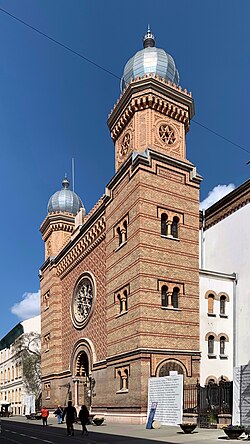
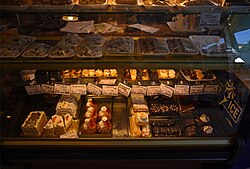
The city's multiculturalism is reflected in its religious sites, such as the Cetate Synagogue, and its diverse gastronomy, featuring international desserts like dobostorta and tiramisu.
| Category | Detail |
|---|---|
| Population (Municipality) | Approx. 291,000 (2026) |
| Area | 130.03 km² |
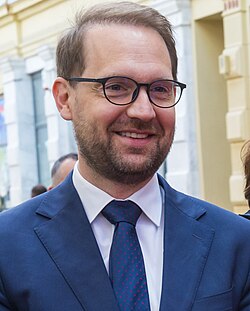
| Mayor | Dominic Fritz (2024–2028) |
| Key Airport | Traian Vuia International (TSR) |
| Climate Type | Cfb (Temperate Oceanic) |
Frequently Asked Questions
![Woman operating a cotton roll machine at Uzinele Textile Timișoara, 1961. During Ceaușescu's time, labor force came to Timișoara from all over Romania[147]](/images/8a/7d/8a7dbe42515bb8e23d30ec82376c73423f6be7da114f05792b0d9f2e90ea093c.png)
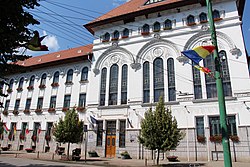
![Credit Bank Palace, nowadays home of West City Radio[354]](/images/5c/0a/5c0a1cea7b416ca7de986ee37951dc409a84d180af8d207e51f822e7cc3722d5.jpg)
Why is Timișoara called "Little Vienna"?
The nickname stems from the city's architectural style and urban planning developed during the Habsburg rule, which closely mirrors the imperial elegance of Vienna.
What is the economic status of Timișoara compared to the rest of Romania?
Timișoara has the highest standard of living nationwide and the highest average net wages in the country, second only to Bucharest.
Which historical districts are most prominent in the city?
The most prominent historical districts are Cetate (the center), Fabric, Iosefin, and Elisabetin.
What role did Timișoara play in the 1989 Revolution?
Timișoara was a primary site of the 1989 Revolution, where mass protests against the communist regime helped trigger the national uprising.
What are the main transport links for the city?
The city is connected by the A1 motorway, European routes E70 and E671, the Traian Vuia International Airport, and the Bega Canal for water transport.