Oltenia: A Historical Journey Through the Heart of Romania
Oltenia, a region of profound historical significance in modern-day Romania, has served as a crossroads of empires and a bastion of local resilience for millennia. From its early days as a Roman province to its role in the formation of the Romanian state, the region's trajectory reflects the broader shifts of power in Southeastern Europe.
Ancient Times and Roman Influence
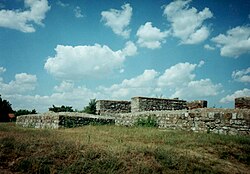
Originally inhabited by the Dacians, Oltenia was integrated into the Roman Empire in 106 AD following the conclusion of the Dacian Wars. The region underwent several administrative transformations under Roman rule. In 129 AD, during the reign of Emperor Hadrian, it became part of Dacia Inferior. Later, under Marcus Aurelius, the region was reorganized as Dacia Malvensis, with its capital and primary city established at Romula.
To secure the territory, the Romans colonized the area with veterans from the legions. However, this Roman administration ended in the late 3rd century when the empire withdrew south of the Danube. This vacuum led to a period of migration and conquest, where Oltenia was first ruled by the Germanic Goths (acting as foederati, or treaty-allied tribes), followed by the Taifals in the late 4th century, and eventually the Huns.
The Middle Ages: Empires and Principalities
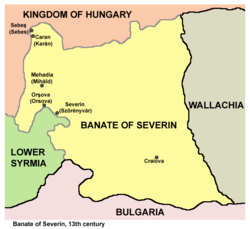
The early Middle Ages saw Oltenia fluctuate under various powers. Starting in 681 AD, the region was intermittently part of the Bulgarian Empire. By 1233, the Kingdom of Hungary established the Banate of Severin in the western portion of the region, a political entity that persisted until the Battle of Mohács in 1526.
Around 1247, a local polity emerged under the leadership of Litovoi. This paved the way for the rise of the medieval state of Wallachia in the 14th century. In the Wallachian administrative hierarchy, the Ban of Craiova (the "Great Ban") served as the prince's representative in Oltenia. This position became the most prestigious office in the Wallachian hierarchy, dominated largely by the Craiovești family from the late 15th century until approximately 1550. The title of Ban remained in use until 1831.
During the 15th century, Wallachia became a vassal state of the Ottoman Empire, paying an annual tribute to maintain autonomy. While some members of the Craiovești family cooperated with the Turks, others, most notably the Oltenian-born Michael the Brave, led fierce resistances that secured brief periods of independence.
Modern Era and Political Transitions
The 18th century brought significant administrative shifts. After 1716, the Ottomans ended the practice of selecting voivodes (princes) from the local Wallachian boyars, instead appointing foreign governors from the Phanar district of Constantinople. This era is known as the Phanariote regime.
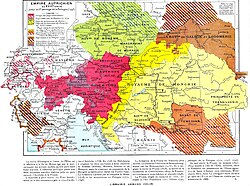
Between 1718 and 1737, Oltenia was separated from Wallachia and annexed by the Habsburg monarchy as the Banat of Craiova following the Treaty of Passarowitz. During this period, the region experienced Enlightened absolutism—a form of absolute monarchy inspired by the Enlightenment—and Austrian administration. While initially welcomed, the Austrians eventually faced opposition from both the nobility, who lost their privileges, and the peasants, who were burdened by new taxes.
By 1761, the residence of the Bans was moved to Bucharest to centralize power, though a kaymakam (governor) continued to represent the boyars in Craiova. The era of the Bans officially ended with the death of Barbu Văcărescu in 1832.
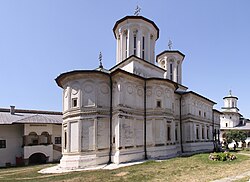
The region's spirit of resistance culminated in 1821 with the uprising led by Tudor Vladimirescu. Centered in Oltenia and Gorj County, Vladimirescu gathered his Pandurs (irregular soldiers) in Padeș, utilizing a network of fortified monasteries, including Strehaia and Tismana, to support the revolt.
Key Facts
- Roman Era: Known as Dacia Malvensis with its capital at Romula.
- Administrative Power: The Great Ban of Craiova was the highest office in the Wallachian hierarchy.
- Habsburg Rule: Annexed as the Banat of Craiova from 1718 to 1737.
- Resistance: Home to Michael the Brave and the 1821 uprising led by Tudor Vladimirescu.
- Strategic Sites: Fortified monasteries like Tismana and Strehaia played key roles in local military history.
| Period | Dominant Power/Entity | Key Designation/Title |
|---|---|---|
| 106 AD - 3rd Century | Roman Empire | Dacia Inferior / Dacia Malvensis |
| 681 AD - (Intermittent) | Bulgarian Empire | Bulgarian lands across the Danube |
| 1233 - 1526 | Kingdom of Hungary | Banate of Severin |
| 14th Century - 1831 | Wallachia | Great Ban of Craiova |
| 1718 - 1737 | Habsburg Monarchy | Banat of Craiova |
Frequently Asked Questions
What was the role of the Great Ban of Craiova?
The Great Ban of Craiova was the highest-ranking official in the Wallachian hierarchy, serving as the representative of the Voivode (Prince) within the region of Oltenia.
How did the Roman administration change in Oltenia?
Oltenia was first part of Dacia Inferior in 129 AD and later became Dacia Malvensis under the administrative reforms of Marcus Aurelius, with Romula serving as its capital.
What was the Phanariote regime?
The Phanariote regime began after 1716 when the Ottoman Empire stopped appointing local Wallachian boyars as voivodes and instead appointed Orthodox Greeks from the Phanar district of Constantinople.
Who were the Pandurs in the context of Oltenian history?
The Pandurs were irregular soldiers gathered by Tudor Vladimirescu in Padeș during the 1821 uprising against the established order in Wallachia.
What happened during the Habsburg occupation of Oltenia?
From 1718 to 1737, Oltenia was the Banat of Craiova. The Austrians introduced Enlightened absolutism and centralized reforms, which eventually caused friction with both the peasantry and the nobility.