Roman Augurs: The Priests of Divine Signs
In the classical Roman world, the augur was far more than a simple priest; he was a critical official whose interpretations could determine the fate of the state. Through the practice of augury—the interpretation of the will of the gods—these officials provided the divine sanction necessary for every major public and private undertaking, from declaring war to conducting commerce.
The core of this practice was "taking the auspices." An augur would observe events within a templum, a predetermined sacred space on the ground that corresponded to a specific section of the sky. By studying signs within this space, the augur sought to ensure the pax (peace), fortuna (good fortune), and salus (well-being) of Rome.
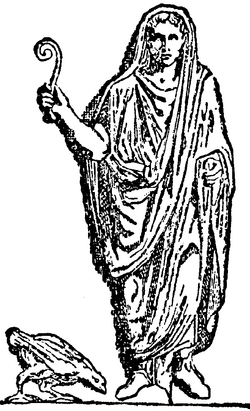
Key Facts
- Primary Role: Interpreting divine will through observed signs, primarily bird behavior and weather.
- The Templum: A delimited sacred space used as an observation platform for the sky.
- Symbol of Office: The lituus, a curved wand used by augurs.
- Core Objective: Maintaining the pax deorum (the peace of the gods).
- Political Power: The ability to adjourn or overturn legal processes and elections based on "inaugural errors."
The Mechanics of Augury
Augurs relied on a complex system of observation. While they monitored thunder, lightning, and accidental signs like falling objects, they focused heavily on birds. They analyzed whether birds flew alone or in groups, their flight direction, their species, their numbers, and the sounds they made.
Because wild birds and weather were unpredictable, Romans used domesticated chickens. These birds were released into the templum, and their feeding behavior was studied to determine divine approval.
Categories of Auspices
Auspices were divided into two primary categories: impetrativa (requested by humans) and oblativa (offered spontaneously by the gods). These were further classified into five subclasses:
- Ex caelo: Signs from the sky, such as lightning and thunder.
- Ex avibus: Signs from birds.
- Ex tripudiis: The feeding habits of Mars' sacred chickens.
- Ex quadrupedibus: Signs from animals like dogs, horses, wolves, and foxes.
- Ex diris: Ominous events.
Bird signs were further split into alites (based on flight patterns and location) and oscines (based on the pitch and direction of their voices). Certain species, known as aves augurales—including eagles, ravens, owls, and woodpeckers—were considered the only valid sources of signs.
History and Public Role
Augury likely originated in Etruria, where such officials were highly respected. In Rome, the practice was managed by the college of augurs (collegium). Initially, during the foundation of the Republic in 510 BC, only patricians could hold this office, though it opened to plebeians by 300 BC.
Evolution of the College
The size of the college grew as Rome expanded. In the Regal period (ending 509 BC), there were typically three augurs. By the third century BC, this number rose to nine, and Sulla later increased it to fifteen. By the time of the Principate, the college had grown to approximately 25 members.
Political Influence
Membership in the college was as prestigious as the consulship. Augurs possessed the ius augurii (right of augury), and the officiating augur held the nuntiatio—the right to announce an unexpected sign, which could immediately halt official proceedings. Cicero noted that the power to invalidate consular elections due to ritual errors made the augur one of the most powerful authorities in the Republic.
Augury in the Roman Empire
During the Empire, the political influence of the augurate declined, though it remained a source of immense social prestige. The concept of pax deorum became a tool for legitimacy. For example, Octavian (Augustus) claimed the true right of augury because he alone had restored peace to the Roman people after the Civil Wars.
Augustus further consolidated religious power by becoming pontifex maximus, gaining control over state oracles and the Sibylline books, and using his censorial powers to suppress unapproved oracles.
Ritual and Evasion
The ritual of inauguration was rigorous. The templum had to be square, have a single entrance, and be purified. The augur would then perform the legum dictio (enunciation of requested auspices) in absolute silence. The sky was divided into four regions: dextera (right), sinistra (left), antica (anterior), and postica (posterior).
Because the system was so complex, conflicting signs were common. A hierarchy was established where signs from an eagle, for instance, outweighed those from a woodpecker. Over time, some magistrates used "evasion" techniques to avoid negative signs, such as pretending not to notice them, claiming a ritual mistake (vitia), or simply repeating the entire procedure.
| Category | Type/Source | Examples/Details |
|---|---|---|
| Auspices | Impetrativa | Requested by man |
| Auspices | Oblativa | Spontaneous divine signs |
| Bird Signs | Alites | Flight, height, and resting place |
| Bird Signs | Oscines | Voice, pitch, and direction |
| Subclasses | Ex caelo / Ex tripudiis | Thunder / Sacred chicken feeding |
The Legend of Attus Navius
While the foundation of Rome is tied to augury—with Romulus and Remus acting as augurs—the figure of Attus Navius best represents the art. Born into poverty, Navius allegedly discovered the principles of augury after losing a pig. He promised the gods the largest grape in his vineyard if the pig was found. By dividing the sky into four sections and following the flight of birds, he located the largest grape, leading to his fame and eventual role as the king's augur.
Frequently Asked Questions
What is the difference between an augurium and an auspicium?
While often used interchangeably, some scholars suggest that auspicium refers to the technical process of observing birds (aves spicere), whereas augurium refers to the resulting interpretation and the divine intention identified.
How did an augur determine the will of the gods?
The augur observed specific signs within a sacred space called a templum. These signs included the flight patterns and calls of specific birds, weather phenomena like lightning, and the feeding behavior of sacred chickens.
Could an augur stop a political election?
Yes. Through the right of nuntiatio, an augur could announce an unexpected sign or an inaugural error, which had the authority to adjourn or even invalidate the process of law, including consular elections.
What was the lituus?
The lituus was a curved wand that served as the primary symbol of the augur's office and was frequently depicted on Roman coins.
What happened if the signs were negative?
Magistrates sometimes used evasion tactics to bypass negative signs, such as repudiare (refusing the sign through interpretation) or non observare (claiming they had not paid attention to the sign).