Barbarians: The Evolution of a Cultural Label from Antiquity to Modernity
The word barbarian is one of the most enduring and misunderstood labels in human history. While modern usage often evokes images of wild, uncivilized people or rude behavior, its origins were far more literal. Etymologically, a barbarian is simply a foreigner—someone whose language and customs differ from those of the speaker. From the city-states of ancient Greece to the imperial courts of China, the term has served as a powerful tool for defining the boundaries of "civilization" by labeling those outside it.
Key Facts
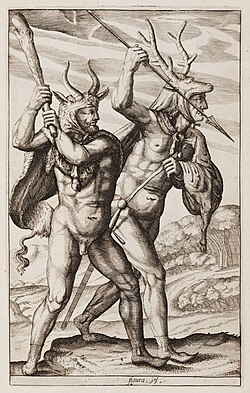
- Etymology: Derived from the Ancient Greek barbaros, referring to those who did not speak Greek.
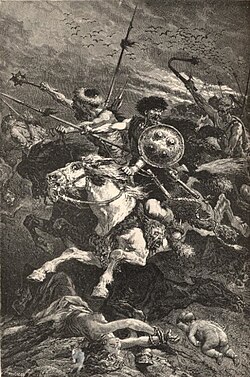
- Roman Adaptation: Romans applied the term to tribal peoples outside their empire, including Germans, Celts, and Huns.
- Chinese Context: Ancient China used specific exonyms like yi, man, and di to categorize foreigners by cardinal direction.
- Mercenary Role: Many labeled "barbarians" served as elite soldiers for the empires that marginalized them.
- Modern Shift: The term evolved from a linguistic descriptor to a pejorative meaning "uncivilized."
The Greco-Roman Perspective
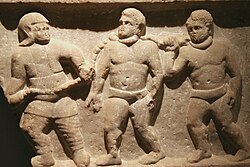
In ancient Greece, the term barbaros was initially a descriptive label for non-Greeks. Interestingly, it was not always used for foreigners; Greeks sometimes applied the term to their own people on the fringes of the Greek world who spoke peculiar dialects. To a Greek ear, the speech of a foreigner sounded like "bar-bar," leading to the linguistic root of the word.
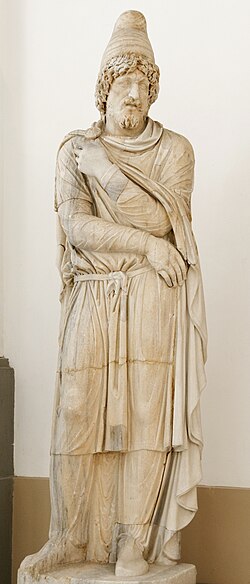
As the Roman Empire expanded, it adopted this Hellenic framework. For Romans, barbarians were the tribal peoples living outside the political and cultural sphere of the empire. This included groups such as the Huns, Germans, Celts, Iberians, Helvetii, Thracians, Illyrians, and Sarmatians.
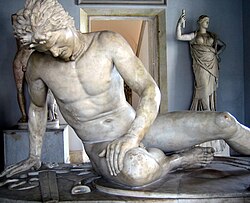
The perception of barbarians was often contradictory. While they were frequently stereotyped as wild, some were recognized for their strength or nobility. The famous statue The Dying Galatian captures this duality, portraying a defeated enemy with dignity and pathos.
The Migration Period and the Fall of Rome
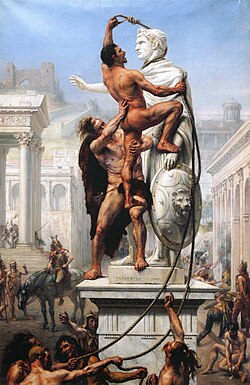
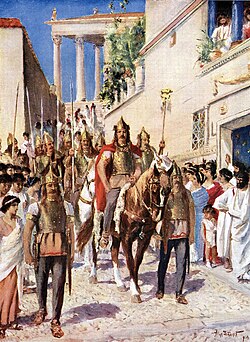
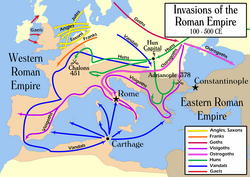
By the 5th century AD, the distinction between "civilized" Roman and "barbarian" outsider blurred. During the Migration Period, various tribal groups moved into Roman territories, leading to significant historical upheavals, including the Sack of Rome in 410 AD by the Visigoths under Alaric I.
Barbarianism in East Asia
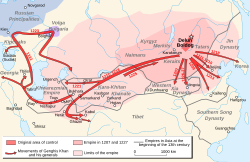
Parallel to the Western experience, ancient China developed its own complex system of labeling foreigners. As early as the Shang dynasty (1600–1046 BC), oracle bones and bronze inscriptions recorded conflicts with groups labeled as barbarians, such as the Guifang, Di, and Qiang.

Chinese terminology was often categorized by geography and carried specific connotations:
- Yi (夷): Generally referred to barbarians to the East; the term could also mean to destroy or raze.
- Man (蛮): Referred to the "Southern barbarians" and was often associated with being savage.
- Di (狄): Referred to Northern barbarians, sometimes translated as "fire-dogs."
The Paradox of the Barbarian Mercenary
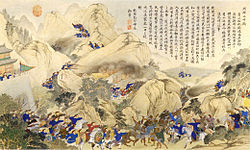
Despite the social stigma, empires frequently relied on the military prowess of the people they labeled barbarians. This created a paradox where the "uncivilized" outsider became the primary protector of the "civilized" state.
Notable examples include:
- The Roman Empire: By the 5th century, the Roman army was largely composed of Germanic mercenaries.
- Byzantium: The Varangian Guard, composed of Viking warriors, served as the elite bodyguard to the Emperor.
- The Abbasid Caliphate: Turkic mercenaries were employed as high-level soldiers.
- Imperial China: Nomadic frontier tribes were frequently hired to fight other frontier groups.
Evolution of the Term in Later History
The term continued to migrate across cultures. The Arabic word barbar was used as an exonym for the indigenous peoples of North Africa, known today as the Amazigh or Berbers.

In the 20th century, the term shifted from an ethnic label to a political and social one. Marxist theorist Rosa Luxemburg used the phrase "regression into Barbarism" to describe a potential societal collapse resulting from the failures of capitalism and social democracy, rather than a return to tribalism.
| Culture | Primary Meaning | Target Groups |
|---|---|---|
| Ancient Greece | Non-Greek speakers | Persians, Egyptians, fringe Greek dialects |
| Ancient Rome | Outside the Empire | Germans, Celts, Huns, Sarmatians |
| Ancient China | Foreigners/Outsiders | Yi (East), Man (South), Di (North) |
| Arabic/North Africa | Indigenous outsiders | Amazigh (Berbers) |
| Modern English | Uncivilized/Rude | General pejorative use |
Frequently Asked Questions
Did the Greeks consider all non-Greeks to be barbarians?
Yes, etymologically, any person who did not speak Greek or follow classical Greek customs was termed a barbaros. However, this was sometimes applied even to Greeks who spoke dialects that sounded unpolished or unfamiliar to others.
Were barbarians always viewed as violent or savage?
Not necessarily. While stereotypes existed, there were instances of admiration. For example, the Romans recognized the discipline of certain armies, and the Greeks occasionally acknowledged the distinction of certain "barbarian" nations.
What is the connection between the word barbarian and the Berbers?
The word "Berber" is a cognate of "barbarian." It stems from the Arabic barbar, which was borrowed from the Greek term to describe the indigenous people of North Africa.
Why did empires hire barbarian mercenaries if they looked down on them?
Empires often valued the specialized combat skills, loyalty, and raw strength of frontier tribes. In many cases, it was a strategic move to "use barbarians to attack barbarians," reducing the risk to the empire's own citizen population.
How did the meaning of the word change in the modern era?
The term shifted from a linguistic and geographic descriptor (someone from elsewhere) to a moral and social judgment (someone who is uncivilized, wild, or rude).