Laurel Wreaths: History, Symbolism, and Modern Usage
The laurel wreath is a timeless symbol of triumph, honor, and achievement. Traditionally crafted from the connected branches and leaves of the bay laurel (Laurus nobilis)—an aromatic broadleaf evergreen—these wreaths are worn as chaplets around the head or as garlands around the neck. While the bay laurel is the primary source, historical variations have also utilized cherry laurel (Prunus laurocerasus) or spineless butcher's broom (Ruscus hypoglossum).
From the athletic arenas of Ancient Greece to the graduation halls of modern universities, the laurel wreath has evolved from a physical prize into a powerful cultural metaphor for success.

Key Facts

- Origin: Traces back to Ancient Greece, where it was associated with the god Apollo.
- Botanical Source: Primarily the bay laurel (Laurus nobilis).
- Symbolism: Represents victory, academic achievement, and martial success.
- Modern Idioms: "Resting on one's laurels" refers to relying on past success.
- Academic Use: Used in Italy, Sweden, and Finland to mark degree conferral.
Mythological Origins and Ancient History
The association between the laurel wreath and victory begins with Apollo, the Greek god of lyrical poetry, musical performance, and skill-based athletics. In mythology, Apollo's connection to the laurel tree stems from his pursuit of the river nymph Daphne.
After Apollo mocked Eros (Cupid), the god of love retaliated with two arrows: a gold one that instilled passionate love in Apollo, and a lead one that filled Daphne with hatred for him. To escape Apollo's pursuit, Daphne was transformed into a laurel tree. In his grief, Apollo vowed to honor her forever, using his powers to make the tree evergreen and crafting wreaths from its branches to symbolize his patronage of poets and musicians.
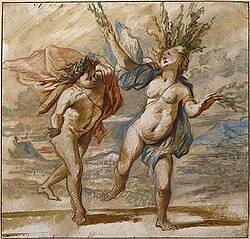
In antiquity, wreaths were common prizes. While the ancient Olympics awarded victors with kotinos (wild olive tree wreaths), the laurel became a staple for musical and poetic competitions. Later, in Ancient Rome, the laurel wreath became a symbol of martial victory, used to crown successful commanders during their triumphal processions.

Academic and Educational Traditions
The legacy of the laurel continues in academia, where it signifies the completion of rigorous study. The term laureate, as seen in "poet laureate," is derived directly from this tradition.
European Traditions
- Italy: The term laureato refers to any graduate. Following the laurea (graduation ceremony), students wear a laurel wreath, a tradition that began at the University of Padua.
- Sweden: Those receiving doctorates or honorary doctorates in the Faculty of Philosophy (including arts, history, and natural sciences) are presented with a laurel wreath.
- Finland: The University of Helsinki awards laurel wreaths during master's degree conferral ceremonies.

United States Traditions
Several American institutions maintain unique laurel-based customs:
- Connecticut College: Juniors carry a laurel chain that is passed to them by seniors during commencement, symbolizing the continuation of life.
- Mount Holyoke College: Since 1900, graduating students have used laurel wreaths. Since 1902, a chain of mountain laurel has been used in campus parades.
- Reed College: Seniors receive laurel wreaths upon submitting their senior thesis, symbolizing that they have "crossed the finish line."
- St. Mark's School: Students earning a Classics Diploma for completing classical language requirements wear a laurel wreath on Prize Day.
Art, Heraldry, and Decorative Design
The laurel wreath is a recurring motif in the visual arts, representing prestige and authority. It is frequently found in architecture from the Federal, Regency, Directoire, and Beaux-Arts periods, as well as in the stone and plaster works of Robert Adam.
In the decorative arts of the Empire period, laurel motifs were woven into textiles, inlaid in marquetry, and applied to furniture as gilded brass mounts. Even in the automotive world, Alfa Romeo added a laurel wreath to its logo after winning the first Automobile World Championship in 1925.

Heraldic Use
In heraldry, laurel wreaths serve as charges on shields or as headgear similar to circlets. They differ from torses (twisted bands of cloth) and chaplets. While usually circular (annular), they can sometimes be penannular. In the Society for Creative Anachronism, laurel wreaths are specifically reserved for the arms of territorial branches.

Modern Commercial and Civic Applications
Beyond academia and art, the laurel wreath remains a symbol of curated excellence and service.
Film Festival Laurels
In the film industry, "laurels" are used on posters and promotional art to indicate that a movie was selected for a film festival. Because top-tier festivals have extremely low acceptance rates (sometimes as low as 1%), these laurels provide validation for independent filmmakers and help drive box office interest through earned media.

The Wreath of Service
The Boy Scouts of America utilizes a "wreath of service" on all commissioner position patches. This symbol represents the commitment to program service and the partnership between professional Scouters and volunteers.

Summary of Laurel Wreath Usage
| Field | Meaning/Purpose | Example |
|---|---|---|
| Mythology | Patronage of arts and poetry | God Apollo |
| Ancient Rome | Martial victory | Triumphant commanders |
| Academia | Degree completion | Italian laureato |
| Cinema | Festival selection | Film poster laurels |
| Heraldry | Honor and rank | Shield charges |
| Civic Service | Commitment and partnership | BSA Commissioner patches |
Frequently Asked Questions
What does it mean to "rest on one's laurels"?
This idiom describes a person who relies entirely on their past achievements to maintain their current fame or status, rather than continuing to work hard or innovate.
What is the difference between a laurel wreath and a kotinos?
While both are victory wreaths, a laurel wreath is made from the bay laurel tree, whereas a kotinos is specifically made from a wild olive tree, traditionally awarded at the ancient Olympics.
Why do film posters have laurel wreaths?
They indicate that the film was officially selected for screening at a film festival, which serves as a mark of quality and curation to attract distributors and audiences.
How is the laurel wreath used in Italian universities?
In Italy, students receive a laurel wreath during their graduation ceremony (laurea) and wear it for the remainder of the day to celebrate their new status as a laureato.
Which god is most associated with the laurel wreath?
The Greek god Apollo is the primary figure associated with the laurel, as he adopted the tree as his symbol after the nymph Daphne was transformed into one.