Mercury: The Roman God of Commerce, Communication, and Luck
In the vast pantheon of ancient Rome, few deities were as versatile or as essential to daily life as Mercury (Latin: Mercurius). As one of the 12 Dii Consentes—the primary council of gods in Roman religion—Mercury presided over the vital arteries of civilization: trade, speech, and the movement of information. From the bustling markets of the Forum to the silent paths leading to the afterlife, Mercury served as the ultimate mediator and messenger.
Mercury is most recognized as the god of boundaries, commerce, eloquence, and financial gain. However, his influence extended far beyond the marketplace; he was the patron of travelers, the protector of thieves, and the psychopomp—the divine guide responsible for escorting the souls of the deceased to the underworld.
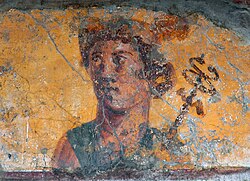
Key Facts
- Primary Domains: Commerce, communication, eloquence, travelers, and boundaries.
- Key Symbols: The caduceus (staff with intertwined snakes), winged sandals (talaria), and a winged hat (petasos).
- Greek Equivalent: Hermes.
- Family: Son of Jupiter and Maia (or Caelus and Dies).
- Associated Day: Wednesday (dies Mercurii).
- Role in Afterlife: Guide of souls to the underworld.
Origins and Etymology
The name "Mercury" is deeply rooted in the language of trade. It is likely derived from the Latin merx (merchandise), mercari (to trade), and merces (wages). Alternatively, some scholars link the name to the Proto-Indo-European root merĝ-, meaning "boundary" or "border," reflecting his role as the bridge between the upper world and the underworld.
Historically, Mercury was not part of the earliest Roman deities. He emerged during the Roman Republic around the 4th century BC as part of a process of syncretism—the blending of different beliefs—where Roman religion merged with Greek influences. He was categorized as one of the Di Novensides ("New Gods") and shared strong characteristics with the Etruscan deity Turms and the Greek god Hermes.
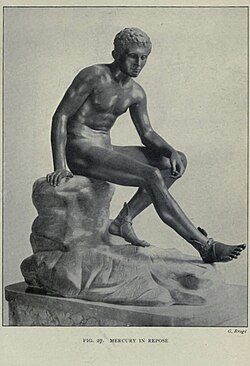
Symbols and Attributes
Mercury is instantly identifiable through his iconic gear, much of which was mirrored by his Greek counterpart, Hermes. His most famous attribute is the caduceus, a herald's staff entwined with two snakes, which was originally a magic wand gifted to him by Apollo.
To facilitate his role as a swift messenger, he wore talaria (winged sandals) and a petasos (winged hat). In art and mythology, he is often accompanied by three animals:
- The Rooster: A herald of the new day.
- The Ram or Goat: Symbols of fertility.
- The Tortoise: A reference to the legend that Mercury invented the lyre using a tortoise shell.
The Interpretatio Romana and Global Influence
As the Roman Empire expanded, they practiced interpretatio romana, a cultural habit of identifying foreign gods as local versions of their own. Because of his association with trade and arts, Mercury became one of the most popular deities in conquered territories.
Julius Caesar noted that Mercury was the most revered god in Britain and Gaul, where he was equated with the Celtic god Lugus and often appeared alongside the goddess Rosmerta. In Germanic regions, the Romans associated Mercury with Wotan (Odin), the chief Germanic god. This linguistic legacy survives today in the names for Wednesday: Mercredi in French and Wednesday (Woden's day) in English.
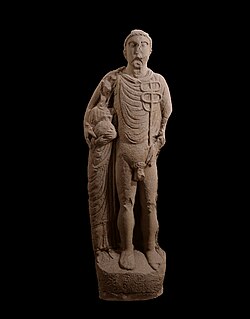
Regional Syncretisms
Across the empire, Mercury merged with various local deities to form unique hybrid identities:
- Mercurius Artaios: A blend with a Celtic bear and hunting god in France.
- Mercurius Moccus: A connection to a Celtic god associated with boar-hunting.
- Mercurius Sobrius: A syncretism with a Carthaginian god of commerce.
- Mercurius Visucius: A frontier deity worshipped in Gaul and Germany.
Temple, Worship, and Literature
Mercury's temple in Rome was strategically located in the Circus Maximus, situated between the Aventine and Palatine Hills. Built in 495 BC, its location was symbolic: it sat between the plebeian (commoner) stronghold and the patrician (aristocratic) center, emphasizing Mercury's role as a mediator.
His primary festival, the Mercuralia, took place on May 15. During this event, merchants would sprinkle water from his sacred well near the Porta Capena over their heads to seek favor in their business dealings.
In literature, Mercury appears as a pivotal figure. In Virgil's Aeneid, he reminds Aeneas of his destiny to found Rome. In Ovid's Fasti, he is depicted as the lover of the nymph Larunda; their union produced the Lares, the invisible gods who protected the Roman household.
| Attribute | Details |
|---|---|
| Greek Equivalent | Hermes |
| Etruscan Equivalent | Turms |
| Celtic Equivalent | Lugus |
| Key Symbols | Caduceus, Winged Sandals, Winged Hat |
| Major Festival | Mercuralia (May 15) |
| Temple Location | Circus Maximus, Rome |
Mercury in Modern Culture
The legacy of the messenger god persists in modern terminology and iconography. While the United States "Mercury dime" (1916–1945) actually depicts Winged Liberty, it earned its name due to the visual resemblance to the god. In aviation, the U.S. Navy's E-6B communications platform is named after him, honoring his role as the god of messages. He also appeared in early comic book history in Jack Kirby's 1940 story, Mercury in the 20th Century.
Frequently Asked Questions
Who are the parents of Mercury?
According to most Roman traditions, Mercury is the son of Jupiter and Maia (the daughter of the Titan Atlas). However, some sources, such as Cicero and Hyginus, suggest his parents were Caelus and Dies.
What is the difference between Mercury and Hermes?
Mercury is the Roman deity, while Hermes is the Greek deity. While they share almost identical roles, symbols, and myths due to syncretism, Mercury had a stronger emphasis on commercial success and trade within the Roman societal structure.
What is a psychopomp?
A psychopomp is a divine entity responsible for escorting newly deceased souls from the world of the living to the afterlife. Mercury served this role in Roman mythology, guiding souls to the underworld.
Why is Wednesday associated with Mercury?
The day is named after the god due to the Roman dies Mercurii. In Germanic cultures, the Romans equated Mercury with Wotan (Odin), leading to the English name "Wednesday" (Woden's day).
What is the significance of the caduceus?
The caduceus is a staff entwined with two snakes, symbolizing heraldry, negotiation, and peace. It was originally a gift from Apollo to Hermes/Mercury and serves as the primary symbol of the messenger god.