Roger Penrose: The Mathematical Visionary of Black Holes and Consciousness
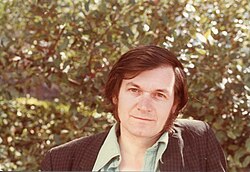
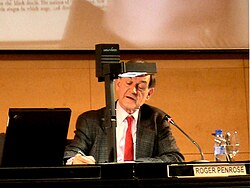
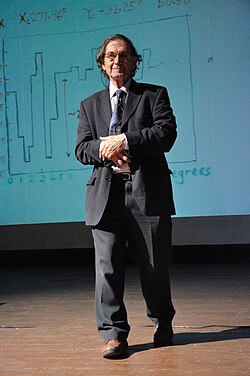
Sir Roger Penrose is a towering figure in modern science, whose work spans the vast reaches of the cosmos and the intimate mysteries of the human mind. A mathematical physicist known for his profound intuition and geometric approach to the universe, Penrose has challenged our understanding of space, time, and the nature of intelligence.
From the discovery of singularities in black holes to the creation of "impossible" shapes that baffle the eye, Penrose's contributions are as diverse as they are influential. His career is a testament to the power of mathematical rigor applied to the most abstract questions of existence.
Key Facts
- Nobel Prize: Awarded the Nobel Prize in Physics in 2020 for his work on black hole formation.
- Core Expertise: Specializes in mathematical physics and tessellations.
- Major Theories: Developed the Penrose–Hawking singularity theorems and Conformal Cyclic Cosmology.
- Interdisciplinary Work: Proposed the Orch-OR theory regarding the quantum nature of consciousness.
- Education: Holds a BSc from University College London and a PhD from St John's College, Cambridge.
The Geometry of the Universe and Black Holes
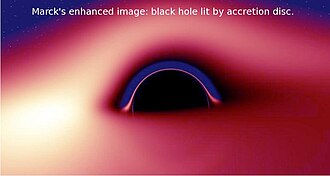
Penrose is perhaps most famous for his contributions to general relativity. He developed the Penrose–Hawking singularity theorems, which mathematically proved that singularities—points of infinite density where the laws of physics break down—are inevitable in the collapse of stars into black holes.
Beyond singularities, he introduced the Penrose process, a mechanism by which energy can be extracted from a rotating black hole, and the Penrose diagram, a specialized tool used to map the causal structure of spacetime.
Conformal Cyclic Cosmology
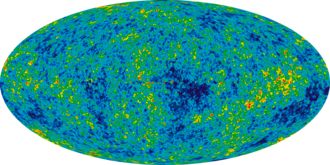
In his later work, Penrose proposed Conformal Cyclic Cosmology (CCC). This theory suggests that the universe does not have a single beginning and end, but rather exists in a series of infinite cycles called "aeons." In this model, the remote future of one universe becomes the Big Bang of the next.
Tessellations and Impossible Geometry
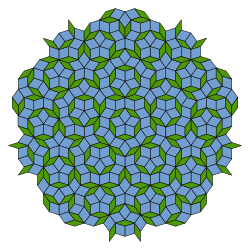
Outside of astrophysics, Penrose is renowned for his work on tessellations—the tiling of a plane using one or more geometric shapes. Penrose tiling consists of a non-periodic set of tiles that can cover an infinite plane without ever repeating the same pattern, a discovery that later found parallels in the study of quasicrystals.
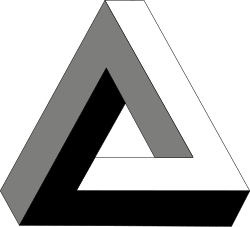
He is also widely recognized for his exploration of optical illusions, most notably the Penrose triangle and Penrose stairs. These "impossible objects" use perspective to create shapes that can be drawn in 2D but cannot exist in 3D space.
The Quest for Consciousness
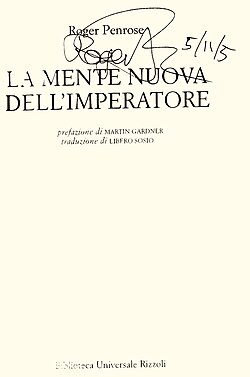
Penrose has spent decades investigating the nature of the human mind, arguing that consciousness is not a computation. In his books, such as The Emperor's New Mind and Shadows of the Mind, he posits that intelligence cannot be entirely algorithmic.
Together with Stuart Hameroff, he developed the Orch-OR (Orchestrated Objective Reduction) theory. This hypothesis suggests that consciousness arises from quantum computations occurring within microtubules inside brain neurons, rather than from the complex firing of synapses alone.
Academic Legacy and Recognition
Throughout his career, Penrose has held positions at prestigious institutions, including Oxford, Princeton, and Cornell. His academic output includes the development of Twistor theory and the Moore–Penrose inverse in matrix algebra.
| Field | Key Contribution | Impact |
|---|---|---|
| Astrophysics | Singularity Theorems | Proved black holes must contain singularities. |
| Mathematics | Penrose Tiling | Discovered non-periodic tiling patterns. |
| Cosmology | Conformal Cyclic Cosmology | Proposed a cyclic model of the universe's existence. |
| Neuroscience | Orch-OR Theory | Linked quantum mechanics to human consciousness. |
| Geometry | Impossible Objects | Created the Penrose triangle and stairs. |
Frequently Asked Questions
Why did Roger Penrose win the Nobel Prize?
He was awarded the 2020 Nobel Prize in Physics for the discovery that black hole formation is a robust prediction of the general theory of relativity, specifically through his work on singularity theorems.
What is a Penrose tiling?
A Penrose tiling is a non-periodic tiling of the plane. Unlike standard tiles that repeat in a grid, Penrose tiles cover a surface in a pattern that never repeats exactly, despite being governed by strict mathematical rules.
What is the main idea behind Conformal Cyclic Cosmology?
It is the theory that the universe undergoes infinite cycles. Once a universe reaches its maximum expansion and all matter decays, the resulting state is mathematically identical to the state of a Big Bang, triggering a new aeon.
Does Penrose believe the mind is a computer?
No. Penrose argues that human consciousness is non-algorithmic, meaning there are things the human mind can understand or "see" that a computer, following a set of programmed rules, could never achieve.
What is the Penrose triangle?
The Penrose triangle is an optical illusion of an impossible object. It appears as a solid triangle in a drawing, but its geometry is logically impossible to construct in three-dimensional space.