Rodents: The Evolutionary Success and Diverse Biology of a Global Order
From the tiny house mouse to the massive extinct Josephoartigasia monesi, the order Rodentia represents one of the most successful and diverse groups of mammals on Earth. Spanning from the Late Paleocene to the present day, rodents have occupied nearly every ecological niche, demonstrating remarkable adaptability in their feeding, social structures, and habitats.
Whether acting as ecosystem engineers—animals that significantly modify their environment—or serving as vital links in food webs, rodents play a fundamental role in global biodiversity. Their evolutionary journey is a testament to biological resilience and specialized adaptation.
Key Facts
- Temporal Range: Rodents have existed since the Late Paleocene.
- Extreme Size Variation: The largest known fossil rodent, Josephoartigasia monesi, may have reached 3 meters in length and weighed 1,000 kg.
- Global Presence: Rodents are found across nearly all continents, with significant evolutionary radiations in Eurasia, Africa, and the Americas.
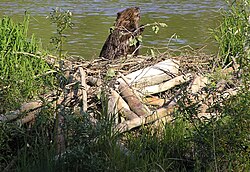
- Ecological Impact: Many species act as ecosystem engineers, such as the North American beaver.
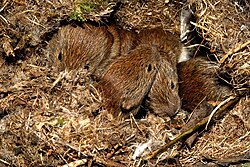
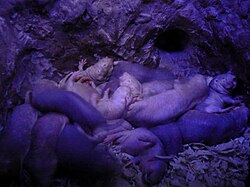
- Diverse Sociality: Behaviors range from solitary existence to complex eusociality, as seen in naked mole-rats.
Evolutionary History and Distribution
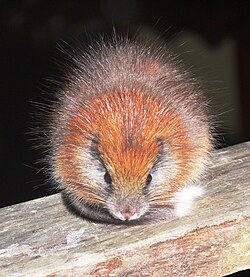
The evolutionary history of rodents is marked by repeated colonizations and radiations. By approximately 20 million years ago, fossil evidence shows that modern families, such as Muridae (the mouse and rat family), were already well-established. The Muroid group likely originated in Eurasia, subsequently recolonizing the continent multiple times and spreading to Africa, North America, Southeast Asia, and South America.
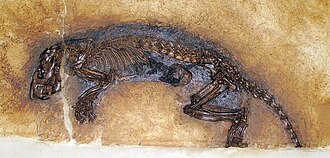
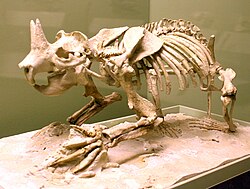
One fascinating evolutionary event occurred 20–24 million years ago, when Nesomyid rodents are thought to have reached Madagascar by rafting across the ocean. The fossil record also reveals extinct species with unique traits, such as the Ceratogaulus hatcheri, a horned burrowing mammal from the late Miocene to early Pleistocene.
Biological Classification and Diversity

The order Rodentia is divided into several major suborders, including Sciuromorpha, Castorimorpha, Hystricomorpha, and Myomorpha. This classification reflects the vast morphological and genetic differences between groups like squirrels, beavers, guinea pigs, and mice.
| Suborder | Common Examples | Key Traits |
|---|---|---|
| Sciuromorpha | Squirrels | Arboreal or terrestrial specialists |
| Castorimorpha | Beavers, Gophers | Often semi-aquatic or burrowing |
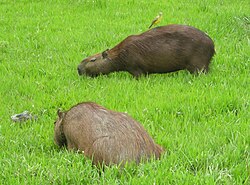
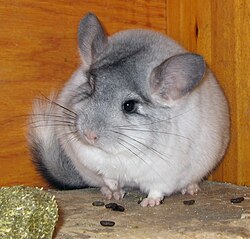
| Hystricomorpha | Capybaras, Chinchillas | Diverse ranging from large to small |
| Myomorpha | Mice, Rats | Highly successful, often commensal |

Behavior, Communication, and Intelligence
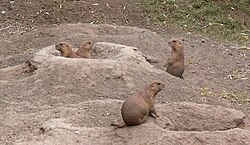
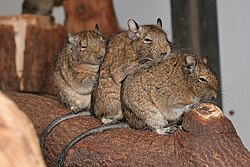
Rodents exhibit a staggering array of social behaviors. While some species are solitary, others are highly social. Prairie dogs, for instance, live in complex "towns" and use sophisticated vocalizations to communicate information about predators. Similarly, common degus possess a complex vocal repertoire used for social interaction.
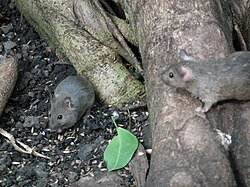
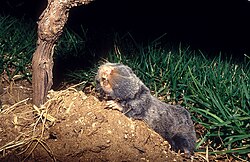
Communication is not limited to sound. Many species rely on olfactory (smell) cues. Nepotistic species, such as house mice, use urine, feces, and glandular secretions to recognize their kin. Other species, like the Middle East blind mole-rat, utilize seismic communication—sending vibrations through the ground—to interact with others in their tunnels.
Intelligence and Memory
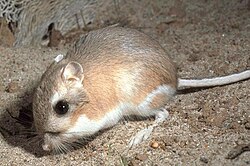
Research into rodent cognition has revealed high levels of intelligence. Kangaroo rats demonstrate advanced spatial memory, allowing them to locate food caches hidden underground. Furthermore, studies on rats have suggested capacities for metacognition—the ability to reflect on their own mental processes—and even optimistic behavioral responses.
Mating Strategies and Life History
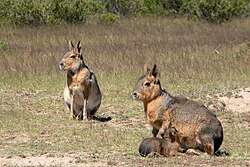
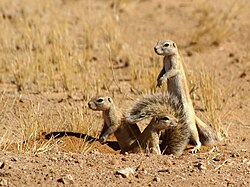
Reproductive strategies among rodents are highly varied. Some species, like the Patagonian mara, are monogamous and practice communal nesting. Others exhibit polygyny, where one male mates with multiple females. The Cape ground squirrel is an example of a species that can be both promiscuous and non-defense polygynous.
Human Interaction: From Pets to Pests
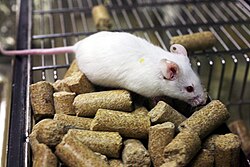
Humans have a complex relationship with rodents. Many species are kept as domesticated pets, such as chinchillas and guinea pigs. In scientific research, the laboratory house mouse is an essential tool for medical and biological advancement.
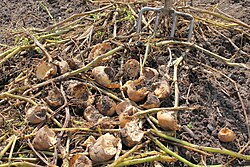
Conversely, many rodents are classified as pests. They can cause significant economic damage by consuming crops, such as potatoes, and can act as vectors for various diseases. Effective management often requires specialized tools like rodent bait stations to protect agricultural and urban environments.

Frequently Asked Questions
What makes a rodent an "ecosystem engineer"?
An ecosystem engineer is an organism that creates, significantly modifies, or maintains a habitat. For example, beavers build dams that create wetlands, fundamentally changing the local environment for many other species.
How do rodents communicate without sound?
Many rodents use chemical signals (scent marking) through urine or glandular secretions to communicate identity and kinship. Some underground species also use seismic signals, creating vibrations in the soil to communicate.
Are all rodents the same size?
No, rodent size varies immensely. While many are tiny, like mice, the extinct Josephoartigasia monesi was a massive rodent that could reach up to 3 meters in length.
Why are rodents considered pests?
Rodents are often considered pests because they can damage human crops, destroy property, and act as disease vectors, meaning they can carry and spread illnesses to humans.
Do rodents have good memories?
Yes, many rodents possess excellent spatial memory. For instance, kangaroo rats are capable of remembering the exact locations of their underground food caches.