Rewilding: Restoring Natural Processes and Biodiversity
Rewilding represents a transformative approach to ecological restoration. Unlike traditional conservation methods that often focus on maintaining a specific, static state of nature, rewilding aims to increase biodiversity by restoring natural processes and reducing human influence on ecosystems. It is a forward-looking strategy that is open to novel ecosystems—emerging environments characterized by new species and unique ecological interactions.
At its core, rewilding seeks to move away from constant human intervention, allowing nature to manage itself. By re-establishing intact, large mammal assemblages, rewilding helps restore trophic networks—the complex food webs that connect producers, consumers, and predators. This process creates resilient, self-regulating, and self-sustaining ecosystems capable of adapting to change.
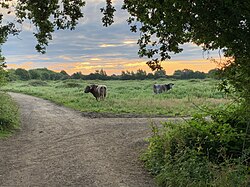
Longhorn cattle at Knepp Wildland in 2019
Key Facts
- Goal: To restore natural processes and increase biodiversity by reducing human management.
- Mechanism: Reintroducing large mammals to act as ecosystem engineers.
- UN Support: The United Nations identifies rewilding as a key method for achieving massive-scale ecosystem restoration by 2030.
- Core Concept: Focuses on restoring ecological functions rather than just preserving specific historical landscapes.
The Role of Ecosystem Engineers and Keystone Species
A fundamental element of rewilding is the reintroduction of ecosystem engineers. These are species that significantly shape the structure and composition of their habitats. Large mammals, in particular, influence ecosystems by altering biogeochemical pathways and creating physical changes in the landscape.
Keystone species—organisms that have a disproportionately large effect on their environment relative to their abundance—play a vital role in this process. This includes predators, which help regulate prey populations and maintain the balance of the entire food web through a process known as a trophic cascade.
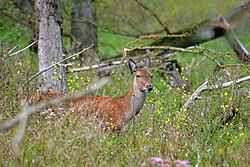
A red deer at the Oostvaardersplassen nature reserve, a rewilding site in the Netherlands
Types of Rewilding Approaches
Rewilding is not a one-size-fits-all strategy; it manifests in several distinct ways depending on the environment and goals:
- Passive Rewilding: Allowing nature to take its course with minimal human interference.
- Active Rewilding: Deliberate interventions, such as the reintroduction of specific species, to jumpstart ecological processes.
- Trophic Rewilding: Specifically focusing on restoring trophic networks by introducing key animals.
- Pleistocene Rewilding: A concept involving the reintroduction of large animals to mimic the ecosystems of the Pleistocene epoch.
- Urban Rewilding: Integrating natural processes into city environments to create green spaces.
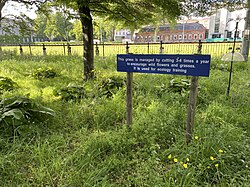
Urban green space at Trinity College Dublin that has been left to overgrow intentionally.
Global Rewilding Initiatives
Rewilding projects are occurring across the globe, from vast wilderness corridors to small urban patches. These initiatives are often grounded in socio-ecological theory and conservation biology to ensure they are effective and sustainable.
North America and South America
In North America, large-scale efforts like the Yellowstone to Yukon initiative focus on connectivity. In South America, corridors such as the Paseo Pantera in Central America aim to link habitats across borders.

A wildlife crossing structure on the Trans-Canada Highway in Banff National Park, Canada. Wildlife-friendly overpasses and underpasses have helped restore connectivity in the landscape for wolves, bears, elk, and other species.
Europe and Africa
Europe features significant projects like the European Green Belt, which follows the former Iron Curtain. In the UK, sites like Knepp Wildland have demonstrated remarkable success in species recovery.
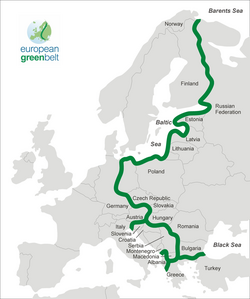
Map of the European Green Belt
In Africa, rewilding is often integrated into large-scale conservation landscapes, such as those found in Namibia, where managing predator-prey dynamics is essential for ecosystem health.
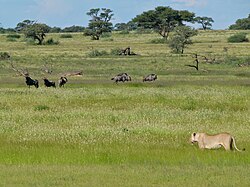
Lioness in Kgalagadi Transfrontier Park
Notable successes in Europe include the return of species to areas where they had long been absent. For example, at Knepp, white storks were observed raising chicks for the first time in Britain in 600 years.
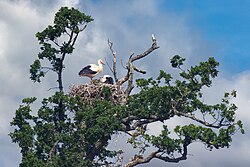
Stork nest at Knepp Wildland. In 2020, white stork were observed raising chicks here for the first time in Britain in 600 years.
In the Netherlands, the Oostvaardersplassen reserve utilizes species like Konik ponies to manage vegetation and maintain open landscapes.
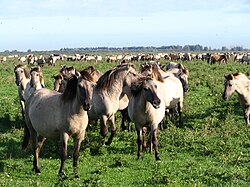
Konik ponies in the Oostvaardersplassen reserve
Summary of Rewilding Concepts
| Concept | Description | Primary Goal |
|---|---|---|
| Trophic Rewilding | Restoring food web interactions | Functional ecosystem balance |
| Ecosystem Engineers | Species that physically alter habitats | Habitat structural diversity |
| Passive Rewilding | Minimal human management | Natural succession |
| Urban Rewilding | Nature in human-dominated areas | Biodiversity in cities |
Frequently Asked Questions
How does rewilding differ from traditional conservation?
Traditional conservation often seeks to preserve a specific historical state of an ecosystem through active management. Rewilding, however, focuses on restoring the natural processes that allow an ecosystem to manage itself, often embracing new or changing ecological conditions.
What are the main criticisms of rewilding?
Rewilding can be controversial due to potential conflicts with economic activities like farming, concerns regarding animal welfare, and human-wildlife conflicts. Some critics also worry about the erasure of environmental history or the potential for harm to existing conservation efforts.
Can rewilding help with climate change?
Yes, the United Nations has highlighted rewilding as a method to achieve large-scale ecosystem restoration, which is a critical component of addressing climate change and meeting global biodiversity targets.
What is an ecosystem engineer?
An ecosystem engineer is a species that creates, significantly modifies, or maintains a habitat. By changing the physical environment, they create new niches for other species, thereby increasing overall biodiversity.
Is rewilding only for large wilderness areas?
No. While much of the focus is on large landscapes, urban rewilding is an important sub-field that brings natural processes and biodiversity into cities and human-dominated environments.