Monotypic Taxa: The Biological Significance of Lone Species
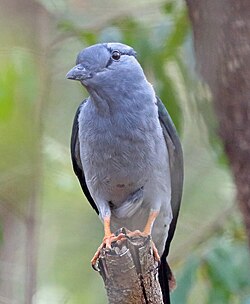
In the vast and complex web of life, most organisms belong to large, diverse groups. However, there is a fascinating exception in biological classification: the monotypic taxon. A monotypic taxon is a taxonomic group—such as a genus or family—that contains only one immediately subordinate living taxon. For example, a genus is considered monotypic if it contains only a single species.
While the term is used across various branches of biology, it carries specific nuances. In botany, a monotypic genus may be described simultaneously with its single species. In other contexts, a species might be described as monotypic if it is the only extant (living) member of its genus. These unique biological entities offer profound insights into evolution, classification theory, and conservation needs.
Key Facts
- A monotypic taxon contains only one immediately subordinate living taxon.
- Monotypic genera are often more vulnerable to extinction than average species.
- Approximately 6.56% of monotypic amphibian genera are critically endangered.
- Many monotypic taxa exist due to scientific uncertainty regarding their evolutionary relationships.
- Island species are disproportionately represented among monotypic genus extinctions.
Theoretical Challenges in Classification
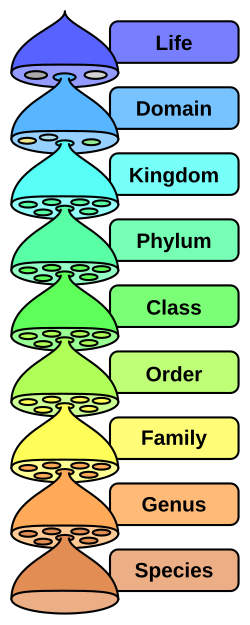
The existence of monotypic taxa introduces significant hurdles for taxonomists attempting to organize biological diversity. One such challenge is Gregg's Paradox. This occurs when a single species is the sole member of multiple hierarchical levels—for instance, being the only species in its genus, which is also the only genus in its family. To maintain a logical structure, each taxonomic rank must have a distinct definition; otherwise, the different levels become effectively identical.
Cladistics and Evolutionary Uncertainty
From a cladistic perspective—a method of classification based on shared derived characteristics—monotypic taxa are complex. Some scientists argue that monotypic groups should only be recognized when relationships cannot be resolved through synapomorphies (shared derived traits). If they are not properly placed, they risk being paraphyletic, meaning they exclude some descendants of a common ancestor.
Often, a taxon is labeled monotypic not because it is evolutionarily isolated, but because of aphyly—a state where evolutionary relationships are poorly supported by current evidence. For example, the diatom Licmophora juergensii is placed in a monotypic genus simply because scientists have yet to find clear evidence of its relationship to other species.
Conservation and Extinction Risks
Monotypic taxa are not just theoretical curiosities; they are critical focal points for conservation. Research indicates that species within monotypic genera face a higher risk of extinction compared to others. This trend is particularly visible in amphibians, where 6.56% of monotypic genera are classified as critically endangered, compared to 4.54% for birds and 4.02% for mammals.
Geography plays a major role in this vulnerability. Out of 25 documented extinctions of monotypic genera, 22 occurred on islands. Flightless birds, in particular, have shown high vulnerability to human-driven environmental changes in these isolated habitats.
Notable Examples of Monotypic Groups
Monotypic groups appear across all domains of life, from ancient plants to modern mammals. Below is a summary of several prominent examples:
| Group Type | Taxon Name | Description |
|---|---|---|
| Plant | Ginkgo biloba | The sole species in the genus Ginkgo and family Ginkgoaceae. |
| Plant | Amborella trichopoda | The only species in the genus Amborella and family Amborellaceae. |
| Animal | Platypus | The only member of the genus Ornithorhynchus and family Ornithorhynchidae. |
| Animal | Aardvark | The sole member of the genus Orycteropus and order Tubulidentata. |
| Animal | Beluga Whale | The only member of the genus Delphinapterus. |
| Animal | Human (*Homo sapiens*) | Monotypic due to a lack of accepted living subspecies. |
Plants and Microorganisms
In the plant kingdom, the division Ginkgophyta is entirely monotypic, containing only the class Ginkgoopsida, which in turn contains only the order Ginkgoales. Other notable examples include the Albany pitcher plant (Cephalotus follicularis), which is the sole member of the genus Cephalotus and family Cephalotaceae. In the microbial world, the division Picozoa contains only the single known species Picomonas judraskeda.
Animals and Mammals
The animal kingdom features many iconic monotypic members. The monito del monte is the only extant member of the order Microbiotheria, while the platypus stands alone in its genus and family. Even humans (*Homo sapiens*) are considered monotypic because there is insufficient genetic diversity to support recognized living subspecies. Other examples include the narwhal (Monodon), the maned wolf (Chrysocyon), and the orca (Orcinus).
Frequently Asked Questions
What is the difference between monotypic and monospecific?
While often used interchangeably, some taxonomists, such as Robert Lücking, suggest more precise terms. "Monospecific" is often preferred when referring specifically to a genus that contains only one species, whereas "monotypic" is a broader term for any taxon containing only one subordinate unit.
Why are monotypic species more at risk of extinction?
Monotypic species often represent unique evolutionary lineages. Because they lack close relatives, their extinction results in the loss of an entire genus or family, representing a significant reduction in biological diversity. This is especially true for island-dwelling species.
Does being monotypic mean a species is an evolutionary loner?
Not necessarily. Often, a taxon is classified as monotypic because scientists lack sufficient data to determine its relationships to other groups (a state known as aphyly), rather than because it has no evolutionary relatives.
Can a species be monotypic if it has subspecies?
Strictly speaking, no. If a species has recognized subspecies, such as the short-beaked echidna or the bearded reedling, the species itself is not considered strictly monotypic.
What is Gregg's Paradox?
Gregg's Paradox refers to the logical difficulty in biological classification when a single species occupies multiple hierarchical ranks alone. Without distinct definitions for each rank, the hierarchy loses its ability to organize diversity effectively.