Roca–Runciman Treaty: The Economic Pact Between Argentina and Britain
The Roca–Runciman Treaty was a pivotal commercial agreement signed on May 1, 1933, in London. This pact was forged during a period of global economic instability, aiming to stabilize the trade relationship between Argentina and the United Kingdom, which served as Argentina's primary economic partner throughout the 1920s and 1930s.
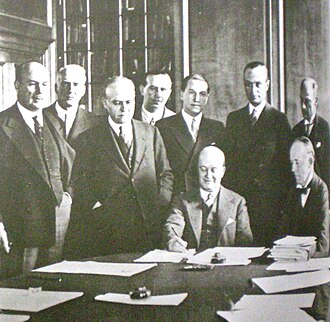
The treaty was signed by the Vice President of Argentina, Julio Argentino Roca, Jr., and Sir Walter Runciman, the president of the British Board of Trade.
The Road to the Agreement
The origins of the treaty lie in the aftermath of the 1929 Wall Street crash and "Black Tuesday." As the Great Depression gripped the world, the United Kingdom sought to protect its meat supply markets within the Commonwealth. During the Imperial Preference negotiations in Ottawa—a system designed to give preferential trade tariffs to members of the British Empire—Britain faced significant pressure from Australia and South Africa.
In response, Britain decided to severely curtail imports of Argentine beef, proposing monthly cuts of 5% during the first year. This decision sparked an immediate outcry in Buenos Aires, prompting the Argentine government to send Vice-President Roca and a team of negotiators to London to secure the nation's economic interests.
Key Facts
- Signed: May 1, 1933, in London.
- Primary Goal: To secure Argentine beef export quotas in the UK market.
- Beef Quota: Guaranteed no less than 390,000 metric tonnes of refrigerated beef.
- Trade Concessions: Argentina reduced tariffs on nearly 350 British goods.
- Coal Monopoly: Argentina vowed to purchase coal exclusively from Britain.
- Successor: Renewed in 1936 as the Eden-Malbrán Treaty.
Terms and Conditions of the Treaty
The resulting agreement, ratified by the Argentine Senate as Law #11,693, established a complex set of mutual obligations. While it saved the beef industry from total collapse, the terms were heavily weighted in favor of British interests.
Beef Export and Market Control
The treaty ensured that beef export quotas remained equivalent to the levels sold in 1932, which was the lowest point of the Great Depression. However, this came with a strict condition: 85% of these exports had to be handled through foreign meat packers. Argentine meat packers were permitted a maximum participation of only 15%.
Concessions to British Industry
Argentina provided several significant advantages to British companies to maintain the trade flow:
- Tariff Reductions: Argentina reduced tariffs on approximately 350 British goods to 1930 levels.
- Coal Imports: Imports of coal and other specific British goods remained free of duties, with Argentina pledging to buy coal only from Britain.
- Infrastructure and Labor: Argentina agreed not to reduce fees paid to British railways and granted exemptions from certain labor legislation, including the funding of pension programs.
- Corporate Treatment: The government promised "benevolent treatment" to ensure the economic development and protection of British company interests.
Financial Arrangements
To manage currency controls (restrictions on sending money abroad), the treaty allowed Britain to recover payments for purchases in Argentina by deducting a percentage from the payments Argentina owed on its foreign debt.
Economic Impact and Political Aftermath
The treaty lasted three years before being renewed as the Eden-Malbrán Treaty of 1936, which provided further concessions to Britain in exchange for lower wheat freight rates.
Despite stabilizing trade, the pact triggered intense political conflict within Argentina. Senator Lisandro de la Torre led denunciations against the agreement, arguing that Britain received far more benefits than Argentina. While Argentina secured a promise to buy beef at Depression-era levels, it surrendered significant tariff autonomy and industrial control.
The following table illustrates the trade volume between the two nations during this era:
| Year | Argentine Imports | Argentine Exports |
|---|---|---|
| 1927 | 19.4 | 28.2 |
| 1930 | 19.8 | 36.5 |
| 1933 | 23.4 | 36.6 |
| 1936 | 23.6 | 35.0 |
| 1939 | 22.2 | 35.9 |
Frequently Asked Questions
What was the primary purpose of the Roca–Runciman Treaty?
The primary purpose was to secure a guaranteed quota for Argentine beef exports to the United Kingdom after Britain attempted to curtail imports to favor Commonwealth nations.
Who were the main signatories of the agreement?
The treaty was signed by Julio Argentino Roca, Jr., the Vice President of Argentina, and Sir Walter Runciman, the president of the British Board of Trade.
Why was the treaty controversial in Argentina?
It was controversial because critics, such as Senator Lisandro de la Torre, argued that Argentina made excessive concessions—such as reducing tariffs on 350 goods and granting labor exemptions—in exchange for beef quotas that were only at the low levels of the Great Depression.
What happened to the treaty after its initial three-year term?
The agreement was renewed in 1936 as the Eden-Malbrán Treaty, which included additional concessions to Britain in exchange for lower freight rates on wheat.
How did the treaty affect the Argentine meat packing industry?
The treaty disadvantaged local producers by requiring that 85% of beef exports be handled by foreign meat packers, limiting Argentine packers to just 15% of the market.