Riograndense Republic: The Rise and Fall of the Piratini State
The Riograndense Republic, also widely known as the Piratini Republic, was a de facto independent state that seceded from the Empire of Brazil in the 19th century. Spanning the territory that roughly corresponds to the modern-day Brazilian state of Rio Grande do Sul, this republic emerged from the turmoil of the Ragamuffin War (1835–1845), a conflict driven by economic grievances and a desire for greater autonomy.
Proclaimed on September 11, 1836, the republic represented a bold attempt by the local gaúcho (southern plainsmen) oligarchies to break away from the centralized control of Rio de Janeiro. For nearly a decade, it operated with its own government, currency, and military, leaving a lasting cultural and symbolic imprint on the region.
Key Facts
- Duration: 1836–1845.
- Capital: Piratini (primary), with others including Alegrete, Caçapava do Sul, Bagé, and São Borja.
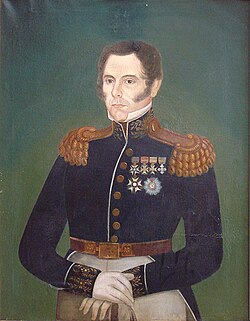
- Key Leaders: Bento Gonçalves (first President) and Gomes Jardim.
- International Recognition: Recognized by the United Kingdom, France, and Uruguay.
- End of State: Reincorporated into the Empire of Brazil via the Ponche Verde Treaty.
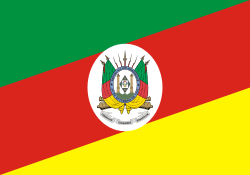
- Legacy: The current flag of Rio Grande do Sul is derived from the republic's colors.
The Roots of Rebellion
The conflict began not with a desire for independence, but with economic frustration. The Province of São Pedro do Rio Grande do Sul relied heavily on the production of leather and jerky. However, the Imperial Government's overvalued exchange rates and tariff policies made imported beef cheaper than local products, crippling the profits of the estancieiros (large estate owners).
Led by figures such as Bento Gonçalves, these landowners formed armed militias to seize control of the provincial government, eventually escalating their demands from economic reform to full independence.
Proclamation and Governance
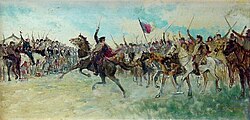
Following a victory at the Battle of Seival, General Antônio de Sousa Neto officially proclaimed the Riograndense Republic on September 11, 1836. In a passionate address to the 1st Cavalry Brigade, Neto denounced the "despotism" of the Rio de Janeiro court and declared the province a free and independent state.
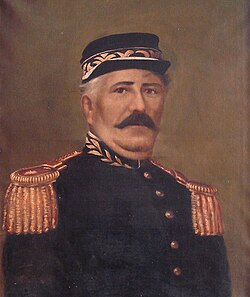
The new state was established as a constitutional presidential republic. While Bento Gonçalves served as the first president, the government faced significant instability, moving its capital five times during its existence. A formal constitution was eventually adopted on February 8, 1843, in the town of Alegrete.
The Riograndense Military and the Navy
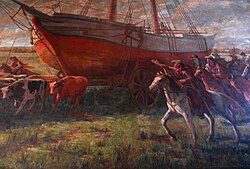
While the Imperial Brazilian Navy dominated the major waterways, the republic managed to build its own naval force. In 1838, the Italian revolutionary Giuseppe Garibaldi was appointed captain-lieutenant and commander of the Riograndense navy, utilizing "corso letters" to seize imperial ships.
On land, the republic utilized various formations, including the Lanceiros Negros (Black Lancers), a unit composed of freed and former slaves who fought for the republican cause.
![One of the "Lanceiros Negros [pt]" ("Black Lancers"), a formation of former and freed slaves, which served the Riograndense Republic as lancers.[7]](/images/71/c8/71c80f92ff190d305ce0f46961a42a7a166d5ba697155dfb58965a7d5400db86.png)
Expansion and the Juliana Republic
At the height of its military success in 1839, the Riograndense forces, led by Garibaldi and David Canabarro, captured the city of Laguna in the Province of Santa Catarina. This led to the proclamation of the Juliana Republic on July 29, 1839, which existed in a confederation with the Riograndense Republic.

This expansion was short-lived. By November 1839, the Empire of Brazil launched a powerful counter-offensive, retaking Laguna and effectively erasing the Juliana Republic from the map.
The Path to Dissolution
After 1840, the tide turned against the rebels. Imperial forces seized key cities, pushing the republicans into the interior. Internal disputes grew, and Bento Gonçalves began exploring peace negotiations with the Empire, sometimes in secret, which caused friction within the republican leadership.
The final obstacle to peace was the status of the slaves freed by the Republic to serve in its army. The Empire was reluctant to recognize freedom granted by a seditious state. However, after years of attrition, the Ponche Verde Treaty was signed on March 1, 1845.
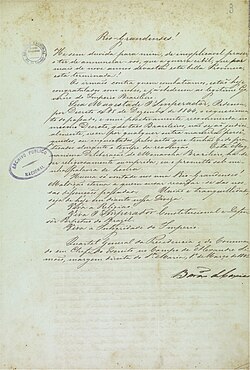
The treaty provided complete amnesty to the rebels and the liberation of slaves who had fought in the Republican Army. With this agreement, the Riograndense Republic was reincorporated into the Empire of Brazil.
Summary of the Riograndense Republic
| Feature | Details |
|---|---|
| Motto | Liberdade, Igualdade, Humanidade (Liberty, Equality, Humanity) |
| Government Type | Presidential Republic |
| Presidents | Bento Gonçalves (1836–1841), Gomes Jardim (1841–1845) |
| Currency | Brazilian Real |
| Key Treaty | Ponche Verde Treaty (1845) |
| Recognition | UK, France, Uruguay |
Symbolism and Legacy
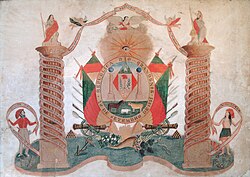
The legacy of the republic survives today in the civic symbols of the state of Rio Grande do Sul. The state flag retains the green, yellow, and red colors of the Riograndense Republic, with the republican coat of arms placed at its center.
Frequently Asked Questions
Why did the Riograndense Republic secede from Brazil?
The secession was primarily driven by economic grievances. Local cattle ranchers (estancieiros) were frustrated by high taxes and imperial trade policies that made imported beef cheaper than locally produced jerky and leather.
Who was Giuseppe Garibaldi's role in the republic?
Garibaldi, an Italian revolutionary, served as the commander of the Riograndense navy. He led the naval campaign that captured Laguna and helped establish the short-lived Juliana Republic.
What happened to the slaves who fought for the Republic?
Under the terms of the Ponche Verde Treaty of 1845, the slaves who served in the Republican Army were granted their freedom, although the full implementation of this clause remains a subject of historical debate.
What was the Juliana Republic?
The Juliana Republic was a short-lived independent state proclaimed in Laguna, Santa Catarina, in 1839. It existed as a confederation with the Riograndense Republic until it was reconquered by the Empire of Brazil later that year.
How is the republic remembered today?
It is remembered as a significant regionalist movement. Its influence is most visible in the current flag and coat of arms of the state of Rio Grande do Sul.