Ragamuffin War: The Republican Struggle in Southern Brazil
The Ragamuffin War (Portuguese: Guerra dos Farrapos), also known as the Ragamuffin Revolution or the Heroic Decade, was a significant republican uprising that shook the foundations of the Brazilian Empire. Spanning nearly a decade from 1835 to 1845, this conflict was centered in the province of Rio Grande do Sul and eventually expanded into Santa Catarina. It represented a clash between regional autonomy and the centralized authority of the Imperial government during a period of intense political instability known as the regency period.
The conflict was driven by a combination of economic grievances and political aspirations. Local producers in Rio Grande do Sul, whose economy relied heavily on livestock and charque (jerked beef), felt marginalized by the Empire. They faced high export taxes and customs duties on salt, while competing beef from Uruguay and Argentina enjoyed more favorable tax treatment in Brazilian markets. This economic pressure, coupled with a desire for greater provincial autonomy, ignited a fire of rebellion among the regional elite.
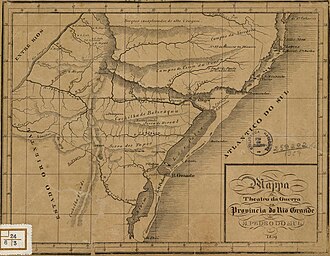
Key Facts
- Duration: September 20, 1835 – March 1, 1845.
- Primary Locations: Rio Grande do Sul and Santa Catarina.
- Main Belligerents: The Piratini (Riograndense) and Juliana Republics vs. the Empire of Brazil.
- Key Leaders: Bento Gonçalves, Giuseppe Garibaldi, and the Baron of Caxias.
- Outcome: Imperial victory, though achieved through a negotiated peace treaty with significant concessions.
- Defining Treaty: The Treaty of Ponche Verde (1845).
The Outbreak of Revolution
The spark for the uprising occurred on September 20, 1835, when General Bento Gonçalves captured Porto Alegre. The rebels were dubbed "ragamuffins" (farrapos) due to the fringed leather clothing worn by the gaúchos (South American cowboys). The movement was further fueled by the influence of Southern Freemasonry, which promoted republican ideals among the leadership.
Following a victory at the Battle of Seival in 1836, the rebels moved toward formal secession. On September 11, 1836, Antônio de Souza Neto proclaimed the independence of the Riograndense Republic (also known as the Republic of Piratini). Although the Empire recaptured Porto Alegre in June 1836, the rebels maintained control over much of the interior, operating from shifting capitals such as Piratini.
Expansion and International Influence
The war was not merely a local affair; it became entangled with the volatile politics of the Río de la Plata region. The rebels sought alliances with Argentine and Uruguayan caudillos (regional military-political leaders). A pivotal moment occurred in 1839 when the Italian revolutionary Giuseppe Garibaldi joined the cause. Alongside his wife, Anita Garibaldi, he led the rebellion into Santa Catarina, capturing the city of Laguna and proclaiming the short-lived Juliana Republic.
Garibaldi's experience in the Ragamuffin War served as a foundational military training ground, contributing to his later fame as a leader in the Unification of Italy. The rebels also received financial and indirect military support from the Uruguayan government under José Fructuoso Rivera, who envisioned a political union between the two regions.
The Role of Minorities and the Black Lancers
Afro-Brazilians played a critical role in the conflict, estimated to make up between one-third and one-half of the republican army. They served as soldiers, drovers, and messengers, and were essential in the production of gunpowder and cultivation of tobacco.
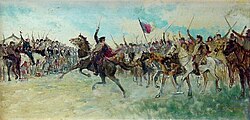
To bolster their ranks, some rebel leaders promised freedom to enslaved men who enlisted. This led to the formation of the Black Lancers (Lanceiros Negros), a unit of former and freed slaves. However, the movement's commitment to abolition was inconsistent; the 1843 republican constitution preserved slavery, and many leaders, including Bento Gonçalves, were slaveholders. The Black Lancers met a tragic end in 1844 during the Porongos Massacre, where they were annihilated in a surprise attack.
![A painting of the "Lanceiros Negros [pt]" ("Black Lancers"), a formation of former and freed slaves which served the Riograndense Republic as lancers](/images/71/c8/71c80f92ff190d305ce0f46961a42a7a166d5ba697155dfb58965a7d5400db86.png)
The Path to Peace: Treaty of Ponche Verde
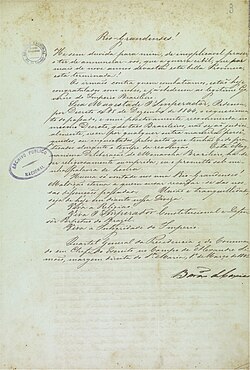
By the early 1840s, the Empire had strengthened its military capabilities through reforms and mass civilian recruitment. General Lima e Silva took command of the Imperial forces and shifted toward a strategy of negotiation. On March 1, 1845, the conflict concluded with the signing of the Treaty of Ponche Verde in Dom Pedrito.
The treaty was remarkably lenient, offering the rebels full amnesty and the opportunity to be incorporated into the Imperial army. The Empire also agreed to pay off the debts of the Riograndense Republic and implemented a 25% tariff on imported jerked beef to protect local producers. This compromise effectively reintegrated Rio Grande do Sul and Santa Catarina into the Empire of Brazil.
| Feature | Details |
|---|---|
| Dates | 1835 – 1845 |
| Belligerents | Piratini & Juliana Republics vs. Empire of Brazil |
| Key Figures | Bento Gonçalves, Giuseppe Garibaldi, Lima e Silva |
| Primary Cause | High taxes on jerked beef and desire for autonomy |
| Casualties | Approximately 3,000 killed |
| Final Agreement | Treaty of Ponche Verde |
Frequently Asked Questions
Why was the war called the "Ragamuffin War"?
The term comes from the Portuguese word farrapos (ragamuffins), referring to the fringed leather clothing worn by the gaúchos who fought in the rebellion.
Did the Ragamuffin War lead to the abolition of slavery?
No. While some enslaved people were promised freedom in exchange for military service, the rebels did not demand general abolition, and the 1843 republican constitution explicitly preserved slavery.
Who was Giuseppe Garibaldi in the context of this war?
Garibaldi was an Italian revolutionary who joined the rebels in 1836. He led the expansion of the war into Santa Catarina and the proclamation of the Juliana Republic, gaining vital guerrilla warfare experience.
What were the main economic causes of the conflict?
The primary cause was the unfair taxation of local jerked beef (charque) and high import duties on salt, which made local products less competitive than those from Uruguay and Argentina.
How did the war eventually end?
The war ended with the Treaty of Ponche Verde in 1845, which granted amnesty to the rebels, incorporated them into the Imperial army, and provided economic concessions regarding beef tariffs.