Retiro Mitre Railway Station
Located in the heart of the Retiro neighborhood in Buenos Aires, Argentina, Retiro Mitre is one of the city's six major mainline railway termini. As a critical transportation hub, it serves as the terminal for the Mitre Line, providing essential commuter rail services to the northern suburbs of the metropolitan area, and functions as a primary terminal for the national General Mitre Railway.
The station is a central node for urban mobility, offering seamless connections to the Buenos Aires Metro (Subte) via Line C and Line E, with a future extension of Line H planned. Additionally, it is situated near the Terminal de Omnibus, the city's principal long-distance bus station, and provides links to the Retiro Belgrano and Retiro San Martín stations.
Key Facts
- Location: Av. Ramos Mejía 1358, Buenos Aires, Argentina.
- Opened: August 1, 1915.
- Status: Designated as a National Historic Monument of Argentina in 2006.
- Architecture: Edwardian style with a steel structure manufactured in Liverpool, England.
- Capacity: 8 platforms.
- Current Operator: Trenes Argentinos.
Architectural Heritage and History
The station's striking Edwardian-style building was the result of a collaboration between British architects Eustace L. Conder, Roger Conder, and Sydney G. Follet, alongside engineer Reginald Reynolds. Construction began in June 1909, and the facility officially opened on August 1, 1915, under the operation of the Central Argentine Railway.
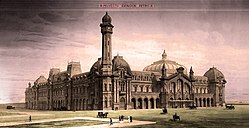
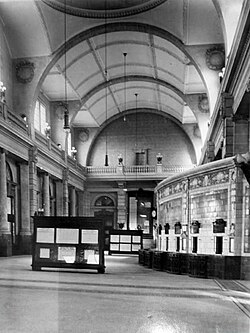
A marvel of early 20th-century engineering, the station's steel structure was prefabricated in Liverpool, England, and shipped to Argentina for assembly. For many years, it was regarded as one of the finest buildings in the world and a premier example of structural engineering in South America. The train shed, supplied by the Butterley Company, bears a close resemblance to the iconic St Pancras station in London.
Evolution of Ownership
Following the nationalization of railways in Argentina, the station became part of the Bartolomé Mitre Railway under the state-owned Ferrocarriles Argentinos. During this era, it hosted prestigious long-distance services, most notably the Estrella del Norte, which traveled to Tucumán.
The early 1990s brought privatization, leading to a period where various private entities managed the station. Commuter services were handled by Trenes de Buenos Aires (TBA), while long-distance journeys to Tucumán, Rosario, and Santiago del Estero were managed by Tucumán Ferrocarriles. Other operators during this transition included Ferrocentral and Corredores Ferroviarios.
Modern Services and Expansion
Today, the state-owned Trenes Argentinos manages all operations. Commuter rail services are divided into three branches serving Tigre, Bartolomé Mitre, and José León Suárez. The company also maintains long-distance routes connecting the capital to the cities of Rosario and Tucumán.
To modernize the facility, plans announced in 2015 include the addition of new platforms specifically for long-distance services operated by Operadora Ferroviaria Sociedad del Estado. This expansion involves creating new road access from Libertador Avenue, utilizing land previously reserved for rolling stock storage. Ongoing efforts also include the restoration of the historic train shed and general building renovations.
Cultural Significance
Beyond its utility, Retiro Mitre is a cultural landmark. Its grand architecture has made it a popular filming location for major motion pictures, including Evita and The Secret in Their Eyes, and it frequently appears as a setting in various novels.
Station Summary
| Feature | Details |
|---|---|
| Coordinates | 34°35′29″S 58°22′29″W |
| System Type | Terminal Station |
| Ownership | Government of Argentina |
| Fare Zone | Retiro, Buenos Aires |
| Historic Designation | National Historic Monument (2006) |
Historic Operators Timeline
- Central Argentine Railway (1915–1948)
- Ferrocarriles Argentinos (1948–1991)
- FEMESA (1991–1994) - Temporary operator prior to privatization.
- TBA (1995–2012)
- Ferrocentral (2005–2014) - Long-distance services to northern provinces.
- UGOMS (2012–2014) - Temporary operator.
- Corredores Ferroviarios (2014–2015)
- Trenes Argentinos (2015–Present)
Frequently Asked Questions
When did Retiro Mitre station open?
The station officially opened on August 1, 1915, after construction that began in June 1909.
Who designed the station building?
The building was designed by British architects Eustace L. Conder, Roger Conder, and Sydney G. Follet, in collaboration with engineer Reginald Reynolds.
Is Retiro Mitre a protected landmark?
Yes, it was declared a National Historic Monument of Argentina in 2006 (following an earlier declaration in 1997).
Which metro lines provide access to the station?
The station is currently accessible via Line C and Line E of the Buenos Aires Metro, with Line H expected to provide access upon completion of its extension.
What long-distance destinations are served from this station?
The station provides long-distance rail services to the cities of Rosario and Tucumán.