Central Argentine Railway: The British-Built Backbone of Argentine Transport
The Central Argentine Railway (Spanish: Ferrocarril Central Argentino) was a cornerstone of Argentina's industrial development. As one of the "Big Four" British-owned broad gauge companies, it played a pivotal role in connecting the fertile agricultural heartlands of the interior with the bustling ports of the coast, facilitating a massive surge in international trade during the 19th and early 20th centuries.
Operating on a 1,676 mm (5 ft 6 in) broad gauge, the network expanded from its initial focus on the provinces of Santa Fe and Córdoba to reach as far as Tucumán and Santiago del Estero, fundamentally altering the geography of Argentine commerce.
Key Facts
- Founded: 1863 by William Wheelwright.
- Gauge: 1,676 mm (5 ft 6 in) broad gauge.
- Primary Route: Originally connected Rosario to Córdoba.
- Innovation: Launched South America's first electrified railway (Retiro-Tigre line) in 1916.
- Fate: Nationalized in 1948 by the Juan Perón administration, becoming part of the F.C. Mitre.
- Legacy: The founders of the Rosario Central football club were employees of the railway.
Origins and Early Construction
The vision for the railway began in 1854 when American engineer Allan Campbell proposed a study for a line between Rosario and Córdoba. His report estimated the distance at 247 miles (approximately 398 km) and projected a construction cost of 4,000 sterling per mile.
By 1855, permission was granted to begin work, with financing and support provided by American entrepreneur William Wheelwright. In 1863, the Argentine government granted Wheelwright's company a formal concession to build and operate the line, which included a mandate to populate the lands surrounding the tracks.
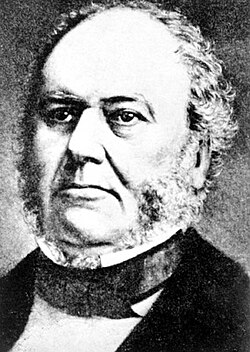
Construction commenced in 1863 at the Rosario Central station. While the line reached Villa María, Córdoba, by 1867, progress slowed due to disputes over land grants and poor service conditions. Following a government disbursement of $1,500,000 in September 1867, the railway finally reached Córdoba in 1870. At the time, it was the longest railway system in the country and the first to link two different provinces.
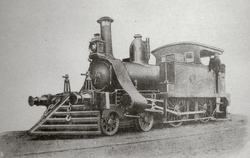
Expansion and Economic Impact
The Central Argentine Railway was more than a transport provider; it was an engine of colonization. The company supported the creation of agricultural colonies—settlements where immigrants farmed the land—in areas such as Bernstadt, Cañada de Gomez, and Carcañal. This infrastructure allowed Argentina to export vast quantities of wheat and other agricultural products to Great Britain by the late 1880s.
Throughout the late 19th and early 20th centuries, the company expanded its footprint through strategic acquisitions and mergers:
- 1888: Acquired the Buenos Aires Northern railway.
- 1900: Absorbed the Santa Fe Western Railway (SFWR), integrating services from the southwest of Santa Fe and south Córdoba.
- 1908: Merged with the Buenos Aires and Rosario Railway, optimizing passenger services between Rosario Central (short/mid-distance) and Rosario Norte (long-distance/express).
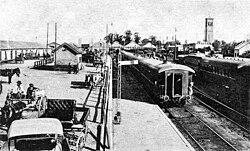
Technological Milestones and Luxury Travel
The company was a pioneer in rail technology. In 1916, the Retiro-Tigre line became the first electrified railway in South America, utilizing British Thomson-Houston (BTH) multiple units.
The railway also introduced high-speed and long-distance luxury services. El Rápido, launched in 1910, was Argentina's first express train, reaching Rosario in roughly five hours. Later, El Panamericano (1929) connected passengers to the Bolivian border via Tucumán, and the Estrella del Norte became a legendary service linking Buenos Aires and Tucumán using W G Armstrong Whitworth & Co PS11 locomotives.
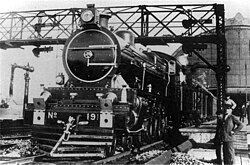
Operational Scale and Nationalization
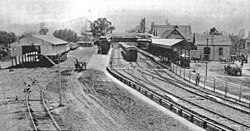
By the mid-1930s, the railway was a massive operation. Between 1935 and 1940, Rosario Central station alone handled 70 daily services and an average of 438,000 annual passengers. By 1936, the company's fleet included 520 locomotives, 976 coaches, and over 20,000 goods wagons.
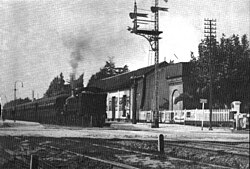
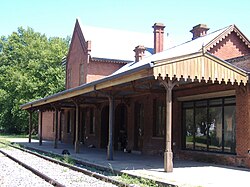
This era of private British ownership ended in 1948. Under the administration of President Juan Perón, the Central Argentine Railway was nationalized. It was integrated into the state-owned Ferrocarril General Bartolomé Mitre, leading to a reconfiguration of the network and the closure of numerous smaller stations.
Labor and Political Struggles
The company's history was marked by social tension. During World War I, employees initially showed patriotic support for the British owners. However, by 1917, economic pressures and unfair dismissals—including those based on German heritage—led to the first major railway strike in Argentina in Rosario. These protests continued until 1922.
Politically, the 1920s were defined by a struggle over rate-setting. The government of Hipólito Yrigoyen attempted to regulate railroad rates to protect consumers, while the company fought to raise them to recover post-war financial losses. Through a combination of legal battles and personal diplomacy between CA officials and Yrigoyen, the company eventually secured the right to collect higher rates.
Cultural Legacy: The Birth of Rosario Central
The railway's influence extended into sports. In the late 1880s, employees began playing football on vacant lands near Alberdi Avenue. In December 1889, they formally established the "Central Argentine Railway Athletic Club." In 1903, the club was renamed Rosario Central, evolving into one of the most famous football clubs in Argentina.
| Former Company | Provinces Covered | Year Acquired |
|---|---|---|
| BA Northern | Buenos Aires | 1888 |
| Santa Fe Western | Santa Fe | 1900 |
| BA & Rosario | Buenos Aires, Santa Fe, Córdoba, Sgo. del Estero, Tucumán | 1908 |
Frequently Asked Questions
Who founded the Central Argentine Railway?
The railway was financed and supported by American entrepreneur William Wheelwright and officially granted a concession by the Argentine government in 1863.
What was the first electrified railway in South America?
The Retiro-Tigre line, operated by the Central Argentine Railway, became the first electrified railway system in South America in 1916.
How did the railway contribute to Argentina's economy?
It facilitated the creation of agricultural colonies and provided the transport infrastructure necessary to export large quantities of wheat and other produce to Great Britain.
What happened to the railway in 1948?
The railway was nationalized by the government of Juan Perón and became part of the state-owned Ferrocarril General Bartolomé Mitre.
What is the connection between the railway and Rosario Central football club?
The football club was originally founded in 1889 as the Central Argentine Railway Athletic Club, and its initial membership was restricted to employees of the railway.