Research Methodology: Principles, Practices, and Global Trends
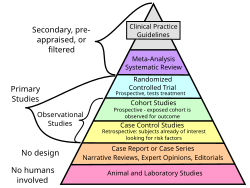
Research is the creative and systematic pursuit of knowledge. At its core, it is the process of collecting, organizing, and analyzing evidence to deepen our understanding of a specific topic. To ensure accuracy, research is defined by a rigorous attentiveness to controlling sources of error and bias. Whether expanding upon previous discoveries or replicating prior experiments to test validity, research serves as the engine for human intellectual advancement.
Depending on the goal, research is often categorized into two primary types: basic research, which focuses on documentation, discovery, and the advancement of theoretical knowledge, and applied research, which seeks practical solutions to specific problems. The approach a researcher takes is guided by their epistemology—the philosophical study of knowledge—which varies significantly between the sciences and the humanities.
![Aristotle, (384–322 BC), an Ancient Greek philosopher and pioneer in developing the scientific method[3]](/images/23/d7/23d7898230f1e24c76962ab84d2aaf57f4dab0b11d0c4a86b932da4272fddc01.jpg)
Key Facts

- Purpose: Research aims to increase the stock of human knowledge through systematic evidence analysis.
- Diversity: Forms of research include scientific, humanities, artistic, economic, social, business, and technological.
- Meta-research: The scientific study of how research itself is practiced.
- Ethics: Modern research is governed by international codes like the Nuremberg Code and the Belmont Report to prevent human rights violations.
- Global Investment: Research expenditure is often measured as a share of a country's GDP, divided into basic, applied, and development spending.
Forms of Research
Scientific Research
Scientific research follows a structured cycle of observation and verification. It typically involves the formulation of a hypothesis, rigorous testing, and the revision of that hypothesis based on results. This process concludes with a final conclusion or a reiteration of the cycle if the data remains inconclusive.

Research in the Humanities and Arts
Unlike the laboratory-based approach of the sciences, research in the humanities and arts often focuses on interpretation and historical context. Artistic research explores creative practices, while historical research relies on a specific set of evidentiary checks, including:
- Identification of the origin date.
- Evidence of localization.
- Recognition of authorship.
- Analysis of data and identification of integrity.
- Attribution of credibility.
Documentary Research
Documentary research involves the systematic review of existing records and documents to gather data, often serving as a foundation for secondary research.

The Research Process: Step-by-Step
While methodologies vary, most professional research projects follow a logical progression to ensure the findings are valid and reproducible.
- Problem Identification: Defining the specific research problem.
- Literature Review: Examining existing work to understand the current state of knowledge.
- Purpose and Questions: Specifying the research purpose and determining precise questions.
- Conceptual Framework: Establishing a framework, which may include a set of hypotheses.
- Methodology: Choosing the appropriate methods for data collection.
- Data Collection and Verification: Gathering and validating the evidence.
- Analysis: Interpreting the data to find patterns or answers.
- Reporting: Evaluating the research and communicating findings and recommendations.

Research Ethics and Integrity
The history of research includes grave violations of human rights, such as the Tuskegee syphilis experiment and Nazi human experimentation. These atrocities led to the creation of international ethical codes to protect participants. Key guiding documents include the 1947 Nuremberg Code, the 1964 Declaration of Helsinki, and the 1978 Belmont Report.
Beyond human rights, the research community faces systemic challenges known as biases. These include academic bias, funding bias (where financial interests influence results), and publication bias (the tendency to publish only positive results). The replication crisis occurs when scientific studies cannot be reproduced by other researchers, calling into question the validity of the original findings.
Global Research Statistics
Research capacity and investment vary widely across the globe. Some nations prioritize basic research, while others focus heavily on development and applied technology.
| Country | Researchers (per million inhabitants) | Basic Research (% GDP) | Applied Research (% GDP) | Development (% GDP) |
|---|---|---|---|---|
| South Korea | 7980 | 0.68 | 1.06 | 3.07 |
| United States | 4412 | 0.47 | 0.56 | 1.80 |
| Japan | 5331 | 0.41 | 0.62 | 2.10 |
| Germany | 5212 | 0.50 | 0.92 | 0.78 |
| China | 1307 | 0.12 | 0.24 | 1.82 |
| India | 253 | 0.10 | 0.15 | 0.13 |

Frequently Asked Questions
What is the difference between basic and applied research?
Basic research is driven by curiosity and the desire to expand fundamental knowledge without an immediate practical application. Applied research is designed to solve specific, practical problems or develop new technologies.
What is meta-research?
Meta-research, also known as metascience, is the scientific study of research practices themselves. It examines how research is conducted and seeks to improve the quality and reliability of scientific methods.
What is the replication crisis?
The replication crisis refers to a phenomenon where many scientific studies are found to be irreproducible when other researchers attempt to repeat the experiment using the same methods, suggesting issues with original data or methodology.
Why are ethical codes like the Nuremberg Code important?
These codes were established following historical crimes against humanity to ensure that research involving human subjects is conducted voluntarily, safely, and with full informed consent.
What are the common types of research bias?
Common biases include funding bias, where the source of money influences the outcome; publication bias, where only "successful" results are shared; and academic bias, which can stem from preconceived notions within a field of study.