Thesis and Dissertation: Academic Requirements and Global Variations
In the world of higher education, the culmination of years of study is often a single, comprehensive document: the thesis or dissertation. While these terms are frequently used interchangeably, they represent a formal submission of research and findings required to obtain an academic degree or professional qualification. Depending on where you are in the world, the meaning of these words can shift, reflecting different academic traditions and institutional standards.
At its core, this type of academic writing is designed to demonstrate a candidate's ability to conduct independent research, analyze data, and contribute new knowledge to their field. From the undergraduate level to the highest doctoral achievements, these documents serve as the primary evidence of a student's scholarly competence.
Key Facts
- Terminology: In American English, "thesis" usually refers to master's work and "dissertation" to doctoral work; in the UK and Commonwealth countries, this is often reversed.
- Purpose: To present original research and findings in support of a degree candidature.
- Structure: Typically includes an introduction, literature review, findings, and a conclusion.
- Standards: Many institutions follow specific house styles or international standards like ISO 7144 for presentation.
- Defense: Most advanced degrees require an oral defense, known as a viva voce in the UK and Ireland.
Etymology and Conceptual Origins
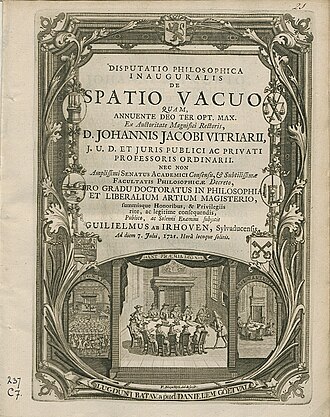
The concept of the thesis dates back to Aristotle, who viewed a thesis as a supposition stated in contradiction to general opinion or in disagreement with other philosophers. In this context, a supposition is a statement that may or may not be true depending on the evidence provided. Consequently, the purpose of the dissertation is to outline the proofs and arguments that justify why the author disagrees with established opinions.
Structure and Presentation Style
While requirements vary by program, most academic theses follow a logical progression to ensure the research is transparent and reproducible.
Standard Structure
- Introduction: Defines the research topic, methodology, scope, and the overall significance of the work.
- Literature Review: Examines existing research to show how previous work has informed the current research issue.
- Findings Chapter: The core of the document, outlining the actual results of the research.
- Conclusion: Presents the final judgment or decision reached based on the evidence.
Style and Standardization
Institutions typically enforce a "house style" for formatting. Beyond local rules, several international standards guide the presentation of academic work, including ISO 2145 for section numbering, ISO 690 for bibliographic references, and ISO 31 (or ISO 80000) for quantities and units.
Regional Practices and Terminology
The requirements for length and naming vary significantly across different countries and educational systems.
North America and the UK
In Canada, undergraduate work is typically called a paper or essay, while a 4-year bachelor's degree may require a "major paper." Master's and doctoral works are referred to as theses or dissertations. Page counts vary, but a 2021 study in Québec found that master's theses averaged 127.4 pages and PhD theses averaged 245.6 pages.
Europe
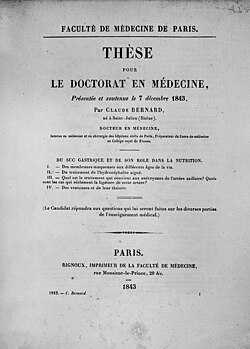
- France: The thèse is reserved for doctoral candidates, typically exceeding 100 pages. The oral defense is called a soutenance.
- Germany: Bachelor's theses are often 40–60 pages, while master's and diploma theses range from 60–100. Doctoral work is called a Dissertation or Doktorarbeit.
- Finland: The master's dissertation is known as pro gradu (or maisterintutkielma).
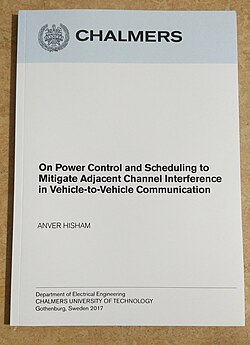
- Sweden: Theses are categorized by credit hours (HP), such as the C thesis (Bachelor), D thesis (one-year Master), and E thesis (two-year Master).
Other Global Variations
In Brazil and Portugal, a dissertação is required for a master's degree, while a tese is used for the PhD. In Pakistan, undergraduate work is often called a "final year project," which is generally less extensive than a full thesis. In Italy, thesis work is mandatory for all three levels of degree: Laurea, Laurea Magistrale, and Dottorato di Ricerca.
The Examination and Defense Process
The final stage of the degree process is the examination, which ensures the candidate truly understands their research and can defend its validity.
The Oral Defense
In North America, the oral defense involves a 20–40 minute presentation followed by one to two hours of questioning. In the UK, Ireland, and Hong Kong, this is called a viva voce (Latin for "by live voice"). A viva typically lasts about three hours and involves the candidate and two examiners—one internal and one external.
International Variations in Defense
In Spain, a tesis doctoral (averaging 250 pages) must be evaluated by two external academics and exhibited publicly for 15 days before a public defense before a three-member committee. In Portugal and Brazil, the defense is a public presentation open to teachers, students, and the general public.
Summary of Global Thesis Terminology
| Region/Country | Undergraduate/Bachelor | Master's Level | Doctoral Level |
|---|---|---|---|
| USA | Thesis (sometimes) | Thesis | Dissertation |
| UK / Commonwealth | Dissertation (sometimes) | Dissertation | Thesis |
| France | - | - | Thèse |
| Brazil / Portugal | TCC (Brazil) | Dissertação | Tese |
| Germany | Bachelorarbeit | Masterarbeit | Dissertation |
Frequently Asked Questions
What is the main difference between a thesis and a dissertation?
The difference is primarily regional. In the US, a thesis is typically for a master's degree and a dissertation is for a doctorate. In the UK and many Commonwealth countries, the terms are often reversed, with the dissertation being the shorter work and the thesis being the doctoral requirement.
What is a viva voce?
A viva voce, or "viva," is an oral examination common in the UK, Ireland, and Hong Kong. The candidate defends their research in a detailed discussion with internal and external examiners to prove the authenticity and quality of their work.
How long should a thesis or dissertation be?
Length varies by country and discipline. For example, in Canada, master's theses average around 100 pages and PhDs over 200. In Germany, bachelor's theses are often 40–60 pages. Always refer to your specific institution's guidelines.
What are the standard sections of a thesis?
Most theses include an introduction (scope and significance), a literature review (existing research), a findings chapter (the results of the study), and a conclusion (the final judgment or decision).
What happens if a thesis is not accepted?
Depending on the institution, the verdict may be that the thesis must be revised or that extensive revisions are required before it can be approved for the degree.