Understanding Scientific Literature: A Comprehensive Guide
Scientific literature is the vast, interconnected body of academic work that drives progress across the natural and social sciences. It serves as the primary vehicle for sharing original empirical research—findings based on observation and experimentation—and theoretical contributions. Within specific research communities, this collective body of work is often referred to simply as "the literature."
The journey from a laboratory discovery to a published paper is a rigorous one. Researchers submit their findings to reputable journals or conferences, where they undergo peer review. This is a critical quality-control process where independent experts in the same field evaluate the work for validity, reliability, and originality. Only after passing this scrutiny does the research become a permanent part of the scientific record.

Key Facts
- Primary Literature: Original research published in journals, patents, and technical reports.
- Secondary Literature: Review articles and books that summarize existing research.
- Peer Review: An essential evaluation process by experts to ensure research quality.
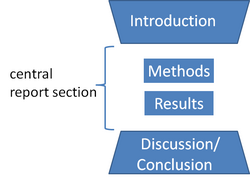
- IMRaD: A standard structural format for scientific articles (Introduction, Methods, Results, and Discussion).
- Grey Literature: Materials published outside traditional channels, such as theses or newsletters.
Classifying Scientific Publications
Not all scientific writing serves the same purpose. To navigate the academic world, it is essential to distinguish between different types of sources based on their originality and depth.
Primary vs. Secondary Sources
Primary literature consists of original research first published in scientific journals. This category also includes patents and technical reports, which may cover engineering designs, computer software, or minor research results. In contrast, secondary sources do not present new data; instead, they provide context. This includes review articles that summarize recent progress to highlight new research directions, as well as comprehensive books that tackle extensive projects.
Common Publication Formats
Scientific knowledge is disseminated through various formats, including:
- Scientific Journals: The most prominent and prestigious form of publication.
- Books: Written by single authors or small groups, or edited volumes where different authors contribute specific chapters under a central editor.
- Web-based Publications: Scientific content hosted on the World Wide Web, including digital journals.
- Grey Literature: Information published outside traditional commercial or academic channels, such as manuals, theses, dissertations, and bulletins. These are often not indexed in major databases.
| Type | Description | Examples |
|---|---|---|
| Primary | Original, first-hand research and data. | Journal articles, patents, technical reports. |
| Secondary | Summaries and analyses of primary research. | Review articles, academic books. |
| Grey | Non-traditional, often unindexed material. | Theses, dissertations, newsletters. |
The Anatomy of a Scientific Paper
While the specific requirements vary by discipline, most scientific papers follow a standardized structure to ensure clarity and reproducibility. A common framework is the IMRaD model.
Common Paper Categories
Scientific papers are often categorized by their specific objectives. There are ten recognized types, eight of which have clear goals:
- Original Article: Presents new information supported by the scientific method.
- Case Report: Describes unique events or specific subjects.
- Technical Note: Details a modification to an existing technique or piece of equipment.
- Review: A detailed analysis of recent developments (e.g., meta-analysis or scoping reviews).
- Commentary: A short summary of an author's personal experience.
- Editorial: A short critique or review of an original article.
- Letter to the Editor: Communications used to ask questions or provide constructive criticism.
- Non-scientific Material: Content that contributes to a paper's reputation rather than its scientific advancement.
Standard Article Structure
To maintain professional standards, authors typically follow these structural conventions:
- Title: Can be declarative (stating a conclusion), descriptive (describing content), or interrogative (posing a question).
- Abstract: A concise summary used for indexing and providing metadata.
- Introduction: Provides context by citing previous investigations.
- Materials and Methods: Describes empirical techniques (the specific methods used to gather data) so that other scientists can repeat the experiment.
- Results: Presents findings, often using tables, charts, or diagrams.
- Discussion/Conclusions: Interprets the results, ensuring arguments are based on evidence rather than personal authority.
- References: A complete list of all cited sources.
Ethics and Integrity in Publishing
Maintaining the integrity of the scientific record requires strict adherence to ethical standards. Several critical issues must be managed by researchers and publishers:
Research Conduct and Data
Researchers must avoid data fabrication—the purposeful alteration of data to favor a specific outcome. Furthermore, publications should avoid redundancy, ensuring that the material presented is new and unpublished.
Human and Animal Welfare
Scientific research involving living subjects is governed by strict ethical codes. For human subjects, principles from the Belmont Report emphasize autonomy, the necessity of benefits outweighing risks, and equitable selection. For animal research, organizations like the APS set strict regulations to prevent unnecessary harm, which are often enforced by federal laws.
Authorship and Conflicts of Interest
Authorship disputes can arise when there is disagreement over who contributed significantly to a work. Ethical guidelines from organizations like the NIH help determine who earns authorship and who should be placed in the acknowledgments section. Additionally, researchers must disclose any conflicts of interest—private interests that could bias their data or conclusions.
Frequently Asked Questions
What is the purpose of peer review?
Peer review acts as a quality control mechanism. It involves experts in a specific field evaluating a manuscript to ensure the research is valid, reliable, and original before it is published.
Why is English so important in scientific publishing?
Many high-impact journals, particularly in the hard and applied sciences, are published in English. Because career advancement often depends on publishing in these journals, many international researchers use professional copy editors to ensure their work meets the required linguistic standards.
What are research notebooks used for?
Research notebooks or logbooks serve as the day-to-day records of scientific information. They provide essential evidence of work for establishing scientific priority (such as for patents) and can be used to resolve scientific disputes.
What is the difference between a review article and an original article?
An original article presents new, primary research and data. A review article summarizes and analyzes existing published studies to highlight progress and suggest new directions for future research.
What is "grey literature"?
Grey literature refers to research materials published outside of traditional commercial or academic channels. Examples include theses, dissertations, technical manuals, and newsletters, which are often not indexed in major scientific databases.