The Republic of Korea Army: A Comprehensive Overview
The Republic of Korea Army (ROKA), also known as the South Korean Army, serves as the primary land warfare branch of the Republic of Korea Armed Forces. As the largest component of South Korea's military, the ROKA plays a critical role in national defense, maintaining a massive presence to ensure stability on the Korean Peninsula.
As of 2025, the army maintains a strength of approximately 400,000 personnel. This size is sustained through a system of conscription, where all able-bodied South Korean males are required to complete military service. For the army, this service typically lasts 18 months for men between the ages of 18 and 35.
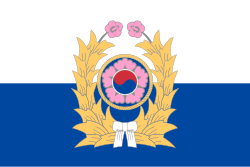
Key Facts
- Founded: September 5, 1948
- Personnel: Approximately 400,000 (as of 2025)
- Headquarters: Gyeryong, South Chungcheong, South Korea
- Motto: "A Strong Friend, Republic of Korea Army"
- Main Battle Tanks: Over 2,800 units, including the K1 series and M48 Patton
- Primary Role: Land warfare and national defense
Historical Evolution
Foundations and the Korean Constabulary
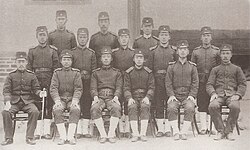
The lineage of the ROKA can be traced back to the Gwangmu Reform, specifically the establishment of the Pyŏlgigun by Emperor Gojong in 1881. However, its modern iteration emerged following the end of World War II. Between 1945 and 1948, the force existed as the Korean Constabulary (or National Security Guard) during the USAMGIK period. This early force was initially a reserve unit of the National Police and was influenced by the doctrines of the Imperial Japanese Army, a legacy that remains a subject of historical discussion in South Korea.
The Korean War and Modern Development
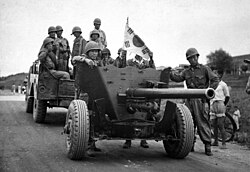
The outbreak of the Korean War presented a significant challenge for the ROKA. Caught unprepared by rapid North Korean offensives, the army suffered heavy losses, with five out of its eight divisions being overrun. Following United Nations intervention and a defensive stand at Busan, the United States began an intensive program to rebuild, train, and equip ROKA divisions.
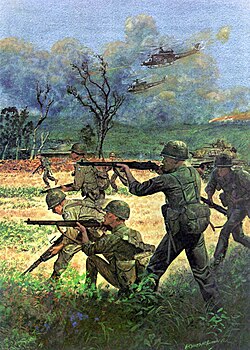
By the end of the war, the ROKA had transformed into a much more capable force. This evolution led to significant international deployments, including approximately 320,000 combat troops to the Vietnam War, as well as participation in the Gulf War, Iraq, and Afghanistan.
Current Operational Structure
The ROKA is structured to operate effectively within the unique geography of the Korean Peninsula, which is 70% mountainous. The army is organized to counter the 950,000-strong Korean People's Army Ground Force, a significant portion of which is stationed near the Demilitarized Zone (DMZ).
To improve efficiency and reduce redundancy, the army has undergone several structural reorganizations:
- Second Operations Command: Formed in 2007 following the conversion of the Second ROK Army.
- Ground Operations Command: Established in 2019 through the merger of the First and Third ROK Armies.
- Brigade Reorganization: On December 1, 2020, all subordinate regiments within divisions were reorganized into brigades to enhance combat mobility.
As of July 2023, the army's organizational hierarchy includes 2 field armies, 6 corps, and 34 divisions.
Military Equipment and Technology
Armored Vehicles and Tanks
The ROKA maintains a formidable array of armored assets. As of 2025, the inventory includes approximately 2,838 tanks and 131,000 armored fighting vehicles. Key tank models include:
- K1 and K1A1: Locally manufactured tanks featuring 120mm smoothbore guns.
- M48 Patton Series: Including various upgrades such as the M48A5K.
- T-80U/UK: Soviet-built tanks provided by Russia to settle financial debts, used primarily for "aggressor" training.
- K2 Black Panther: The future mainstay of the armored corps, designed with a 1500hp engine, an autoloader, and advanced active protection systems comparable to the American M1A2 Abrams.
Artillery and Infantry Support
The army fields 9,300 artillery pieces and 2,000 multiple rocket launchers. A notable domestic success is the K-9 howitzer, which has gained international recognition and has been exported to countries like Turkey. For infantry support, the ROKA utilizes the K21 KNIFV (Korea Next Generation Infantry Fighting Vehicle), a lightweight vehicle designed for high speed and payload capacity using a fiberglass chassis.
Challenges in Modernization
Despite technological advancements, the ROKA has faced procurement and equipment challenges. In 2015, reports indicated shortages in body armor capable of stopping standard North Korean AK-74 rounds. Additionally, the Daewoo K11 infantry rifle, intended to be a highly advanced weapon, saw its production halted in 2020 due to issues with its targeting components and ammunition quality.
Summary of ROKA Capabilities (2025)
| Category | Estimated Quantity/Details |
|---|---|
| Total Personnel | 400,000 |
| Main Battle Tanks | 2,838 |
| Armored Fighting Vehicles | 131,000 |
| Artillery Pieces | 9,300 |
| Multiple Rocket Launchers | 2,000 |
| Helicopters | 982 |
Military Ranks and Hierarchy
The ROKA uses a rank system derived from Hanja (Sino-Korean characters). Officer ranks are categorized into Junior, Field, and General officers, while Non-Commissioned Officers (NCOs) and Enlisted personnel follow a distinct hierarchy.
Commissioned Officer Ranks
- General Officers: Wonsu (General of the Army), Daejang (General), Jungjang (Lieutenant General), Sojang (Major General), Junjang (Brigadier General).
- Field Officers: Daeryeong (Colonel), Jungnyeong (Lieutenant Colonel), Soryeong (Major).
- Junior Officers: Daewi (Captain), Jungwi (First Lieutenant), Sowi (Second Lieutenant).
- Warrant Officers: Junwi.
Non-Commissioned Officers and Enlisted
- NCOs: Wonsa (Sergeant Major), Sangsa (Master Sergeant), Jungsa (Sergeant First Class), Hasa (Staff Sergeant).
- Enlisted: Byeongjang (Sergeant), Sangdeungbyeong (Corporal), Ildeungbyeong (Private First Class), Ideungbyeong (Private).
Frequently Asked Questions
How long is the mandatory military service in South Korea?
For those serving in the Republic of Korea Army, the required military service is 18 months.
What is the primary role of the ROKA?
The ROKA is the ground warfare branch of the Republic of Korea Armed Forces, primarily responsible for land-based defense and operations.
What is the K2 Black Panther?
The K2 Black Panther is a next-generation Main Battle Tank (MBT) being developed to replace the K1 and K1A1 series, featuring advanced armor, a 120mm gun with an autoloader, and high-performance engines.
How is the ROKA organized?
The army is organized into 2 field armies, 6 corps, and 34 divisions, with subordinate units reorganized into brigades as of late 2020.
Why does the ROKA use conscription?
Conscription is used to maintain a large standing force of approximately 400,000 personnel, which is necessary for the nation's defense requirements.