Regional Demographics and Population Trends 2026
Analyzing the demographic landscape provides critical insights into the growth, age distribution, and urban concentration of a region. As of 2026, the total population has reached 15,955,242 residents. This population is nearly evenly split by gender, with females accounting for 50.8% and males making up 49.2%.
The age structure reveals a significant demographic shift. Seniors—those in the older age brackets—now represent 25.5% of the population, while minors (individuals under the age of 18) constitute 14.4%.
Key Facts
- Total Population (2026): 15,955,242
- Gender Split: 50.8% Female / 49.2% Male
- Senior Population: 25.5%
- Minor Population: 14.4%
- Largest City: Milan (1,362,863 residents)
- Primary Birth Country: Italy (87.3%)
Historical Population Growth
Since 1861, the region has experienced substantial growth. Starting at 6,834,069 residents, the population climbed steadily through the early 20th century, surpassing the 10 million mark by 1921. The most rapid expansion occurred between 1961 and 1971, seeing a growth rate of 13.5%.
While the population saw a slight decline between 1981 and 2001, it has since rebounded. According to ISTAT (the national statistics institute), the population grew to 15,831,941 by 2021, continuing its upward trajectory into 2026.
| Year | Population | Percentage Change |
|---|---|---|
| 1861 | 6,834,069 | — |
| 1901 | 8,803,296 | +12.3% |
| 1951 | 11,745,432 | +8.7% |
| 1971 | 14,938,428 | +13.5% |
| 2021 | 15,831,941 | +0.4% |
Major Urban Centers
The region's population is concentrated in several key cities, with Lombardy hosting the highest number of populous urban centers. Milan stands as the primary hub, significantly leading in total inhabitants.
Milan serves as the largest metropolitan center in the region.
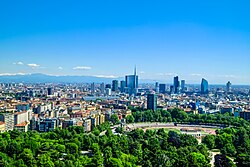
Turin follows as the second most populous city, maintaining a strong presence in the Piedmont region.
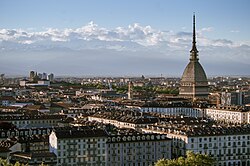
Genoa remains the primary urban center for the Liguria region.
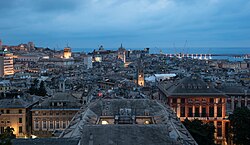
Brescia is another significant city within Lombardy, ranking fourth in overall population.
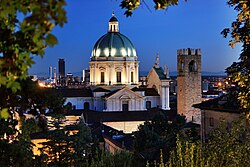
Cities with Over 50,000 Inhabitants
- Milan (Lombardy): 1,362,863
- Turin (Piedmont): 855,654
- Genoa (Liguria): 566,247
- Brescia (Lombardy): 201,342
- Monza (Lombardy): 123,672
- Bergamo (Lombardy): 120,629
- Novara (Piedmont): 103,238
Immigration and National Origins
As of 2025, data regarding the known countries of birth for 15,619,008 residents indicates a diverse population. While the vast majority of residents were born in Italy (87.3%), several other nations contribute significantly to the demographic makeup.
The most prominent non-Italian birth countries include Romania (1.7%), Albania (1.3%), and Morocco (1.3%). Other notable populations originate from Egypt (0.9%) and Peru (0.6%).
Frequently Asked Questions
What is the total population as of 2026?
The total population is 15,955,242.
Which city is the most populous in the region?
Milan is the most populous city, with 1,362,863 residents.
What percentage of the population are seniors?
Seniors make up 25.5% of the total population.
Which countries, other than Italy, have the highest number of residents by birth?
The highest numbers of residents born outside of Italy come from Romania, Albania, and Morocco.
How has the population changed since 1861?
The population has grown from 6,834,069 in 1861 to 15,955,242 in 2026, despite a brief period of slight decline between 1981 and 2001.