Regensburg: A Journey Through Bavaria's Historic Imperial City
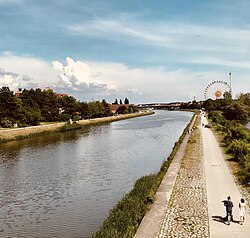
Nestled along the banks of the Danube, Regensburg stands as one of Germany's most significant cultural and historical landmarks. As the fourth largest city in Bavaria, it seamlessly blends its Roman origins and medieval grandeur with a thriving modern economy. From its status as a Free Imperial City to its current role as a hub for high-tech industry and academia, Regensburg offers a profound look at the evolution of Central European society.
The heart of the city is the Old Town with Stadtamhof, a designated UNESCO World Heritage Site recognized for its exceptional preservation of medieval urban architecture and its historical role as a center of international diplomacy.

Key Facts
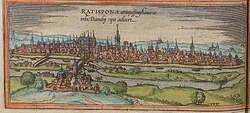
- UNESCO Status: The Old Town and Stadtamhof were inscribed as a World Heritage Site in 2006.
- Population: Approximately 151,389 residents (as of December 2024).
- Geography: Located in Bavaria, Germany, situated on the Danube River.
- Economy: A major center for high-tech firms including Siemens, BMW, Infineon, and OSRAM.
- Education: Home to the University of Regensburg (est. 1965) and the Regensburg University of Applied Sciences (est. 1971).
A Deep Dive into History
Early History and the Imperial Era
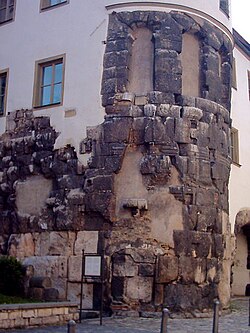
Regensburg's roots stretch back to Roman times, evidenced by the remains of the Porta Praetoria, an ancient city gate. By 1245, the city had evolved into a Free Imperial City, serving as a vital trade hub before trade routes shifted in the late Middle Ages. Its strategic importance made it a preferred location for international summits, including a 1471 meeting to discuss war against the Turks.
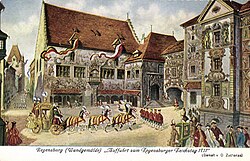
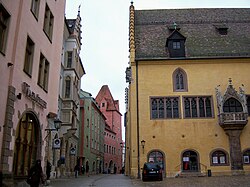
The city's political significance peaked with the Imperial Diet (the deliberative body of the Holy Roman Empire), which occupied the Old Town Hall from 1663 to 1806.
The Jewish Community and Persecution
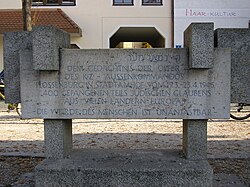
Regensburg once hosted one of the largest and most influential Jewish communities in southern Germany. However, in 1519, following the death of Emperor Maximilian I, the community was expelled. Approximately 500 Jews were forced out, and their synagogue and quarter were demolished. This marked the end of Jewish life in the city for several centuries.
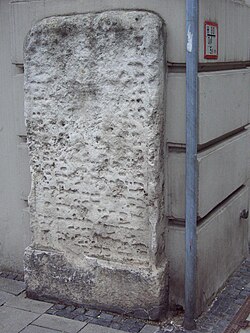
The 20th century brought further tragedy. Under the Nazi regime, the community faced severe persecution. During Kristallnacht on November 9, 1938, the synagogue and Jewish businesses were destroyed. Thousands were later deported to camps such as Dachau, Piaski, and Theresienstadt. In the final months of World War II, a subcamp of the Flossenbürg concentration camp operated within the city, where 40 forced laborers died.
From Napoleon to the Modern Era
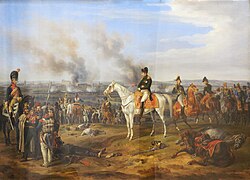
In April 1809, the city was the site of the Battle of Ratisbon, where Napoleon's forces overran the retreating Austrian army, leaving many houses burnt and looted.
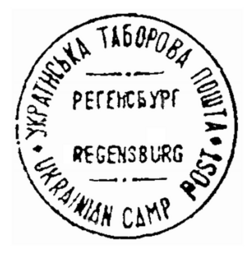
Following World War II, Regensburg became the site of Germany's largest displaced persons (DP) camp between 1945 and 1949, housing thousands of Ukrainian and non-Ukrainian refugees. The city's subsequent growth was fueled by strategic investments in infrastructure during the 1960s, attracting multinational giants like Siemens and later BMW in 1986.
Geography and Climate
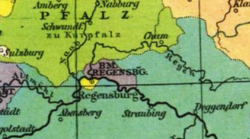
Regensburg is characterized by diverse topography. To the east and southeast lies the Gäuboden, a fertile loess plain. The south is defined by the Tertiary Hill Country, while the west is bordered by the Franconian Jura.
| Metric | Winter (Jan) | Summer (July) | Annual Average |
|---|---|---|---|
| Mean Daily Max Temp (°C) | 2.3 | 26.1 | 14.6 |
| Mean Daily Min Temp (°C) | -2.9 | 13.4 | 5.0 |
| Average Precipitation (mm) | 48.3 | 76.9 | 660.1 |
| Sunshine Hours | 47.6 | 234.4 | 1,681.2 |
Cultural Landmarks and Sights
Architectural Marvels
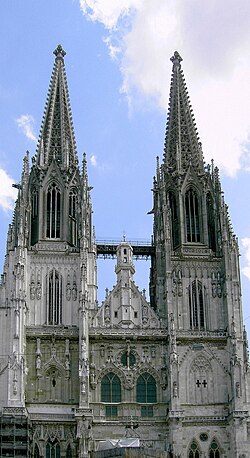
The city is dominated by St. Peter's Church, the Regensburg Cathedral, a masterpiece of Gothic architecture. Another iconic structure is the Stone Bridge, which for centuries served as the only crossing over the Danube in the region.
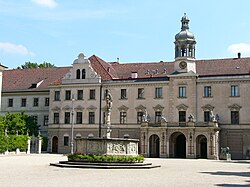
Visitors can also explore St. Emmeram's Abbey, now the sprawling Schloss Thurn und Taxis palace, and the historic Old Town Hall.
Museums and Education
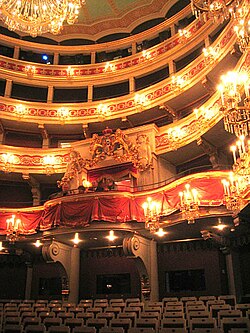
With 20 museums, the city is a cultural treasure trove. The Regensburg Museum of History and the Imperial Diet Museum provide deep insights into the region's past, while the Kepler Memorial House honors the astronomer Johannes Kepler.

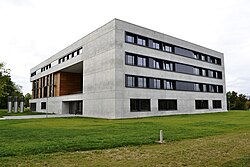
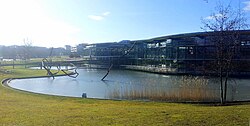
Modern Regensburg is also a center of learning, featuring a world-class university hospital (Universitätsklinikum Regensburg) and two major higher education institutions.
Notable People
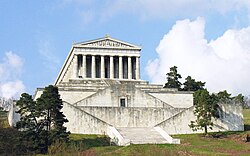
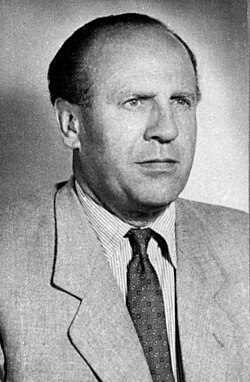
Regensburg has been home to many influential figures, from the religious leadership of Pope Benedict XVI (a former professor at the university) to the humanitarian efforts of Oskar Schindler. The city also boasts a legacy of artists, musicians, and athletes, including racing driver Walter Röhrl and football talents like Kenan Yıldız.
Frequently Asked Questions
What makes Regensburg a UNESCO World Heritage Site?
The Old Town of Regensburg with Stadtamhof is recognized for its exceptionally well-preserved medieval urban fabric and its historical significance as a center of trade and diplomacy within the Holy Roman Empire.
Which major companies are based in Regensburg?
The city is a high-tech hub hosting several multinational corporations, most notably BMW, Siemens, Infineon, and OSRAM.
What is the significance of the Stone Bridge?
The Stone Bridge is one of the city's most famous landmarks, historically serving as a critical crossing point over the Danube River and symbolizing the city's medieval prosperity.
How did the city recover after World War II?
Regensburg invested heavily in technical and social infrastructure starting in the 1960s to attract industry and established two major universities to foster research and economic growth.
Who was the Imperial Diet?
The Imperial Diet was the general assembly of the estates of the Holy Roman Empire. Regensburg served as the seat of the Perpetual Diet from 1663 until the empire's dissolution in 1806.