Red Meat: Nutritional Value, Health Risks, and Dietary Guidelines
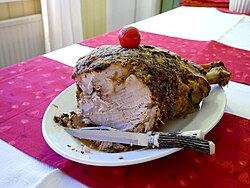
When we talk about red meat in a nutritional context, we aren't just talking about the color of the food on our plates. While culinary definitions often focus on the raw appearance of the meat, nutritionists define red meat as any meat obtained from mammals. This category includes beef, pork, lamb, mutton, veal, and venison.
Interestingly, not all red meats look red. For example, pork is classified as red meat even though it often appears pink or white once cooked.
Key Facts
- Definition: Red meat includes all mammal-derived meats (beef, pork, lamb, veal, venison).
- Nutrients: It is a rich source of protein, iron, zinc, and vitamins B1, B2, B6, and B12.
- Cancer Risk: The IARC classifies unprocessed red meat as probably causing cancer, specifically colorectal cancer.
- Processed Meat: Salting, curing, and smoking increase health risks; processed meat is known to cause colorectal cancer.
- Recommended Limit: The World Cancer Research Fund suggests limiting red meat to 350–500g (cooked weight) per week.
The Science of Meat Classification
The distinction between red, white, and dark meat is primarily driven by myoglobin, a protein that stores oxygen in muscle cells. The higher the concentration of myoglobin, the darker the meat appears.
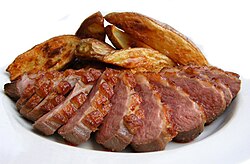
While duck or other poultry may have a reddish appearance, they are not considered red meat in nutritional studies because they do not come from mammals.
Below is a breakdown of myoglobin levels across different meat types:
| Meat Type | Myoglobin Percentage | USDA Category |
|---|---|---|
| Aged beef | 1.50 – 2.00% | Red meat |
| Beef | 0.40 – 1.00% | Red meat |
| Pork | 0.10 – 0.30% | Red meat |
| Veal | 0.10 – 0.30% | Red meat |
| Turkey thigh | 0.25 – 0.30% | Dark meat |
| Chicken thigh | 0.18 – 0.20% | Dark meat |
| Turkey breast | 0.008% | White meat |
| Chicken breast | 0.005% | White meat |
Health Impacts and Risks
Cancer and Carcinogens
The International Agency for Research on Cancer (IARC) has noted that unprocessed red meat probably causes cancer, with a particular link to colorectal cancer. A 2021 umbrella review indicated that for every 100g per day increase in red meat consumption, the risk of multiple cancers increased by 11–51%. For processed meats, a 50g per day increase was linked to an 8–72% increase in risk.
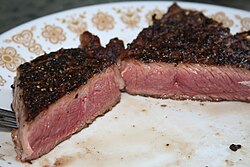
Cooking methods also play a role. Meat cooked at very high temperatures can develop a dark exterior, which is associated with increased health risks.
Type 2 Diabetes
Research suggests a strong correlation between red meat intake and metabolic health. A 2022 umbrella review found that consuming an additional 100g of red meat daily was associated with a 17% increased risk of type 2 diabetes. Conversely, diets that replace red meat with whole grains, vegetables, fruits, and dairy have been associated with an 81% reduced risk of diabetes.
Cardiovascular Disease and Industry Funding
The link between red meat and heart health is a subject of significant debate. A 2025 review highlighted a discrepancy in research findings based on funding sources. Studies funded by the meat industry reported favorable (20.7%) or neutral (79.3%) cardiovascular outcomes. In contrast, independent studies reported unfavorable outcomes in 73.3% of cases, suggesting that unprocessed red meat may negatively affect cardiovascular risk factors.
Dietary Guidelines
Different health organizations provide varying advice on meat consumption:
- USDA (MyPlate): Does not distinguish between meat types but recommends eating at least 8 oz of fish per week.
- Harvard School of Public Health (Healthy Eating Plate): Recommends avoiding processed meats and limiting red meat to twice a week to reduce the risk of heart disease, diabetes, and colon cancer. They suggest substituting these with poultry, fish, beans, or nuts.
- World Cancer Research Fund: Recommends limiting red meat to no more than three portions per week (approximately 350–500g cooked weight) and minimizing processed meat.
Frequently Asked Questions
Is pork considered a red meat?
Yes. In nutritional terms, red meat is defined as meat from mammals. Since pigs are mammals, pork is classified as red meat regardless of its pink or white appearance after cooking.
What is the difference between red meat and processed meat?
Red meat refers to the biological source (mammals). Processed meat refers to red meat that has been transformed through methods like salting, curing, or smoking to enhance flavor or preserve it. Processed meats carry a higher health risk and are known to cause colorectal cancer.
How much red meat is safe to eat per week?
The World Cancer Research Fund recommends limiting consumption to no more than three portions per week, which equals roughly 350–500g of cooked meat.
Why is red meat linked to type 2 diabetes?
While the exact mechanisms are complex, studies show that higher daily intake of red and processed meats increases risk, while substituting them with nuts, low-fat dairy, and whole grains can lower the risk by 16–35%.
Does the way I cook my meat affect my health?
Yes. High-temperature cooking that creates a dark, charred exterior is associated with an increase in cancer risk.