Rain Shadows: How Mountains Create Arid Climates
Across the globe, some of the most extreme contrasts in weather occur over very short distances. On one side of a mountain range, you might find lush rainforests and constant drizzle; on the other, a parched desert. This phenomenon is known as a rain shadow—an area of significantly reduced rainfall located behind a mountainous region, on the side facing away from the prevailing winds.
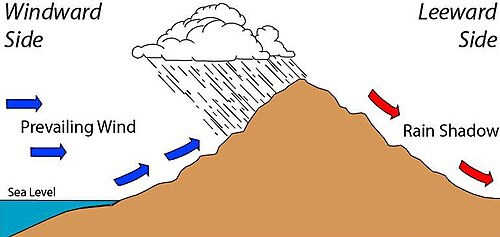
To understand how a rain shadow forms, one must look at the movement of moisture. Evaporated water from oceans and large lakes is carried inland by prevailing breezes. When this moist air encounters elevated landforms, it is forced upward in a process called orographic lifting.
The Science of the Rain Shadow Effect
As the moist air is driven upslope toward the peak, it expands and undergoes adiabatic cooling—a process where air temperature drops as atmospheric pressure decreases with increasing altitude. Once the air reaches its adiabatic dew point, the moisture condenses into clouds and falls as precipitation on the windward side (the side facing the wind).
If the mountain range is sufficiently tall and wide, most of the humidity is stripped away before the air ever crosses the summit. As the now-dry air descends the leeward side, it is compressed and heated. This creates Foehn winds, which are warm, dry winds that absorb moisture from the land below, casting a broad "shadow" of dry climate. These regions typically evolve into deserts, xeric shrublands, or shrub-steppes.
Key Facts
- Windward Side: The side of the mountain that receives heavy precipitation.
- Leeward Side: The protected side where the rain shadow occurs, resulting in arid conditions.
- Adiabatic Process: The cooling of air as it rises and warms as it sinks, independent of external heat exchange.
- Global Impact: Rain shadows contribute to the formation of some of the world's largest deserts, including the Sahara.
- Wind Influence: The effect is driven by trade winds (30° N to 30° S) and westerlies (30° to 60° latitude).
Notable Rain Shadows Around the World
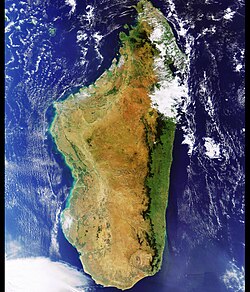
Africa
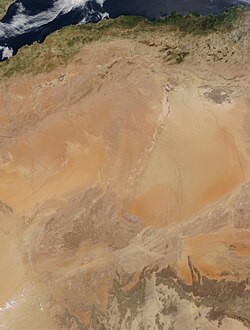
In Northern Africa, the Atlas Mountains block moist Atlantic winds, causing heavy rainfall on the coast but leaving the Sahara Desert even drier on the leeward side.
In Southern Africa, the Cape Fold Mountains create a stark contrast; while the wettest peaks receive 1,500 mm (59 in) of rain, the rain-shadowed town of Worcester receives only about 200 mm (8 in).
Asia
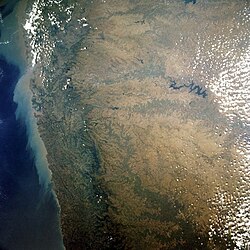
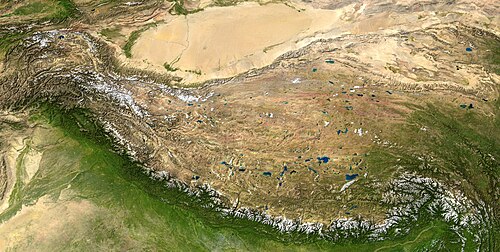
The Himalayas create one of the most dramatic rain shadows on Earth. Moisture from the South Asian monsoon is blocked, leading to the arid climate of the Tibetan Plateau and the desertification of the Tarim Basin.
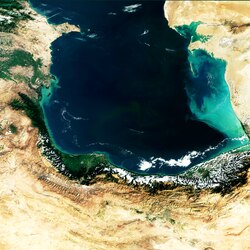
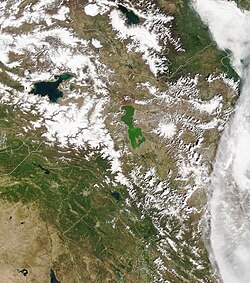
Other Asian examples include the Arakan Mountains in Myanmar, where the coast receives up to 5.5 meters (220 in) of rain, while the central region receives only 750 mm (30 in). In Western Asia, the Alborz mountains rain-shadow much of Iran, and the Zagros Mountains affect the area around Lake Urmia.
Europe
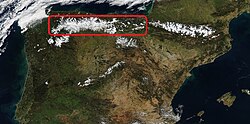
In Southern Europe, the Cantabrian Mountains divide "Green Spain" from the dry central plateau. Further south, ranges blocking the westerlies contribute to Almería, Murcia, and Alicante being among the driest spots in Europe, with averages around 300 mm (12 in).
Northern Europe also sees this effect; the Scandinavian Mountains prevent oceanic climates from moving east. For example, Bergen receives 2,250 mm (88.6 in) of rain, while Oslo, on the leeward side, receives only 760 mm (30 in).
The Americas
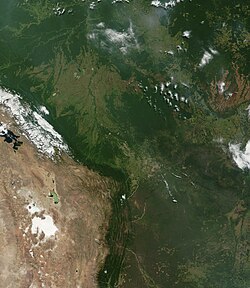
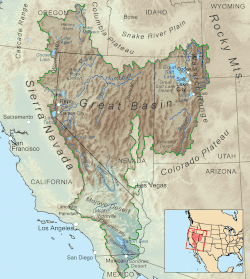
In North America, the Pacific Coast Ranges, the Cascades, and the Sierra Nevada create significant rain shadows for inland deserts. In Washington, the Olympic Mountains leave the Dungeness Valley with only 10–15 inches of rain, while nearby Aberdeen receives nearly 85 inches.
In the East, the Appalachian mountains create a similar effect; Asheville, North Carolina, is the driest location in its state because it sits in the shadow of the Balsam, Smoky, and Blue Ridge Mountains.
Oceania and Pacific Islands
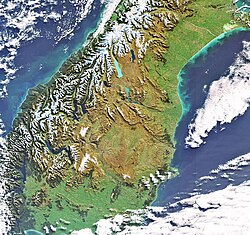
New Zealand's Southern Alps provide a remarkable example: the western side receives 6,300 to 8,900 mm of water, while the eastern side, just 50 km away, can receive less than 380 mm (15 in).
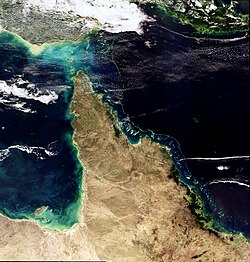
In Australia, the Great Dividing Range and other ranges like the Darling Range and Atherton Tableland create distinct dry zones. In Queensland, Tully receives over 4,000 mm (160 in) of rain, while Mareeba, in the rain shadow, receives only 870 mm (34 in).
Regional Precipitation Comparison
| Region/Mountain Range | Windward Precipitation | Leeward Precipitation | Effect |
|---|---|---|---|
| Southern Alps (NZ) | 6,300–8,900 mm | < 760 mm | Extreme Aridity |
| Atherton Tableland (AUS) | > 4,000 mm (Tully) | 870 mm (Mareeba) | Significant Reduction |
| Arakan Mountains (Myanmar) | Up to 5,500 mm | 750 mm | Semi-arid center |
| Cape Fold Mountains (SA) | 1,500 mm | ~200 mm (Worcester) | Grazing land only |
Frequently Asked Questions
What is the difference between the windward and leeward sides?
The windward side is the side of a mountain that faces the prevailing wind, where moist air is forced upward, cools, and releases precipitation. The leeward side is the opposite side, which receives the dry air after the moisture has already fallen, creating a rain shadow.
How does adiabatic cooling contribute to rain shadows?
Adiabatic cooling occurs when air rises and expands due to lower pressure at higher altitudes, causing its temperature to drop. This cooling leads to condensation and precipitation on the windward slope, leaving the air dry before it reaches the leeward side.
Can a rain shadow create a desert?
Yes. When a mountain range is tall and wide enough to block most of the incoming moisture, the leeward side becomes so arid that it can form xeric shrublands or full deserts, such as the effect the Atlas Mountains have on the Sahara.
Do rain shadows only happen with very high mountains?
While higher mountains create more dramatic effects, even lower highlands can influence precipitation. For example, the South Swedish highlands rise only 377 meters but still reduce precipitation on their eastern side.
What are Foehn winds?
Foehn winds are warm, dry winds that descend the leeward side of a mountain. Because the air is compressed as it sinks, it warms up, which increases its ability to absorb moisture from the ground, further drying the region.