Rail Transport: Evolution, Infrastructure, and Global Impact
Rail transport, commonly known as train transport, is a primary mode of land transportation utilizing wheeled vehicles that run on fixed tracks, typically consisting of two parallel steel rails. Globally, it accounts for approximately 8% of all passenger and freight movement. Its enduring relevance is driven by superior energy efficiency, the capacity for high speeds, and the ability to distribute heavy loads across tracks, allowing trains to carry significantly more weight than road-based trucks.
Unlike rubber-tyred vehicles, rolling stock (the vehicles used on rails) experiences lower frictional resistance. This physical advantage allows multiple cars to be coupled into long trains, powered by either diesel or electric locomotives. While rail systems are capital-intensive and offer less flexibility than road transport, they provide a safer and more energy-efficient alternative for moving massive quantities of cargo and people.
Key Facts
- Efficiency: Rail transport is more energy-efficient and can carry heavier loads than road transport due to lower friction and weight distribution.
- Safety: In Europe, the fatality risk for passengers on railways is 28 times lower than in cars (based on 2008–2010 EU-27 data).
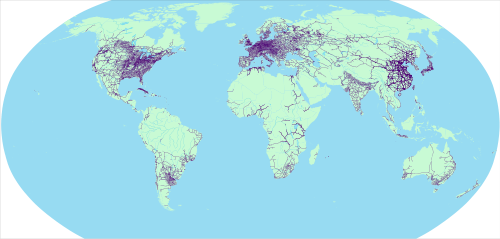
- Global Reach: High-speed rail now connects major urban centers across East Asia, Europe, and the eastern United States.
- Environmental Impact: Modern investments in rail are increasingly driven by the need to reduce CO2 emissions and alleviate road congestion.
The Evolution of Rail Systems
Pre-Steam and Early Modernity
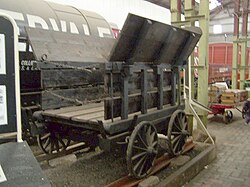
Before the industrial era, precursors to modern railways existed in antiquity, relying on human or animal power. Early systems often used wooden rails before transitioning to metal to increase durability and load capacity.
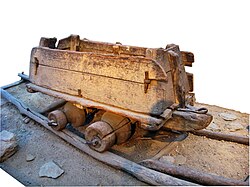
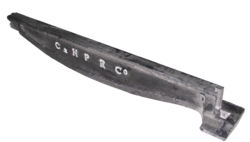
The transition to metal rails saw the introduction of plateways and eventually smooth edge rails designed for wheels with flanges, which improved stability and efficiency.
The Steam Revolution
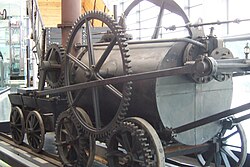
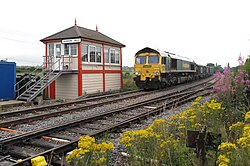
Modern rail transport was born in the United Kingdom at the start of the 19th century with the invention of the steam locomotive. A pivotal moment occurred on February 21, 1804, when Richard Trevithick operated a high-pressure steam engine on tram rails in Merthyr Tydfil.
The Stockton and Darlington Railway, opened in 1825, became the first passenger railway. By 1830, the first intercity connection opened in England, sparking a rapid expansion across Europe and North America. This growth was a cornerstone of the Industrial Revolution, creating "national markets" by lowering shipping costs and stabilizing prices between cities.
Electrification and Diesel Power
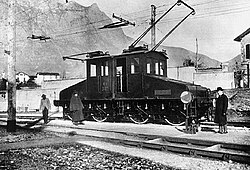
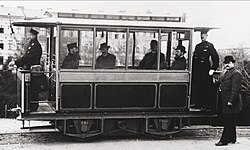
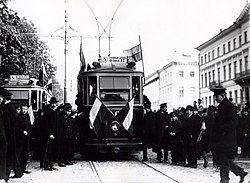
The 1880s marked the beginning of railway electrification, initially appearing in tramways and rapid transit systems. By the early 1900s, most street railways had adopted electric power.
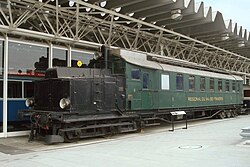
Starting in the 1940s, diesel locomotives began replacing steam. In North America, the Canadian National Railways led this transition in 1929, becoming the first to use diesels in mainline service with Westinghouse units 9000 and 9001.
The High-Speed Era
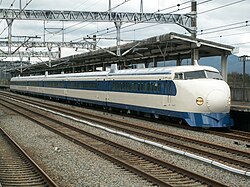
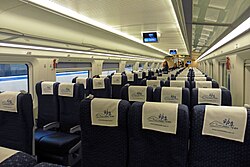
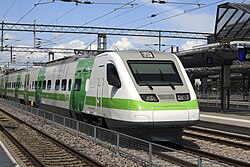
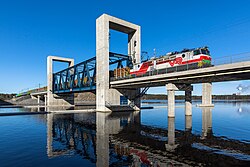
The modern era of rail was redefined in 1964 with the introduction of the 0-Series Shinkansen in Japan, which launched the global high-speed rail boom. Today, high-speed networks, including bullet trains in China and Pendolino trains in Finland, offer rapid intercity connectivity.
Infrastructure and Operations
Track and Power Systems
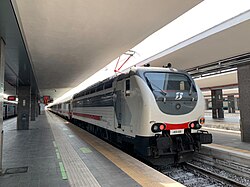
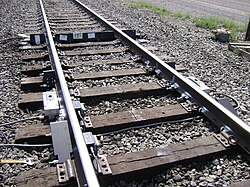
Rail infrastructure relies on a specific right-of-way and track gauge. Electrification is achieved through either Direct Current (DC) or Alternating Current (AC). Common DC voltages include 600V and 750V for trams and 1,500V to 3,000V for mainlines, while AC systems typically operate at 15kV or 25kV.
Urban Rail and Metros
Rapid transit systems, or metros, are essential for urban mobility. The New York City Subway stands as the world's largest single-operator system by station count, while the Milan Metro is Italy's largest in terms of length and ridership.
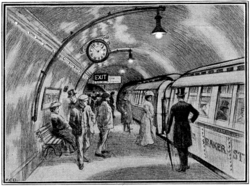
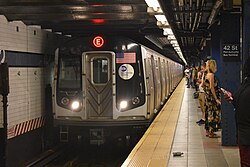
![Milan Metro is the largest rapid transit system in Italy in terms of length, number of stations and ridership; and the eighth longest in Europe.[66]](/images/dd/1b/dd1b7cb19dd6466ac607d38cb8e70b688c965267b5dbb3c5d724e5537445bab8.jpg)
Freight and Haulage
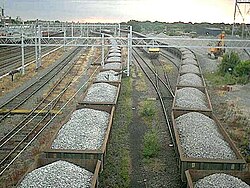
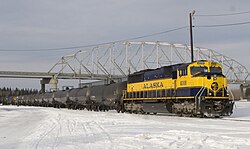
Rail remains a dominant force in bulk cargo transport, moving minerals, lumber, and crude oil over vast distances more efficiently than road transport.
Economic and Social Impact
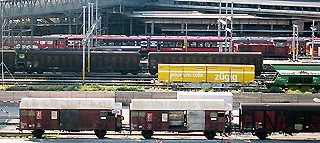
Historian Henry Adams noted that railroad networks required a sophisticated financial system, modern management, and clear career paths to function. Beyond transport, railways have served critical military roles and acted as indicators of economic development.
Global Investment and Subsidies
Many governments subsidize rail to maintain affordability and reduce environmental impact. China has invested heavily in its network, with annual spending reaching ¥840 billion in 2010. India also provides significant subsidies, approximately ₹260 billion, with 60% dedicated to commuter and short-haul trips.
| Country | Subsidy (Billion Euro) | Year |
|---|---|---|
| Germany | 17.0 | 2014 |
| France | 13.2 | 2013 |
| Italy | 8.1 | 2009 |
| Switzerland | 5.8 | 2012 |
| Spain | 5.1 | 2015 |
| United Kingdom | 4.5 | 2015 |
![European rail subsidies in Euro per passenger-km for 2008[126]](/images/ea/df/eadf668fb249a0fb2b4c6038bd006b4d97bbf75c5ea043a4981e2d794da41947.png)
Frequently Asked Questions
![According to Eurostat and the European Railway Agency, the fatality risk for passengers and occupants on European railways is 28 times lower when compared with car usage (based on data by EU-27 member nations, 2008–2010).[90][91]](/images/7b/dd/7bdd12ce284e4b38a4d4befb4147ab73aefc3ab0d279b0e74a292680ae24b9f9.png)
Why is rail transport more energy-efficient than road transport?
Rail vehicles encounter lower frictional resistance than rubber-tyred vehicles and can distribute their weight more effectively across steel rails, allowing them to move heavier loads with less energy per ton-kilometer.
When did high-speed rail begin?
The high-speed rail boom began in 1964 with the introduction of the 0-Series Shinkansen in Japan.
What are the common power sources for modern trains?
Modern trains are primarily powered by diesel locomotives or electric systems using either direct current (DC) or alternating current (AC).
How safe is rail travel compared to driving?
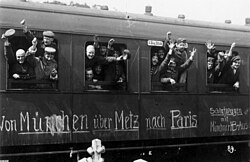
Rail travel is significantly safer; data from EU-27 member nations between 2008 and 2010 indicates that the fatality risk for passengers on European railways is 28 times lower than for those in cars.
What role did railways play in the Industrial Revolution?
Railways lowered shipping costs compared to water or wagon transport, which facilitated the creation of national markets and reduced price variations between cities.