Quantum Physics: The Foundations of Quantization and Energy
In the realm of physics, a quantum (plural: quanta) represents the minimum amount of any physical entity or property involved in an interaction. This concept challenges the classical view of nature as a continuous flow, introducing instead the hypothesis of quantization. This hypothesis posits that certain physical properties cannot take on any arbitrary value; instead, they exist only in discrete values that are integer multiples of a single quantum.
A primary example of this is the photon, which is a single quantum of light or any other form of electromagnetic radiation at a specific frequency. Quantization is not limited to light; for instance, the energy of an electron bound within an atom is also quantized. This means electrons can only exist at specific, discrete energy levels, a fact that ensures the stability of atoms and matter in general. These principles form the bedrock of quantum mechanics and quantum electrodynamics, the framework used to describe how energy and matter interact.
Key Facts
- Definition: A quantum is the smallest possible unit of a physical property.
- Quantization: The process where a property takes on only discrete, integer-multiple values.
- Stability: Matter is stable because electrons are restricted to discrete energy levels.
- Planck Constant: Represented as h, this is the fundamental "quantum of action."
- Light: Electromagnetic radiation consists of spatially localized packets called photons.
The Origin of Quantum Theory
The modern understanding of the quantum began on December 14, 1900, when German physicist Max Planck presented his findings to the German Physical Society. Planck discovered that by modeling harmonic oscillators with discrete energy levels, he could resolve a persistent problem in the theory of blackbody radiation.
Interestingly, Planck did not initially use the word "quantum" as we do today. He used the term Elementarquantum to describe the "quantum of electricity" (now known as the elementary charge) and Energieelement ("energy element") to describe the smallest unit of energy.
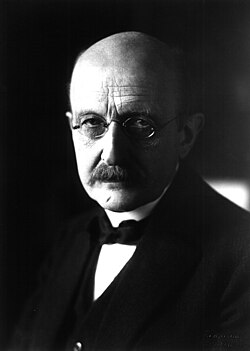
By 1906, in a paper published in Annalen der Physik, Planck introduced the constant h, which he called the "quantum of action" (elementares Wirkungsquantum). Now known as the Planck constant, this value is central to quantum physics. In the same period, Planck provided more precise values for the Avogadro–Loschmidt number (the number of molecules in one mole of a substance) and the elementary charge. For these groundbreaking discoveries, Planck was awarded the Nobel Prize in Physics in 1918.
Einstein and the Quanta of Light
In 1905, Albert Einstein expanded upon Planck's work by suggesting that electromagnetic radiation exists as spatially localized packets, which he termed "quanta of light" (Lichtquanta). Einstein used this hypothesis to refine Planck's treatment of blackbody radiation and to explain the voltages observed in Philipp Lenard's experiments regarding the photoelectric effect. Shortly after this development, the term "energy quantum" was adopted for the quantity hν.
Understanding Quantization
While the discovery of quantization began with electromagnetic radiation, it is a fundamental characteristic of energy across the universe. Max Planck's original postulate—that electromagnetic energy is absorbed or emitted in discrete packets rather than a continuous stream—was the first step in aligning theoretical physics with experimental evidence.
| Concept | Description | Key Figure/Term |
|---|---|---|
| Quantization | Physical properties existing only in discrete values | Hypothesis of Quantization |
| Photon | A single quantum of light/electromagnetic radiation | Albert Einstein |
| Planck Constant (h) | The fundamental "quantum of action" | Max Planck |
| Discrete Energy Levels | Specific energy states for electrons in an atom | Atomic Stability |
Frequently Asked Questions
What is a quantum in physics?
A quantum is the minimum possible amount of a physical entity or property involved in an interaction. When a property is "quantized," it means it can only exist in discrete values that are integer multiples of this minimum unit.
Who discovered the concept of quantization?
Max Planck is credited with the origin of the modern concept of the quantum in 1900, after he used discrete energy levels to solve the blackbody radiation problem. Albert Einstein later expanded this by proposing that light itself consists of quanta.
What is the Planck constant?
The Planck constant, denoted as h, was introduced by Max Planck in 1906. He originally termed it the "quantum of action," and it serves as a fundamental constant in the framework of quantum mechanics.
Why is quantization important for the stability of matter?
Quantization is crucial because it restricts electrons within an atom to specific, discrete energy levels. If electrons could exist at any energy level, atoms would not be stable.
What is the difference between a photon and a quantum?
A quantum is a general term for the smallest unit of any quantized physical property. A photon is a specific type of quantum—specifically, a single quantum of light or electromagnetic radiation.