Prussian Deportations of Poles: The Rugi Pruskie (1885–1890)
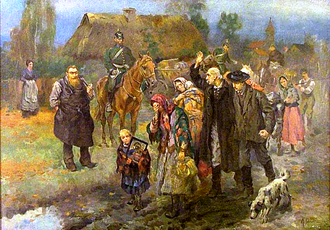
Between 1885 and 1890, the German Empire carried out a series of mass expulsions known in Polish as rugi pruskie and in German as Polenausweisungen. These deportations targeted ethnic Poles living within the Prussian Partition of the Commonwealth, marking a dark chapter of state-sponsored ethnic cleansing and forced Germanisation.
The campaign primarily targeted Poles who had migrated to Prussia from the Russian and Austrian empires. Because these individuals had not obtained German citizenship, they were vulnerable to the nationalist policies of the era, resulting in the forced removal of over 30,000 people from their homes and workplaces.
Key Facts
- Duration: 1885–1890.
- Total Expelled: Over 30,000 ethnic Poles.
- Primary Target: Polish citizens of the Russian and Austrian Empires residing in Prussia.
- Key Figure: German Chancellor Otto von Bismarck.
- Nature of Action: Ethnic cleansing and mass deportation driven by German nationalism and anti-Polish sentiment.
- Outcome: Worsened Russo-German relations and eventual shift in European alliances.
The Expulsion Order of 1885
The economic landscape of eastern Prussia relied heavily on large manors run by junkers (landed nobility), who employed thousands of migrating Polish workers. Additionally, the industrial hub of Upper Silesia attracted laborers from economically underdeveloped regions of partitioned Poland. While these migrants showed no anti-German political activity, their growing numbers alarmed German nationalists and Chancellor Otto von Bismarck.
On March 26, 1885, the Prussian Ministry of Internal Affairs ordered the expulsion of all ethnic Poles and Jews holding Russian citizenship. By July 1885, this order was expanded to include Polish citizens of Austria. The authorities were further instructed to prevent any "undesirable foreigners" from settling in these territories in the future.
Implementation and Brutality
The orders were executed without regard for the age, sex, health, or previous service of the individuals—some of whom had even served in the Prussian Army. Many were driven toward the eastern border by gendarmes using rifle butts. Because many of these expulsions occurred during the winter, fatal incidents were reported. In the first few months alone, nearly 26,000 workers and craftsmen were removed from the eastern provinces.
Public and Political Reaction
The harshness of the rugi pruskie sparked an outcry across Europe. Even within Germany, figures like Alfred von Waldersee noted the "incredible harshness" of the process. The German ambassador to Russia, Schweinitz, described the orders as "unwise and to no purpose cruel."
The issue reached the parliament of the German Empire, where it was condemned by a large majority on January 16, 1886. This opposition included the Centre Party, the Social Democratic Party, and German progressives. However, the Prussian government ignored the resolution. In the Prussian parliament, where anti-Polish sentiment was more deeply entrenched, the government successfully blocked any formal condemnation.
Impact on International Relations
The deportations severely strained the relationship between Germany and Russia. At the time, German minorities in the Russian Empire were already facing hostility due to the rise of Pan-Slavism (a movement promoting the unity of Slavic peoples). Ambassador Schweinitz warned Bismarck that the expulsions would provoke retaliatory measures against Germans living in Russia.
Russian officials, including Foreign Minister Nikolay Giers, argued that Bismarck had set a dangerous example and aggravated ethnic antagonisms. In response, the Russian government imposed legal restrictions on the ability of Germans to lease or acquire land in Russian-controlled Poland.
Ultimately, this erosion of trust contributed to a shift in Russian foreign policy, leading to the Franco-Russian Alliance and the eventual Triple Entente, which opposed the German Empire during World War I.
Economic Necessity and Policy Shifts
By 1890, the demand for cheap labor from industrialist and landowners forced the Prussian government to soften its stance. A new order allowed ethnic Polish foreigners to work in Prussia, provided they left the country between December 20 and February 1 each year. This system of seasonal winter expulsions was designed to prevent migrants from establishing permanent residency.
Despite these restrictions, the need for labor remained high. By the eve of World War I, over 500,000 immigrant workers were in Germany, with 80% coming from the Russian-controlled part of Poland. Many of these workers faced extreme exploitation and low living standards, with men saving between 100–150 Marks and women saving 50–100 Marks per year.
| Category | Details |
|---|---|
| Primary Cause | German nationalism, anti-Polish sentiment, and anti-Semitism |
| Target Population | Poles with Russian or Austrian citizenship |
| Estimated Number Expelled | Over 30,000 |
| Key Political Driver | Otto von Bismarck |
| Long-term Geopolitical Effect | Contributed to the Franco-Russian Alliance |
Frequently Asked Questions
What were the Rugi Pruskie?
The Rugi Pruskie, or Prussian deportations, were the mass expulsions of ethnic Poles from the Prussian Partition of the Commonwealth between 1885 and 1890, targeting those without German citizenship.
Who was responsible for the deportation orders?
The expulsions were driven by the Prussian government and specifically championed by the German Chancellor, Otto von Bismarck, as part of a broader effort of Germanisation.
How did the German parliament react to the expulsions?
The parliament of the German Empire condemned the expulsions by a great majority on January 16, 1886, though the Prussian government ignored this resolution.
Why did the Prussian government eventually allow Polish workers back?
The need for cheap labor in agriculture (by junkers) and in the industry of Upper Silesia outweighed the nationalist desire for total expulsion, leading to a seasonal labor system after 1890.
What was the international consequence of these deportations?
The expulsions damaged Russo-German relations, prompting Russia to restrict German land ownership and eventually contributing to the formation of the Triple Entente against Germany in World War I.