Province of Westphalia
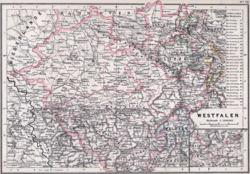
The Province of Westphalia (German: Provinz Westfalen) was a significant administrative territory of the Kingdom of Prussia and later the Free State of Prussia from 1815 to 1946. As a major component of the German Empire, the Weimar Republic, and Nazi Germany, Westphalia evolved from a collection of diverse territories into one of Europe's most vital industrial heartlands.
Centered in the capital city of Münster, the province served as a bridge between the agrarian traditions of the east and the burgeoning industrialization of the west. Its formation marked a pivotal shift for Prussia, expanding its demographic reach and introducing a substantial Catholic population into a predominantly Protestant state.
Key Facts
- Existence: 1815 to 1946.
- Capital: Münster.
- Area: 20,215 km² (7,805 sq mi).
- Peak Population: Approximately 5.2 million by 1939.
- Successor State: North Rhine-Westphalia.
- Economic Engine: The coal and steel industries of the Ruhr area.
Foundation and Early Structure
The province was established in 1815 following the Congress of Vienna. It was assembled from several distinct territories, including the Duchy of Westphalia, the Free Imperial City of Dortmund, and the County of Limburg. This consolidation created a region of 20,215 km² with an initial population of roughly 1.1 million people.
The demographic makeup was notably diverse for Prussia at the time: 56% of the population was Catholic, 43% Protestant, and 1% Jewish. This religious composition would later play a defining role in the region's political identity.
Social Unrest and the 1848 Revolution
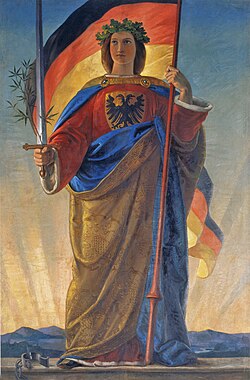
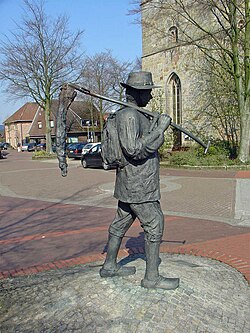
The mid-19th century was a period of volatility. Agrarian reforms and a series of poor harvests in the 1840s led to skyrocketing food prices and widespread rural dissatisfaction. Simultaneously, traditional manufacturing suffered a structural crisis, prompting mass emigration. Between 1845 and 1854, approximately 30,000 people—many from the linen-producing regions of eastern Westphalia—emigrated overseas.
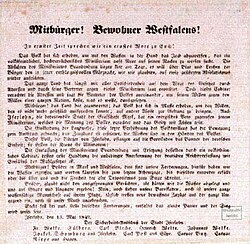
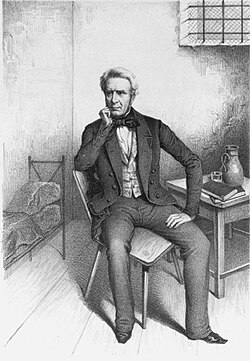
These tensions culminated in the Revolution of 1848-1849. Democratic movements gained momentum, leading to the "Congress for the matter and rights of the Prussian National Assembly and of the Prussian People" in Münster. However, the revolutionary wave ended in June 1849 following the defeat of the Iserlohn Uprising, leading to political prosecutions and further emigration to America.
Industrialization and Urban Transformation
Westphalia underwent a dramatic economic metamorphosis, transitioning from pre-industrial workshops to massive industrial complexes. Early production, such as sewing needles in Iserlohn, gave way to large-scale spinning mills and ironworks.
![Maste-Barendorf historic factory [de], Iserlohn (ca. 1850), a pre-industrial factory, producing sewing needles.](/images/36/21/3621176c96d66ce2872888741c0202c5853db8acb194b10e774aaddc779d6dcd.jpg)
![The Ravensberg Spinning Mill [de] in Bielefeld.](/images/52/58/5258f649730a499a96c1ad65ea197be2c52b96fd265eb47177a6879079fc4a86.jpg)
![Friedrich Harkort's factory in the ruins of Wetter Castle [de].](/images/46/8e/468e675cb9a3b9eaa22fcb83ebfe28c19fe156b3e7f388e04cecc4e5c09ebdfe.jpg)
The most explosive growth occurred in the Arnsberg district, the center of the province's industry. While the populations of Münster and Minden grew by roughly 100% between 1818 and 1905, Arnsberg's population surged by over 400%. This growth was fueled initially by internal migration and later by Polish-speaking workers from eastern Prussia, who established their own unions and cultural societies.
The Rise of the Mining Industry
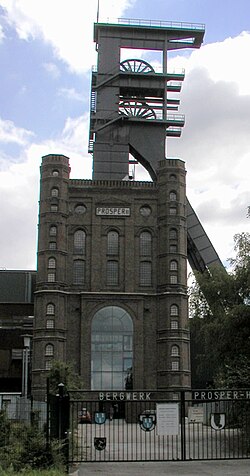
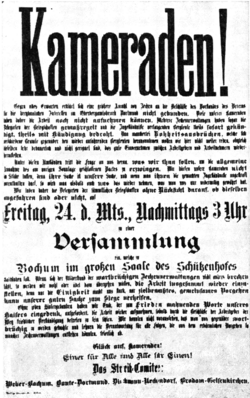
The coal mining districts developed a unique social profile and a distinct dialect known as Ruhrdeutsch. The harsh conditions of the mines led to the birth of organized labor. A landmark strike in 1889 served as a catalyst for the creation of the "Alte Verband" (Old Union) in Dortmund, followed by the Christian Miners' Union in 1894 and a Polish Union in 1902.
Political Landscape
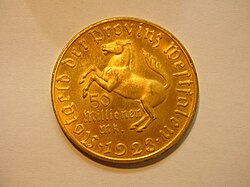
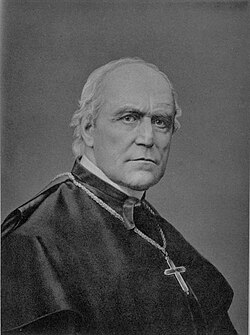
Politics in Westphalia were largely split along religious and class lines. The Centre Party (Zentrum), a Catholic party, dominated the religious heartlands. It was supported by a broad coalition of Catholic workers, farmers, and nobility, with the 1870 Soest Programme serving as a foundational document.
In contrast, the County of Mark and the area around Bielefeld became strongholds for social democracy. Figures like Carl Wilhelm Tölcke were instrumental in establishing the Social Democratic Party (SPD) across cities such as Gelsenkirchen, Bochum, and Hagen.
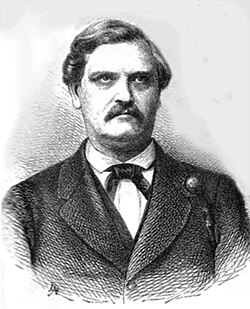
The World Wars and the Nazi Era
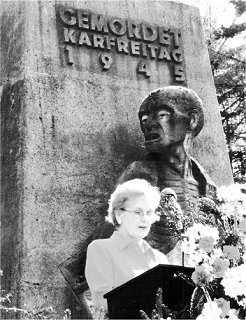
The interwar period was marked by instability. Following World War I, the region saw radicalization within workers' councils and the rise of the Freikorps (paramilitary units). While the 1923 introduction of the Rentenmark brought temporary stability, the 1928 Ruhr iron dispute highlighted the fragility of the peace.
The Nazi Party, initially insignificant in the 1928 elections, gained traction during the Great Depression. By 1933, they had secured significant support, though it varied by region: 28.7% in the Catholic Münster district compared to 40.7% in the Protestant Minden district. The subsequent period of Gleichschaltung (Nazification) saw the seizure of labor unions, the boycott of Jewish businesses, and the burning of books in cities like Münster.
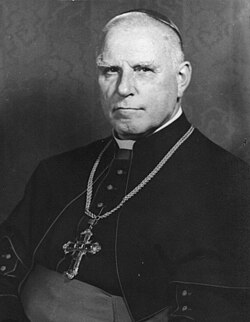
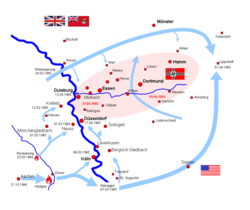
The end of World War II left the province in the British Occupation Zone. The region suffered immense damage, including the breaching of the Möhne Reservoir dam in 1943 and the brutal encirclement of the Ruhr in 1945.
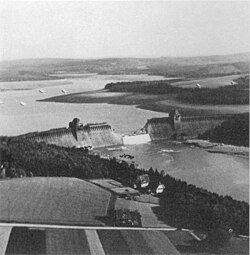
The End of the Province
In August 1946, the British military government abolished the Prussian provinces. Westphalia was merged with the northern part of the Rhine province to create the modern state of North Rhine-Westphalia. By 1947, the Free State of Lippe was also integrated, finalizing the transition from a Prussian province to a state within the Federal Republic of Germany.
| Year | Population |
|---|---|
| 1816 | 1,066,000 |
| 1871 | 1,775,000 |
| 1900 | 3,137,000 |
| 1925 | 4,784,000 |
| 1939 | 5,209,000 |
Frequently Asked Questions
What was the Province of Westphalia?
It was an administrative province of Prussia from 1815 to 1946, encompassing a large area of western Germany and serving as a major industrial and agricultural hub.
How did the population change during the industrial era?
The population grew dramatically, from about 1.1 million in 1816 to over 5.2 million by 1939, with the most intense growth occurring in the industrial Arnsberg district.
What was the significance of the Centre Party in Westphalia?
The Centre Party was the dominant political force in the Catholic regions of the province, uniting various social classes under a shared religious identity.
Why was the Ruhr area important to the province?
The Ruhr area was the center of coal mining and steel production, driving the province's economic growth and leading to the rise of powerful labor unions.
How did the province eventually cease to exist?
Following World War II, the British military government abolished the Prussian provinces in 1946, merging Westphalia with the northern Rhine province to form the state of North Rhine-Westphalia.