Matthias Erzberger: The Architect of German Financial Reform and Peace
Matthias Erzberger was a pivotal figure in early 20th-century German politics, serving as a bridge between the Imperial era and the fragile democracy of the Weimar Republic. A member of the Centre Party (a Catholic political party), Erzberger rose from a humble background to become the Vice-Chancellor and Minister of Finance of Germany. His career was defined by a courageous, often controversial, pursuit of peace during World War I and a radical restructuring of the German tax system.
Key Facts
- Roles: Vice-Chancellor of Germany and Minister of Finance (1919–1920).
- War Effort: Led the German delegation that signed the Armistice of 11 November 1918.
- Financial Legacy: Implemented the "Erzberger reforms," shifting taxing authority from states to the central government.
- Humanitarianism: One of the few German politicians who attempted to stop the Armenian, Greek, and Assyrian genocides in the Ottoman Empire.
- Fate: Assassinated on 26 August 1921 at the age of 45.
Early Life and Political Ascent
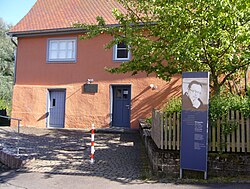
Born on 20 September 1875 in Buttenhausen, Württemberg, Erzberger was the son of a tailor and postman. His early professional life began as a Volksschule (primary school) teacher after graduating from seminaries in Schwäbisch Hall and Bad Saulgau. Driven by an interest in governance, he studied economics and constitutional law in Fribourg, Switzerland, before transitioning into journalism for the Deutsches Volksblatt in Stuttgart.
Erzberger entered the Imperial Reichstag in 1903 representing Biberach. He quickly established himself as an expert in financial and colonial policy, contributing to the financial reforms of 1909. While he initially supported Germany's military build-up between 1912 and 1913, his political trajectory shifted as the realities of World War I unfolded.
World War I and the Quest for Peace
During the early stages of the Great War, Erzberger was an enthusiastic supporter of Germany. However, he soon became a leading critic of unrestricted submarine warfare—the policy of sinking merchant ships without warning. In 1917, he proposed a landmark peace resolution in the Reichstag, calling for a negotiated end to the conflict without territorial annexations.
Beyond the European front, Erzberger demonstrated a rare humanitarian streak. He was one of the only German politicians, alongside Karl Liebknecht, to attempt to halt the genocides of Armenians, Greeks, and Assyrians within the Ottoman Empire. In February 1916, he traveled to Constantinople to negotiate with the Young Turk rulers, though his memorandum regarding the protection of Christians was ultimately ignored by the Ottoman government.
The Armistice of 1918
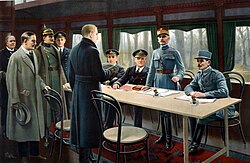
By October 1918, Erzberger joined the government of Prince Maximilian von Baden as a minister without portfolio. Because he was a Catholic civilian with a reputation for peace, he was chosen to head the Armistice Commission. On 11 November 1918, he signed the agreement in the Forest of Compiègne, effectively ending the fighting in World War I.
The Weimar Republic and Financial Revolution
Following the war, Erzberger was elected to the Weimar National Assembly. In June 1919, he assumed the roles of Vice-Chancellor and Minister of Finance under Chancellor Gustav Bauer. Despite fierce opposition from the nationalist right, Erzberger supported the Treaty of Versailles, believing there was no viable military or political alternative to its acceptance.
His most enduring contribution was the Erzberger reforms of July 1919. These reforms fundamentally altered the German state by:
- Transferring supreme taxing authority from individual states to the central federal government.
- Redistributing the tax burden to favor low- and moderate-income households.
- Introducing the first German inheritance tax and new levies on wealth and income.
Conflict, Resignation, and Assassination
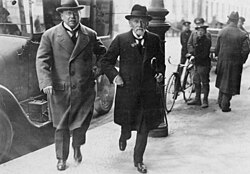
Erzberger's policies made him a target of the nationalist right, particularly the German National People's Party. He engaged in a bitter personal and legal feud with Karl Helfferich, who accused him of corruption. Although Helfferich was fined for slander, a court ruling in March 1920 suggested some of the allegations were partially justified, leading the Centre Party to pressure Erzberger into resigning his ministerial post.
Although he returned to the Reichstag in June 1920, he remained a polarizing figure. The combination of his role in the "humiliating" surrender of 1918 and his tax reforms on the wealthy made him a symbol of hatred for right-wing extremists. This animosity culminated in his assassination on 26 August 1921 in Bad Griesbach.
Summary of Matthias Erzberger's Career
| Period | Role/Event | Key Contribution/Outcome |
|---|---|---|
| 1903 | Elected to Reichstag | Specialized in colonial and financial policy. |
| 1916 | Mission to Constantinople | Attempted to stop Ottoman genocides. |
| 1917 | Peace Resolution | Advocated for negotiated peace without annexations. |
| 1918 | Armistice Signatory | Negotiated the end of WWI hostilities. |
| 1919 | Finance Minister | Centralized tax authority and redistributed tax burdens. |
Frequently Asked Questions
Why was Matthias Erzberger so hated by the German right wing?
He was viewed as a traitor for signing the Armistice of 1918 and supporting the Treaty of Versailles. Additionally, his financial reforms shifted the tax burden onto the wealthy, alienating the conservative elite.
What were the Erzberger reforms?
These were financial measures introduced in 1919 that gave the central German government the power to tax and spend, ending the dependence on individual states and introducing progressive taxation, including the first inheritance tax.
Did Erzberger try to help victims of the Armenian genocide?
Yes. He was one of the very few German politicians to actively oppose the persecution of Armenians, Greeks, and Assyrians, even traveling to Constantinople in 1916 to negotiate protections for Christians.
What led to his resignation in 1920?
A legal battle with Karl Helfferich over allegations of corruption. While Helfferich was fined for slander, the court's judgment partially validated some of the claims, prompting the Centre Party to demand Erzberger's resignation.
How did Matthias Erzberger die?
He was assassinated on 26 August 1921 in Bad Griesbach, Baden, as a result of the intense political hatred directed toward him by nationalist extremists.