Province of Posen: A History of Prussian Rule and Polish Identity
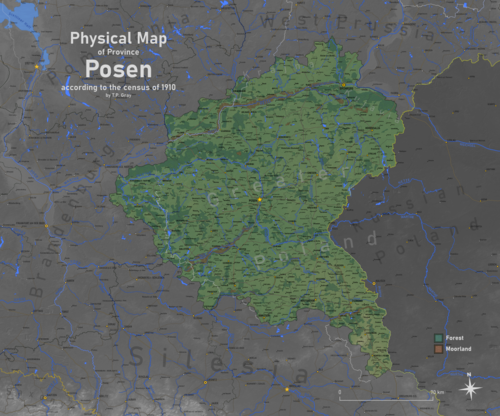
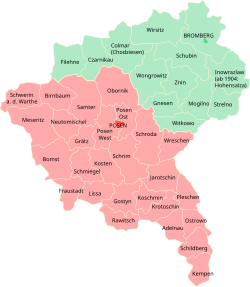
The Province of Posen (German: Provinz Posen; Polish: Prowincja Poznańska) was a significant administrative territory of the Kingdom of Prussia from 1848 to 1920. Encompassing most of the historical region of Greater Poland, the province served as a focal point of ethnic, linguistic, and political tension between German imperial ambitions and Polish national aspirations.
Established as a successor to the Grand Duchy of Posen following the Poznań Uprising of 1848, the province eventually became part of the German Empire in 1871. Its history is marked by a transition from semi-autonomous status to a period of intense Germanization—the state-led effort to replace Polish culture and language with German ones.
Key Facts
- Existence: 1848 to 1920.
- Capital: Poznań.
- Total Area (1910): 28,970 km².
- Population (1910): 2,099,831.
- Primary Regions: Regierungsbezirk Posen and Regierungsbezirk Bromberg.
- Outcome: Most territory was incorporated into the Second Polish Republic after 1919.
Geographic and Social Foundations
The province covered approximately 29,000 km², aligning closely with the borders of Greater Poland. For over a century, this land was part of the Prussian Partition, though it briefly became part of the Duchy of Warsaw during the Napoleonic Wars.
Socially, the region was characterized by a complex class structure. Following the end of the feudal system in Prussia in 1810, a distinct social divide emerged: primarily Polish serfs worked under noble lords, while predominantly free German settlers worked their own land but paid taxes to those same lords. Over time, the economic disparities between these groups narrowed, though ethnic distinctions remained sharp.
Political Evolution and the Era of Bismarck
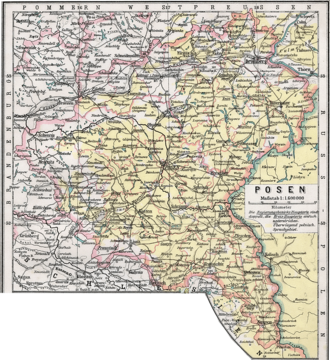
The territory first came under Prussian control during the First and Second Partitions of Poland (1772 and 1793). After the Congress of Vienna in 1815, it was administered as the semi-autonomous Grand Duchy of Posen. However, this autonomy eroded after the 1830 November Uprising, as Prussian authorities feared the spread of Polish nationalism.
By 1849, the region was officially renamed the Province of Posen. With the unification of Germany in 1871, the province became an integral part of the German Empire. This era saw the rise of Chancellor Otto von Bismarck, whose policies were overtly hostile toward the Polish population. Under his leadership, the state implemented oppressive measures to eradicate Polish identity, including the Kulturkampf (a conflict between the German government and the Catholic Church) and the creation of a colonization commission to settle more Germans in the east.
Further pressure came from the German Eastern Marches Society (Hakata), founded in 1894. By 1908, legislation was passed allowing the state to confiscate Polish-owned property. To maintain control, Prussian authorities suppressed industrial development, ensuring the economy remained dominated by high-level agriculture.
Demographics and Ethnic Composition
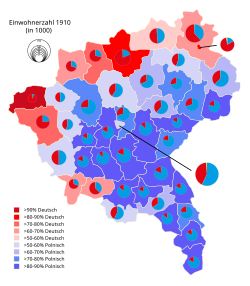
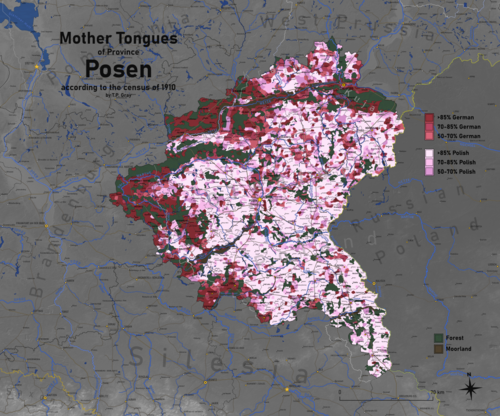
The ethnic makeup of Posen was a subject of intense dispute between Prussian and Polish statisticians. Prussian censuses often grouped German-speaking Jews with ethnic Germans, which inflated the perceived German presence.
| Year | Total Population | % Polish-speaking | % German-speaking |
|---|---|---|---|
| 1815 | 798,000 | 73% | 25% |
| 1846 | 1,343,135 | 71.7% | 39.9% |
| 1890 | 1,751,642 | 60.1% | 38.5% |
| 1910 | 2,099,831 | 61.5% | 38.4% |
While the 1910 Prussian census claimed a Polish majority of 61.5%, Polish historians argue the actual figure was closer to 65%. Following the establishment of the Second Polish Republic, the German population in the Poznań Voivodeship dropped to approximately 7%, due to the exodus of officials and soldiers, as well as the Polonization of local Catholics.
The Road to Dissolution
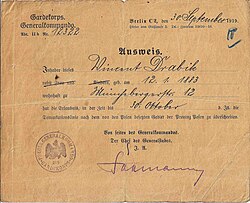
The end of World War I brought the province to a breaking point. On December 27, 1918, the Greater Poland Uprising broke out, driven by the desire of the Polish inhabitants to join the newly independent Second Polish Republic.
Following the success of the uprising, the region functioned as an independent state with its own currency and military until 1919. The Treaty of Versailles eventually formalized the division: 90% of the territory (the Polish-majority areas) was ceded to Poland as the Poznań Voivodeship. The remaining 10% (approximately 2,881 km²) remained with Germany and was merged into the province of Posen-West Prussia.
Frequently Asked Questions
What was the Province of Posen?
It was a province of the Kingdom of Prussia from 1848 to 1920, covering most of the historical region of Greater Poland and serving as a site of conflict between German and Polish national identities.
How did Otto von Bismarck affect the region?
Bismarck implemented aggressive Germanization policies, including the Kulturkampf and the use of a colonization commission, aimed at eradicating Polish culture and language to secure German dominance.
What happened to the province after World War I?
Following the Greater Poland Uprising and the Treaty of Versailles, the majority of the province was incorporated into the Second Polish Republic as the Poznań Voivodeship, while a small remainder became part of Posen-West Prussia.
Why are there discrepancies in the population statistics?
Prussian statistics often included German-speaking Jews and military personnel as "Germans," whereas Polish estimates focused on ethnic identity. Additionally, many Germans left the region after 1918.
What was the economic focus of the province?
The economy was dominated by high-level agriculture, as the Prussian authorities intentionally restricted the development of industries in the region.