Protectionism: Economic Impacts, History, and Global Trade Policy
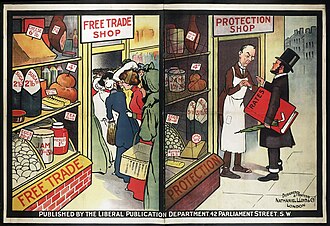
Protectionism is an economic policy designed to restrict imports from other countries. By implementing barriers to foreign goods, governments aim to shield domestic producers, businesses, and workers from international competition. This is typically achieved through tariffs (taxes on imported goods), import quotas (limits on the quantity of goods allowed into a country), and various other government regulations.
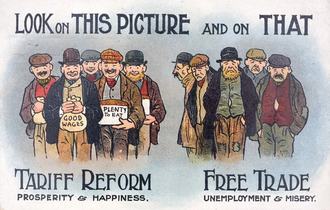
The debate over protectionism often pits economic nationalists, who advocate for shielding domestic industries, against economic liberals, who champion free trade. While proponents argue that these policies protect local jobs and increase government revenue, opponents contend that they raise costs for consumers and harm export-oriented sectors both at home and abroad.
Key Facts

- Primary Tools: Protectionism relies on tariffs, quotas, and regulatory barriers to limit foreign imports.
- Economic Consensus: Most mainstream economists agree that free trade promotes economic growth, while protectionism generally hinders it.
- Consumer Impact: Protectionist policies typically lead to higher prices for imported goods and services.
- Historical Role: Some economists link protectionism to the severity of the Great Depression, though views vary on whether it was a cause or a response.
- U.S. Evolution: U.S. trade policy has shifted from revenue generation (1790–1860) to industry protection (1861–1933) and finally to reciprocal trade agreements (1934–2016).
The Economic Debate: Growth vs. Protection
There is a broad consensus among economists that reducing trade barriers has a significantly positive effect on economic welfare and growth. Trade liberalization—the removal of these barriers—lowers costs for both producers and consumers.
However, the transition to free trade is not without friction. In the short term, it can cause economic dislocation for workers in sectors that cannot compete with cheaper imports. This distributional inequality often fuels the political appeal of protectionist measures.
Different economic schools offer varying perspectives on the severity of these impacts. For instance, Douglas Irwin suggests protectionism contributed heavily to economic crises like the Great Depression. In contrast, New Keynesian economist Paul Krugman argues that tariffs were more of a response to the Great Depression than its primary cause, viewing protectionism as a minor source of allocative inefficiency.
Historical Perspectives on Trade Policy
The Experience of Argentina
Argentina provides a notable example of the benefits of openness. Between 1880 and 1929, the country was described as a "super-exporter." This boom is attributed to low trade costs and a multilateral, open economic system that allowed Argentina to offer a diverse range of products to European and American markets.
The Evolution of United States Trade Policy
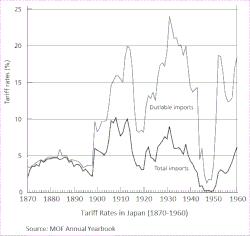
According to historian Douglas Irwin, U.S. tariffs have historically served three main purposes: generating federal revenue, protecting domestic producers, and securing reciprocity through trade agreements.
- The Revenue Period (1790–1860): Import duties were the primary source of federal income, accounting for roughly 90% of receipts.
- The Restriction Period (1861–1933): As domestic taxation grew, the focus shifted toward protecting domestic industries.
- The Reciprocity Period (1934–2016): The primary goal became the negotiation of reciprocal trade agreements to lower barriers globally.
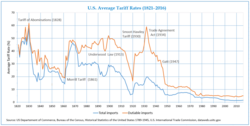
A common misconception is that high tariffs were the primary driver of U.S. industrial power in the late 19th century. While tariffs were high, research suggests they cost approximately 0.5% of GDP in the mid-1870s. The actual drivers of growth were abundant natural resources, foreign capital, imported technologies, and large-scale immigration.
The Great Depression and the Smoot-Hawley Tariff
The period between 1929 and 1933 marked a turning point. The Great Depression led to a political shift in 1932, ending decades of Republican dominance and bringing Democrats to power. This realignment shifted priority toward export-oriented interests, leading to a decline in average tariff levels and a move toward reciprocity.
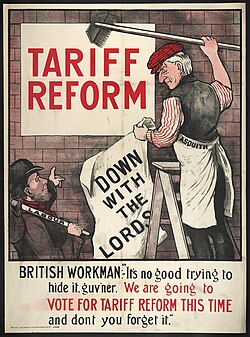
Modern Trends and Global Impact
In the contemporary era, protectionism has seen a resurgence. Following the 2008 Washington G20 summit, the World Bank reported that 17 of the 20 major economies imposed trade-restrictive measures as a response to the global economic slowdown. Estimates suggest that measures taken through late 2009 distorted global merchandise trade by 0.25% to 0.5%, amounting to roughly $50 billion per year.
![Protectionist measures taken since 2008 according to Global Trade Alert[134]](/images/d0/e7/d0e7af470c7f3f9518580781cd134c2f5dfc789e85039adc67ef3a5ae4495764.png)
| Era | Timeframe | Primary Objective | Key Driver/Event |
|---|---|---|---|
| Revenue Period | 1790–1860 | Federal Government Funding | Import duties as main income |
| Restriction Period | 1861–1933 | Domestic Industry Protection | Civil War / Industrialization |
| Reciprocity Period | 1934–2016 | Trade Agreement Negotiation | Great Depression / Post-WWII |
Frequently Asked Questions
What is the difference between a tariff and a quota?
A tariff is a tax imposed by a government on imported goods, which increases the price of the product for consumers. A quota is a physical limit on the total quantity of a specific good that can be imported during a given period.
Why do some governments use protectionist policies?
Governments use these policies to protect domestic businesses and workers from foreign competition, prevent the decline of strategic industries, and generate revenue through import duties.
Does protectionism always help domestic workers?
While it may protect workers in import-competing sectors in the short term, it can harm workers in export sectors and increase costs for all consumers, potentially offsetting the initial benefits.
How did the Great Depression change U.S. trade policy?
The Great Depression led to a political realignment that shifted the U.S. away from high protective tariffs and toward a policy of reciprocity, where trade barriers were lowered through mutual agreements with other nations.
What is the general consensus among economists regarding free trade?
Most mainstream economists agree that free trade and the reduction of trade barriers have a significantly positive effect on overall economic growth and global economic welfare.