Tariffs and Their Impact on Global Trade and Economic Welfare
A tariff, commonly known as an import tax, is a duty imposed by a national government, customs territory, or supranational union on goods imported from abroad. While these taxes are paid by the importer, they serve as a powerful tool for governments to generate revenue and regulate foreign trade. By increasing the cost of foreign products, tariffs are often used to safeguard domestic industries from international competition.
Beyond import duties, some governments may levy export taxes on raw materials or finished goods, which are paid by the exporter. Tariffs are a primary instrument of protectionism—the economic policy of restricting imports to encourage domestic production—and are often used alongside import quotas and other non-tariff barriers.
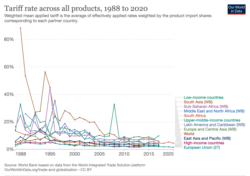
How Tariffs Work
Tariffs generally fall into two categories: fixed tariffs, which are a constant sum per unit or a set percentage of the price, and variable tariffs, where the amount fluctuates based on the price of the good. The primary goal of an import tariff is to raise the price of foreign goods, thereby discouraging consumption and incentivizing citizens to purchase local alternatives.
Supporters of this approach argue that tariffs stimulate the national economy by encouraging import substitution industrialisation—the process of replacing foreign imports with domestic production. This is often justified as a way to protect "infant industries" (new industries that are not yet competitive) or to counteract unfair trade practices such as dumping (exporting goods at prices lower than the home market) and currency manipulation.
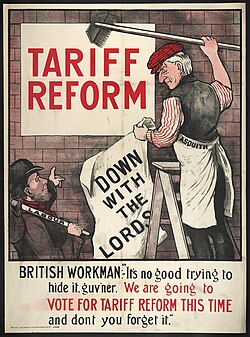
The Economic Debate: Protectionism vs. Free Trade
While political arguments often favor tariffs for job protection, there is a near-unanimous consensus among economists that tariffs are self-defeating. Experts argue that trade barriers negatively impact economic growth and overall welfare, whereas free trade lowers costs for both producers and consumers.
The economic burden of a tariff is shared among the importer, the exporter, and the end consumer. In many cases, tariffs backfire; by raising the cost of imported raw materials (input costs), they can actually harm the domestic industries they were intended to protect. Furthermore, tariffs often trigger retaliatory measures from trading partners, leading to trade wars.
![Effects of an import tariff, which hurts domestic consumers more than domestic producers are helped. Higher prices and lower quantities reduce consumer surplus by areas A+B+C+D, while expanding producer surplus by A and government revenue by C. Areas B and D are dead-weight losses, surplus lost by consumers and overall.[51] For a more detailed analysis of this diagram, see Free trade#Economics.](/images/07/f9/07f96fb0931722367a948955143800d29a83e1c32b28414fb509a0fad4523c0d.png)
Key Facts
- Primary Purpose: To raise the price of imported goods to protect domestic industries and generate government revenue.
- Economic Consensus: Most economists agree that tariffs reduce overall economic growth and welfare.
- Consumer Impact: Tariffs typically lead to higher prices and lower quantities of goods available to consumers.
- Global Trends: While some nations like Switzerland have abolished industrial tariffs to boost economic benefits, others have increased them to combat trade deficits.
- Long-term Effects: A 2021 study of 151 countries found that raising tariffs leads to long-term drops in productivity and output, alongside increased inequality.
Analysis of Tariff Effects
To understand the impact of a tariff, economists analyze the transfer of wealth and the resulting losses to the economy. The following table breaks down the components of tariff impact:
| Region/Symbol | Description and Meaning | Transfer or Loss |
|---|---|---|
| A | Producer surplus (additional revenue for domestic producers) | Transfer from consumers to producers |
| B | Deadweight loss | Overall economic loss |
| C | Tax revenue to governments | Transfer from consumers to government |
| D | Trades prevented because price exceeds willingness to pay | Deadweight loss |
Historical and Modern Applications
Historical Context
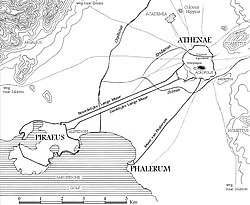
Tariffs have been used since antiquity. In Ancient Greece, the port of Piraeus utilized infrastructure like the Long Walls to secure the transportation of goods into Athens.
In the United States, tariff policy has shifted through various eras, from the revenue-focused period (1790–1860) to the restrictive era of the Great Depression. The Smoot–Hawley Tariff Act of 1930 is historically cited as a measure that deepened the economic crisis of the 1930s.
![Average tariff rates in US (1821–2016)[needs update]](/images/fd/9d/fd9d4b097730d5bde2f732f282fe0002988e84eaf1ba1499a815af508f5c5ac9.png)
Modern Global Practices
Current tariff strategies vary wildly by nation. Russia and India have historically employed protectionist measures to boost domestic manufacturing (such as the "Make in India" drive). Conversely, Switzerland abolished tariffs on industrial products in 2024, estimating an annual economic benefit of 860 million CHF.
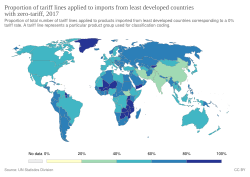
Recent U.S. Trade Policy
Under the first presidency of Donald Trump, the U.S. implemented significant tariffs on solar panels, washing machines, steel (25%), and aluminum (10%). These measures escalated into a trade war with China. By April 2025, a proposed 10% base tariff on all imports would potentially raise the U.S. trade-weighted average tariff from 2% to 24%, the highest level in over a century.
![Average tariff rates (France, UK, US)[needs update]](/images/dc/1a/dc1a3580f67c10e457adf6a9c5b8e0bb5c2eae3fb07ef60a67c990bf87b0a6a9.png)
Frequently Asked Questions
Who actually pays for a tariff?
Although the government imposes the tariff on the importing company, the cost is typically passed down to the consumer through higher prices. The economic burden is shared between the importer, the exporter, and the consumer.
Can tariffs help a country's economy?
Proponents argue they protect infant industries and reduce trade deficits. However, most economists find that they lead to long-term drops in productivity, higher unemployment, and increased inequality.
What is a "deadweight loss" in the context of tariffs?
Deadweight loss refers to the overall loss of economic efficiency. It occurs when the tariff raises prices so high that consumers stop buying a product, and the resulting loss in consumer utility is not offset by any gain in producer or government revenue.
What is the difference between a fixed and variable tariff?
A fixed tariff is a constant amount (either a specific sum per unit or a set percentage), while a variable tariff changes based on the current market price of the imported good.
How do tariffs affect domestic exporters?
Tariffs can harm domestic exporters by disrupting their supply chains and increasing the cost of imported raw materials needed for production, making their final products less competitive globally.