Proscription: The History of State-Sanctioned Condemnation
In the realm of political history and law, proscription refers to a formal decree of condemnation that typically results in death or banishment. Derived from the Latin proscriptio, the term describes a process where the state officially identifies individuals as enemies, stripping them of their protections and, in many cases, their property.
While the term began as a specific legal mechanism in ancient Rome, its meaning has expanded over centuries. Today, it is used more broadly to describe various governmental sanctions and the systemic suppression of individuals or groups who have fallen out of political favor, ranging from the banning of ideologies to the blacklisting of political rivals.
Key Facts
- Definition: A decree of condemnation leading to death, banishment, or the loss of civil rights.
- Origin: Ancient Rome, where it involved public lists of enemies of the state.
- Common Outcomes: Execution, exile, and the confiscation of assets.
- Modern Usage: Includes the banning of terrorist organizations and the suppression of cultural or political groups.
The Roman Origins of Proscription
Proscription first gained prominence during the Roman Republic as a tool for political consolidation. It was not merely a sentence of death but a public declaration that rendered a person an outlaw, meaning anyone could kill them without legal repercussion.
Sulla's Reprisals
One of the most notorious examples occurred under Lucius Cornelius Sulla, a Roman proconsul and later dictator. Following his victory in the civil war of 83–82 BC, Sulla launched a proscription campaign specifically designed to eliminate the supporters of his rival, Marius.
The Second Triumvirate
Later, the Second Triumvirate—consisting of Octavian Caesar, Marcus Antonius, and Marcus Lepidus—utilized proscriptions to avenge the assassination of Julius Caesar. This period was characterized by the systematic elimination of political enemies and the seizure of their wealth to fund the Triumvirate's goals.
Historical Evolution and Global Examples
Beyond Rome, the concept of proscription has appeared in various forms across different cultures and eras, often coinciding with civil unrest or regime changes.
In 1651, following the Battle of Worcester, the Royalists were suppressed after the decisive victory of Oliver Cromwell over Charles II.
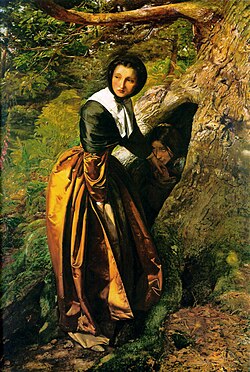
Other notable historical instances include:
- 18th-Century China: The curbing of Western religious practices.
- Scotland (1745): The banning of Highland dress following the Jacobite rising.
- French Revolution (1793–1796): The atrocities committed during the Reign of Terror.
- Crimean War (mid-19th century): The mass deportation of French and British workers from Russia.
Proscription in the 20th and 21st Centuries
In modern contexts, proscription often takes the form of legal bans on organizations or the blacklisting of individuals to prevent political influence.
In the United Kingdom, the Labour Party previously employed blacklisting to prevent "Communist entryism," a process of infiltrating a political party to change its policies from within. Similarly, the Soviet Union implemented broad prohibitions against Jewish cultural institutions and activities after 1948, coinciding with the birth of the state of Israel and the Arab–Israeli War.
In more recent decades, governments have used proscription to combat terrorism. In Ireland during the 1970s, membership in and support for organizations like the Provisional IRA and the INLA were banned. Most recently, the UK government proscribed Palestine Action in 2025.
Summary of Notable Proscriptions
| Period/Era | Entity/Leader | Target Group | Primary Action |
|---|---|---|---|
| 83–82 BC | Lucius Cornelius Sulla | Supporters of Marius | Elimination and property seizure |
| Roman Republic | Second Triumvirate | Political enemies of Caesar | Execution and asset confiscation |
| 1651 | Oliver Cromwell | Royalists | Suppression after Battle of Worcester |
| 1745 | British Government | Scottish Highlanders | Banning of Highland dress |
| 1793–1796 | French Revolutionaries | Perceived enemies of Republic | Reign of Terror atrocities |
| Post-1948 | Soviet Union | Jewish institutions | Cultural and activity prohibitions |
| 2025 | UK Government | Palestine Action | Official proscription |
Frequently Asked Questions
What is the literal meaning of proscription?
Literally, proscription is a decree of condemnation that leads to death or banishment. In its original Roman context, it involved the public posting of names of people declared enemies of the state.
How does proscription differ from a standard legal trial?
Unlike a trial, proscription is often a summary decree. In ancient Rome, it bypassed traditional judicial processes, allowing the state to identify enemies and authorize their killing or the seizure of their property without a court hearing.
Is proscription still used in modern law?
Yes, though the application has shifted. Modern proscription is frequently used to outlaw specific organizations, such as terrorist groups, making it a crime to belong to or support them.
What was the purpose of Sulla's proscriptions?
Sulla used proscriptions as a reprisal campaign to eliminate the political influence and physical presence of his rival Marius's supporters following the civil war of 83–82 BC.
What are some related legal or political terms?
Related concepts include attainder (the loss of civil rights), damnatio memoriae (the erasure of a person from history), ostracism (exclusion from a society), and purges (the removal of people from an organization or government).