Progressive Music: Expanding the Boundaries of Genre
Progressive music is defined by its ambition to push the existing stylistic boundaries of established genres. Rooted in the concept of progress—advancement through accumulation—this approach synthesizes diverse cultural influences, ranging from European art music and Celtic folk to West Indian and African traditions. Rather than adhering to commercial formulas, progressive music often positions itself as a cultural alternative, frequently utilizing concept albums and the vision of auteur-stars to challenge traditional industry structures.
From a theoretical perspective, the progressive approach exists between formalism (a focus on established compositional systems and structural unity) and eclecticism (a preference for synthesizing styles). While it shares the integrative nature of eclecticism, progressive music often highlights the discontinuities between historical styles, contemporary sounds, and electronic media. In the commercial marketplace, the term is frequently used to distinguish high-art aspirations from "commercial" pop music.
Key Facts
![Bandleader Stan Kenton coined "progressive jazz" for his complex, loud, and brassy approach to big band jazz that conveyed an association with art music.[1]](/images/f6/7c/f67c60402d9a895761772b8a82ea89ced84bb09d3513557690bc2c79f0c473a9.jpg)
- Core Goal: To expand and evolve the stylistic boundaries of specific musical genres.
- Influences: Integrates European art music, African, West Indian, and Celtic folk traditions.
- Format Shift: Prioritizes the album as a cohesive work of art over the standalone single.
- Philosophy: Emphasizes personal autonomy and the role of the musician as a composer rather than just a performer.
- Cross-Genre Reach: Spans rock, jazz, soul, electronic, and hip-hop.
Progressive Rock and Art Rock
Progressive rock, often used interchangeably with art rock, emerged in the late 1960s as a movement to break away from standard pop formulas. While art rock tends to lean more toward avant-garde or experimental influences, both share a commitment to poetic lyrics, the use of new technology for sonic exploration, and the adoption of harmonic languages from jazz and 19th-century classical music. During this era, the recording studio became the primary site of creativity, shifting the focus from danceable music to music intended for deep listening.
The rise of this genre was supported by a mid-1960s economic boom that allowed record labels to grant artists more creative freedom. This created a divide between "progressive" pop—often associated with middle-class students—and "mass/chart" pop. Early pioneers, retrospectively labeled proto-prog, utilized longer compositions and medleys, drawing from classical music and psychedelic rock. Bands like The Nice, Procol Harum, and the Moody Blues paved the way for King Crimson, whose 1969 debut In the Court of the Crimson King is credited with crystallizing the genre into a recognizable style.
![Pink Floyd performing The Dark Side of the Moon (1973), the best-selling album of the progressive rock period.[34]](/images/b9/fa/b9fad19dfde41c2ce20139df61d091f35e9824a261289ae959722ffb1fecc338.jpg)
The Evolution to Post-Progressive
By the mid-to-late 1970s, the genre faced criticism for perceived pretentiousness, particularly regarding bands like Yes, Genesis, and Emerson, Lake & Palmer. By the early 1980s, many groups adopted more commercial sounds, leading to the term post-progressive. Robert Fripp of King Crimson argued that "progressive" should be viewed as an attitude rather than a style; once the music stopped pushing boundaries and began repeating conventions, it ceased to be truly progressive.
Progressive Soul and Funk
In the 1970s, a parallel movement occurred within African-American music. Progressive soul saw artists like Stevie Wonder, Marvin Gaye, Sly Stone, Curtis Mayfield, and George Clinton introduce greater musical sophistication and ambitious lyricism to black pop. This movement, flourishing between 1968 and 1973, blended adventurous rock guitar with classic R&B melodies and socially conscious themes.
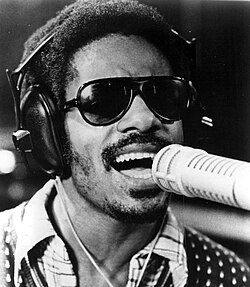
Unlike the suites found in white progressive rock, progressive soul typically unified extended tracks through an underlying rhythmic groove. These artists drew heavily from African and African-American musical idioms, though some incorporated European traditions for ironic or emotional effect. For instance, Stevie Wonder used string sections in "Village Ghetto Land" to contrast a bleak critique of urban poverty with a pleasant instrumental texture.
Electronic and Dance Music
The progressive label also extended into electronic music. Tangerine Dream's 1974 album Phaedra, utilizing a Moog sequencer, is cited as an early masterpiece of the form. In the 1980s, Detroit DJs used "progressive" to describe Italian disco influenced by Giorgio Moroder, distinguishing it from the symphonic Philadelphia sound.
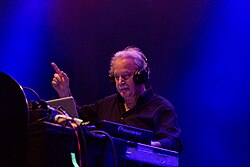
By 1993, progressive house and trance emerged in clubs. Progressive house was characterized by long tracks, big riffs, and multi-tiered percussion. Critics note that the "progressive" label in this context often signified a departure from the roots of gay black disco toward a more detached, "anti-cheese" aesthetic.
Progressive Hip-Hop
Progressive rap began with early works that addressed the chaos of urban life, such as Grandmaster Flash and the Furious Five's "The Message" and the music of Public Enemy. Later, groups like De La Soul, A Tribe Called Quest, and Brand Nubian expanded the genre's thematic range.
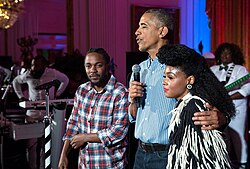
At the turn of the millennium, acts like Outkast and The Roots pushed hip-hop in an avant-garde direction. Kanye West furthered this tradition with his early education-themed trilogy and his 2010 album My Beautiful Dark Twisted Fantasy, which is associated with prog-rap due to its ostentatious style and sampling of progressive rock records.
Summary of Progressive Genres
| Genre | Key Characteristics | Notable Influences | Key Artists |
|---|---|---|---|
| Progressive Rock | Concept albums, long compositions, studio-focused | Classical, Jazz, Psychedelia | King Crimson, Yes, Genesis |
| Progressive Soul | Rhythmic grooves, social consciousness, sophistication | R&B, African idioms, Rock guitar | Stevie Wonder, Marvin Gaye |
| Progressive House | Long tracks, big riffs, multi-tiered percussion | Euro disco, Italian disco | Giorgio Moroder (influence) |
| Progressive Rap | Avant-garde production, urban social critique | Jazz, Progressive Rock sampling | Outkast, Kanye West |
Frequently Asked Questions
What is the difference between progressive rock and art rock?
While the terms are often used synonymously, art rock is more likely to incorporate experimental or avant-garde influences compared to the broader progressive rock style.
What does "proto-prog" refer to?
Proto-prog is a retrospective term for the first wave of musicians in the late 1960s who began using classical influences and complex compositions before the definitive progressive rock style was crystallized.
How does progressive soul differ from progressive rock?
While both emphasize artistic autonomy and extended compositions, progressive soul typically unifies its tracks with a consistent rhythmic groove and draws from African and African-American musical idioms rather than European art music.
What is "post-progressive" music?
Post-progressive refers to rock music that moved away from the specific 1970s progressive style, often adopting a more commercial sound and removing the explicit evocations of art music.
Why was the term "progressive" used in house music?
In the context of house and trance, "progressive" was used to define specific taste markets, often signifying a sound that was distinct from traditional gay black disco and characterized by longer, more complex tracks.