Prehistory: The Journey from Stone Tools to Early Civilizations
Prehistory, often called pre-literary history, encompasses the vast stretch of human existence between the first known use of stone tools approximately 3.3 million years ago and the invention of writing systems. Because writing developed at different times across the globe, the transition from prehistory to recorded history is not a single date, but a staggered process that varied by region.
Unlike recorded history, which relies on written documents to name individuals and nations, prehistory is essentially anonymous. It is reconstructed through archaeological cultures—groups identified by their material remains and artifacts rather than written records. When a culture is described by other literate societies but has not yet developed its own writing, it is referred to as being in a state of protohistory.
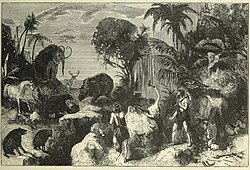
Key Facts
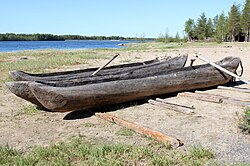
- Timespan: Covers roughly 3.4 million years, accounting for 99% of human history.
- Earliest Tools: The first stone tools date back to 3.3 million years ago in Kenya.
- The Neolithic Revolution: The shift from hunting and gathering to farming and permanent settlements.
- Regional Variance: Prehistory ended around 3100 BCE in Egypt, but as late as the 1870s in parts of New Guinea.
- Material Evidence: Knowledge is derived solely from anthropological evidence and archaeological artifacts.
The Timeline of Human Prehistory
![Entrance to the Ġgantija phase temple complex of Ħaġar Qim, Malta, 3900 BCE[34]](/images/0d/e0/0de00e06ba46233335fa3869086714b99a75ad1c6778f28c3c04a490ecad181e.jpg)
The boundaries of prehistory vary by geography. For instance, African prehistory begins roughly 2.5 million years ago, while European prehistory starts around 1.3 million years ago with the first human arrivals. The end date is equally fluid; while Egypt entered recorded history millennia ago, other regions remained pre-literate until the modern era.
The Stone Age
The Stone Age is the longest period of human existence, ending between 4000 BCE and 2000 BCE. It is divided into three primary stages: the Palaeolithic, Mesolithic, and Neolithic.
The Palaeolithic (Old Stone Age) began with the Lower Palaeolithic, where the earliest tools were likely used by Kenyanthropus. A pivotal development during this era was the control of fire, with evidence from Israel suggesting H. erectus or H. ergaster managed fires between 790,000 and 690,000 years ago. Fire provided warmth, protection, and the ability to cook food.
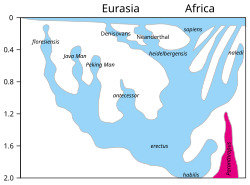
The Middle Palaeolithic saw the emergence of early Homo sapiens about 300,000 years ago, alongside anatomical changes that enabled modern language. This era is marked by the first definitive evidence of fire in Zambia (180,000 BP), the systematic burial of the dead, and the creation of prehistoric art.
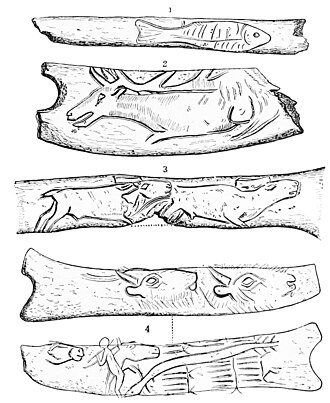
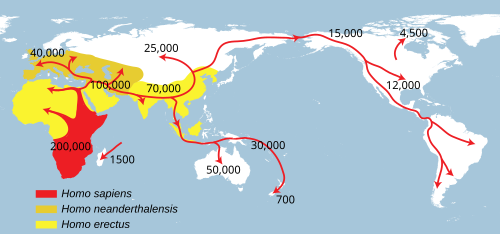
The Upper Palaeolithic (50,000 to 12,000 years ago) witnessed the blossoming of artistic expression and the first organized settlements. By 40,000 BP, humans had reached the southern half of the Australian mainland, and by 30,500 BP, they had populated New Guinea.
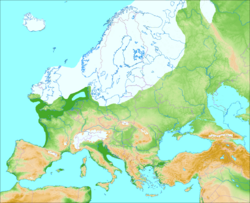
The Neolithic Revolution
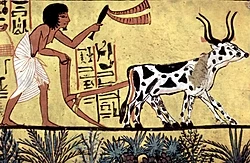
The Neolithic (New Stone Age) began around 10,200 BCE in the Middle East. This era is defined by the Neolithic Revolution: the transition from nomadic hunting and gathering to agriculture and the domestication of animals. This shift allowed for permanent settlements and the rise of early chiefdoms.
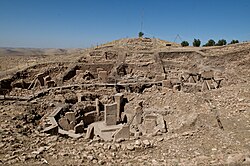
Early agricultural milestones include the cultivation of sterile figs in Gilgal I (Jordan Valley) and the later cultivation of barley and wheat in northern Mesopotamia, which were used for gruel, soup, and eventually beer and bread.
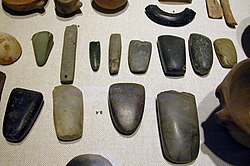
The Transition to Metalworking
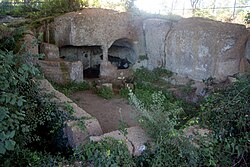
The Chalcolithic (Copper Age)
The Chalcolithic serves as a bridge between the Stone Age and the Bronze Age. Evidence from Serbia indicates copper smelting occurred as early as 7,500 years ago, suggesting that metallurgy may have been invented independently in different parts of Europe and Asia. In the Timna Valley, copper mining was active 7,000 years ago.
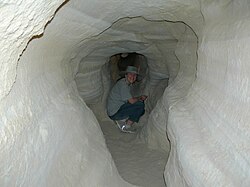
The Bronze and Iron Ages
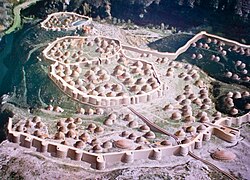
As copper was alloyed with other metals, the Bronze Age emerged, followed by the Iron Age. These periods saw the rise of walled cities, such as Los Millares in Iberia, and more complex social structures. The adoption of these technologies often followed trade routes, such as the import of iron technology into North Africa and the Nile Valley from the Near East.
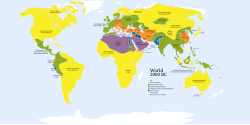
Summary of Prehistoric Eras
| Era | Approximate Timeframe | Key Characteristics | Major Milestones |
|---|---|---|---|
| Palaeolithic | 3.3 million – 12,000 years ago | Nomadic, stone tools | Control of fire, language, cave art |
| Neolithic | 10,200 BCE – 2,000 BCE | Farming, permanent villages | Domestication of crops/animals |
| Chalcolithic | Varies (c. 5,500 BCE) | Copper smelting | Early metallurgy, mining |
| Bronze/Iron Age | 4th millennium BCE onwards | Metal alloys, urbanism | Walled cities, complex states |
Frequently Asked Questions
What is the difference between prehistory and protohistory?
Prehistory refers to the time before any written records existed for a specific culture. Protohistory is the period when a culture has not yet developed its own writing system but is being described in the written records of other, literate civilizations.
When did the Stone Age end?
The Stone Age ended between 4000 BCE and 2000 BCE, depending on the region, as metalworking (starting with copper) became the dominant technology.
Who were the first tool users?
The earliest known stone tools, dated to 3.3 million years ago at the Lomekwi site in Kenya, predate the genus Homo and were likely used by Kenyanthropus.
What was the Neolithic Revolution?
The Neolithic Revolution was the fundamental shift from a hunter-gatherer lifestyle to an agricultural one, involving the domestication of plants and animals and the establishment of permanent human settlements.
How do scientists study prehistory without written records?
Researchers rely on archaeology and anthropology, analyzing material remains, fossils, and artifacts (such as polished stone tools or pottery) to reconstruct the lives of prehistoric peoples.