Homo sapienshuman evolutionhuman biologyhuman population densityhuman genetics

Humanity: The Biology, Evolution, and Culture of Homo sapiens

The Story of Humanity: Evolution, Biology, and Culture From the earliest ancestors to a global civilization of over 8 billion people, the journey of Homo sapiens is a remarkable saga of b...

The Story of Humanity: Evolution, Biology, and Culture

From the earliest ancestors to a global civilization of over 8 billion people, the journey of Homo sapiens is a remarkable saga of biological adaptation and cultural ingenuity. As a species, humans have transitioned from small groups of hunter-gatherers to a dominant global force, reshaping the planet through technology, language, and complex social structures.
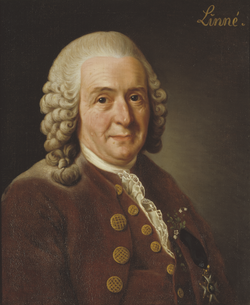
Carl Linnaeus coined the name Homo sapiens.
: Carl Linnaeus coined the name Homo sapiens.

Key Facts

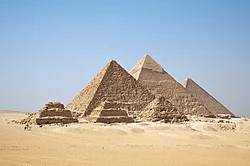
Great Pyramids of Giza, Egypt
  • Scientific Name: Homo sapiens
  • World Population: Approximately 8.3 billion
  • Global Density: 16 people per km² (total area); 55 people per km² (land area)
  • Biological Classification: Kingdom Animalia, Phylum Chordata, Class Mammalia, Order Primates
  • Primary Languages: English, Mandarin Chinese, Hindi, Spanish, and Standard Arabic

Evolutionary Origins
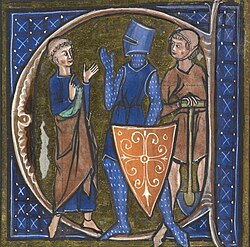
Medieval French manuscript illustration of the three classes of medieval society from the 13th-century Li Livres dou Santé

The evolutionary timeline of humans spans hundreds of thousands of years. While the exact classification of which species should be termed "human" is a subject of ongoing scientific discussion, the lineage leading to modern humans is well-documented through the fossil record.
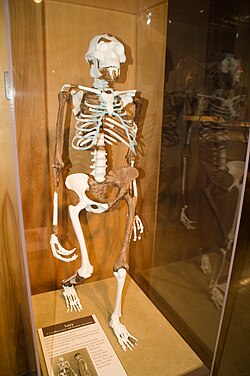
Reconstruction of Lucy, the first Australopithecus afarensis skeleton found
: Reconstruction of Lucy, the first Australopithecus afarensis skeleton found

Early hominids paved the way for the emergence of Homo sapiens, a species characterized by significant cognitive development and physical adaptations. One of the most significant milestones in our history was the migration of early humans out of Africa, eventually leading to the peopling of the entire globe.
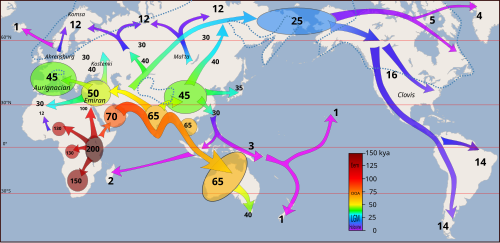
Overview of the peopling of the world by early human migration during the Upper Paleolithic, following the Southern Dispersal paradigm
: Overview of the peopling of the world by early human migration during the Upper Paleolithic, following the Southern Dispersal paradigm

Biological Foundations

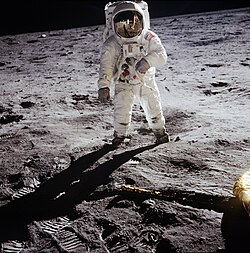
Buzz Aldrin on the Moon during the 1969 Apollo 11 mission, as he and Neil Armstrong became the first humans to set foot on another celestial body.

At a fundamental level, humans are placental mammals belonging to the order Primates. Our biology is defined by a complex genetic makeup, including a standard karyotype—the organized profile of an individual's chromosomes.
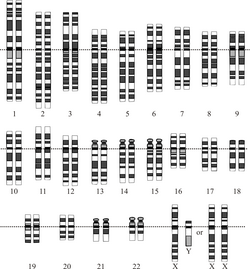
A graphical representation of the standard human karyotype, including both the female (XX) and male (XY) sex chromosomes
: A graphical representation of the standard human karyotype, including both the female (XX) and male (XY) sex chromosomes

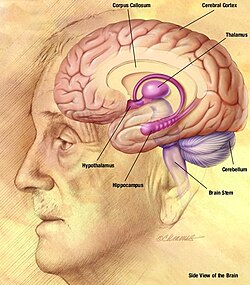
Human development begins as a tiny embryo, growing through various stages of life from infancy and childhood through adolescence to adulthood and old age. This life cycle is supported by intricate anatomy and physiology, including a highly developed brain that facilitates advanced thought and consciousness.
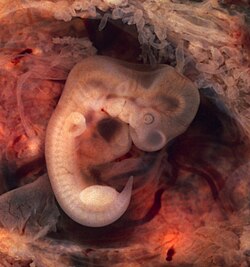
A 10 mm human embryo at 5 weeks
: A 10 mm human embryo at 5 weeks

Drawing of the human brain, showing several important structures
: Drawing of the human brain, showing several important structures

Biological Variation

While all humans belong to the same species, we exhibit significant biological variation. This includes differences in hair color, skin pigmentation, and physical stature, which are often adaptations to different environmental conditions and climates.
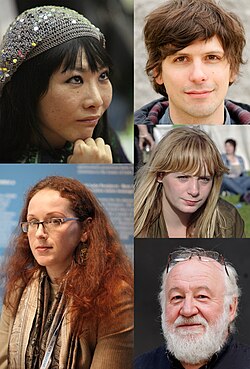
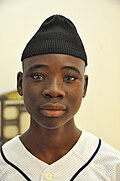
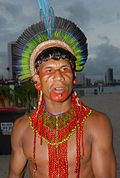
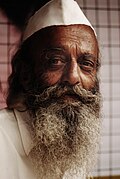
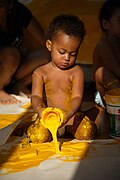
A variety of human hair colors; from top left, clockwise: black, brown, blonde, white, red.
: A variety of human hair colors; from top left, clockwise: black, brown, blonde, white, red.

The Complexity of Human Culture

ภาพประกอบบทความ
ภาพประกอบจากบทความต้นฉบับ

What truly distinguishes humans is our capacity for culture. We do not merely survive; we create. Through language, we communicate complex ideas, share history, and organize massive societies. This communication is facilitated by a vast array of language families used across the globe.
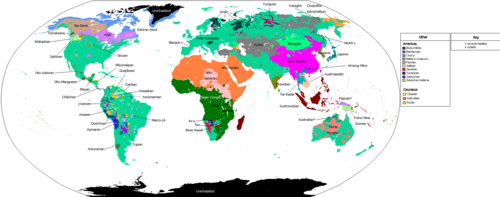
Principal language families of the world (and in some cases geographic groups of families)
: Principal language families of the world (and in some cases geographic groups of families)

Culture manifests in many forms, including:

  • The Arts: Music, dance, storytelling, and visual arts.
  • Religion and Spirituality: Diverse belief systems ranging from Christianity and Islam to Hinduism and Buddhism.
  • Technology: From the earliest stone tools to the high-speed SCMaglev trains of the modern era.
  • Social Structures: Complex systems of kinship, government, and economic trade.

Train running on a track
The SCMaglev, the fastest train in the world clocking in at 603 km/h (375 mph) as of 2015[386]
: The SCMaglev, the fastest train in the world clocking in at 603 km/h (375 mph) as of 2015[386]

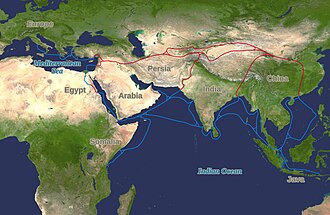
The Silk Road (red) and spice trade routes (blue)
: The Silk Road (red) and spice trade routes (blue)

Society and Global Impact

ภาพประกอบบทความ
ภาพประกอบจากบทความต้นฉบับ

As human populations grew, so did our impact on the Earth. Modern society is characterized by massive urban centers and intricate political organizations, such as the United Nations. However, this growth has also led to a significant shift in the Earth's biomass.
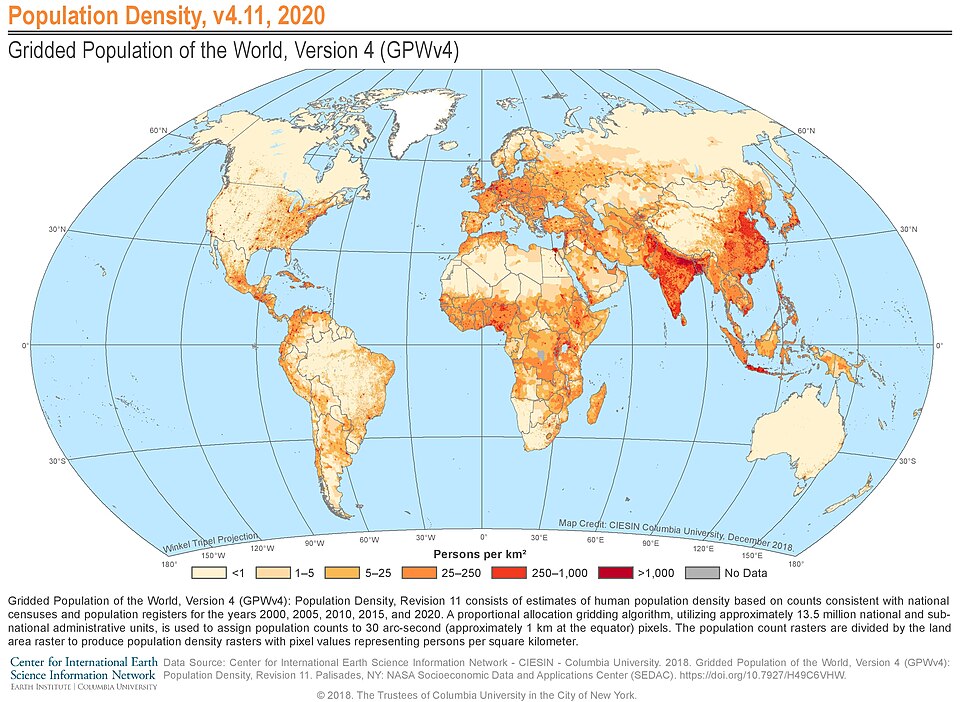
Choropleth map showing Population density (people per square kilometer) estimates by 30 arc-second grid in 2020
: Choropleth map showing Population density (people per square kilometer) estimates by 30 arc-second grid in 2020

Humans and their domesticated animals represent 96% of all mammalian biomass on Earth, whereas all wild mammals represent only 4%.[142]
: Humans and their domesticated animals represent 96% of all mammalian biomass on Earth, whereas all wild mammals represent only 4%.

Our ability to organize into large-scale governments and participate in global trade has allowed for unprecedented technological progress, though it also brings challenges regarding conflict and environmental modification.
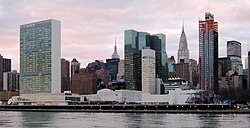
The United Nations headquarters (left) in New York City, which houses one of the world's largest political organizations
: The United Nations headquarters (left) in New York City, which houses one of the world's largest political organizations

Summary of Human Characteristics

Overview of Human Species Attributes
Category Key Details
Scientific Name Homo sapiens
Classification Mammalia, Primates, Hominidae
Major Religions Christianity, Islam, Hinduism, Buddhism, Sikhism, Judaism
Top Languages English, Mandarin, Hindi, Spanish, Arabic
Primary Habitat Global (all continents)

Frequently Asked Questions
ภาพประกอบบทความ
ภาพประกอบจากบทความต้นฉบับ
ภาพประกอบบทความ
ภาพประกอบจากบทความต้นฉบับ
ภาพประกอบบทความ
ภาพประกอบจากบทความต้นฉบับ
ภาพประกอบบทความ
ภาพประกอบจากบทความต้นฉบับ
ภาพประกอบบทความ
ภาพประกอบจากบทความต้นฉบับ
ภาพประกอบบทความ
ภาพประกอบจากบทความต้นฉบับ
ภาพประกอบบทความ
ภาพประกอบจากบทความต้นฉบับ
ภาพประกอบบทความ
ภาพประกอบจากบทความต้นฉบับ
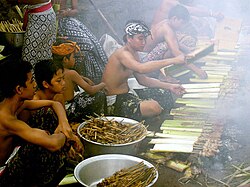
Humans preparing a meal in Bali, Indonesia
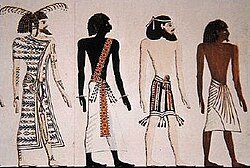
A Libyan, a Nubian, a Syrian, and an Egyptian, drawing by an unknown artist after a mural of the tomb of Seti I, copied by Heinrich von Minutoli (1820). Note that the exaggerated skin shades are due to the 19th century illustrator, not the Ancient Egyptian original.
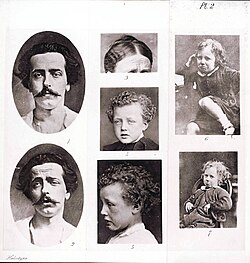
Illustration of grief from Charles Darwin's 1872 book The Expression of the Emotions in Man and Animals
Human parents often display familial love for their children.
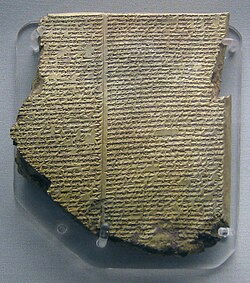
The Deluge tablet of the Gilgamesh epic in Akkadian
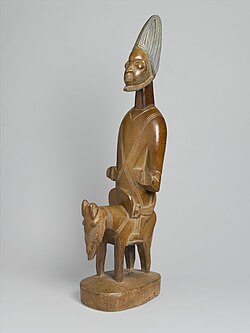
Shango, the Orisha of fire, lightning, and thunder, in the Yoruba religion, depicted on horseback
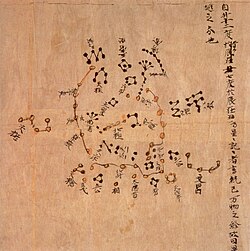
The Dunhuang map, a star map showing the North Polar region. China circa 700.
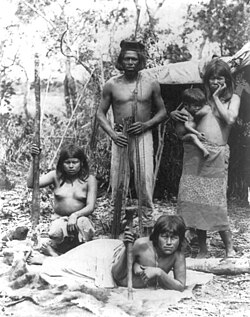
Photo taken between 1890 and 1923 of an indigenous family in Brazil, consisting of 3 adolescent or adult females, an adult male, and a baby. Humans often live in family-based social structures.
A man as the groom and a woman as the bride in a Hindu North Indian wedding, the groom wearing a sherwani and pagri turban and the bride wearing a sari.
American troops landing at Normandy, WWII

What is the scientific classification of humans?

Humans are classified under the kingdom Animalia, phylum Chordata, class Mammalia, order Primates, family Hominidae, genus Homo, and species H. sapiens.

How many people live on Earth today?

The current world population is approximately 8.3 billion people.

What are the most widely spoken languages?

The most widely spoken languages include English, Mandarin Chinese, Hindi, Spanish, Standard Arabic, Bengali, French, Russian, Portuguese, and Urdu.

How do humans differ from other mammals in terms of biomass?

Humans and their domesticated animals account for approximately 96% of all mammalian biomass on Earth, while wild mammals make up only about 4%.

What defines human culture?

Human culture is defined by our use of complex language, the creation of art, the development of technology, the practice of religion, and the establishment of intricate social and political systems.

References

  1. The world population and population density statistics are updated automatically from a template that uses the CIA World Factbook and United Nations World Population Prospects.[122][123]
  2. Cities with over 10 million inhabitants as of 2018.[124]
  3. Traditionally this has been explained by conflicting evolutionary pressures involved in bipedalism and encephalization, the so-called obstetrical dilemma but recent research suggest other factors may be at play.[201][202]
  4. Nyberg, Lars; Kim, Alice S. N.; Habib, Reza; Levine, Brian; Tulving, Endel (21 December 2010). "Consciousness of subjective time in the brain". Proceedings of the National Academy of Sciences of the United States of America. 107 (51): 22356–22359. Bibcode:2010PNAS..10722356N. doi:10.1073/pnas.1016823108. ISSN 1091-6490. PMC 3009795. PMID 21135219.
  5. Tennie, Claudio; Call, Josep; Tomasello, Michael (27 August 2009). "Ratcheting up the ratchet: on the evolution of cumulative culture". Philosophical Transactions of the Royal Society of London, Series B. 364 (1528): 2405–2415. doi:10.1098/rstb.2009.0052. ISSN 1471-2970. PMC 2865079. PMID 19620111.