Poseidon: The Mighty God of the Sea, Storms, and Earthquakes

Poseidon: The Mighty God of the Sea, Storms, and Earthquakes

In the pantheon of ancient Greek religion, few figures command as much awe and terror as Poseidon. Known as the "Shaker of the Earth," Poseidon is the formidable King of the Sea, the bringer of storms, and the master of horses. As one of the twelve Olympians, his influence extended from the deepest ocean trenches to the very foundations of the land, where his rage could trigger devastating earthquakes.

Poseidon's identity is inextricably linked to the wild, unpredictable nature of the water. Whether depicted as a benevolent protector of sailors or a vengeful deity punishing mortals, he remains a central figure in the myths that shaped Western civilization. In Roman mythology, he is identified as Neptune.
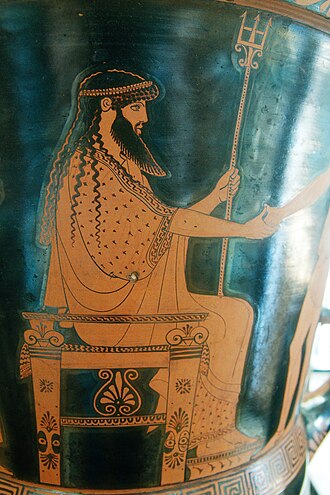
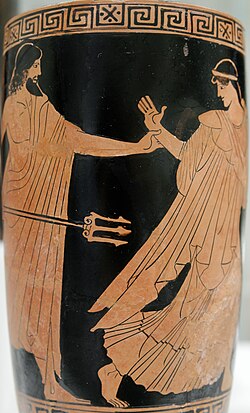
Poseidon greeting Theseus (on the right). Detail, Attic red-figured calyx-krater by Syriscos Painter, 450-500BC from Agrigento. BnF Museum (Cabinet des médailles), Paris

Key Facts

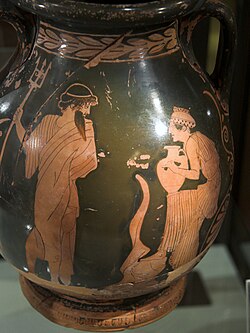
Poseidon pursuing a woman, probably by Achilleus painter, 480–450BC. Metropolitan Museum of Art, Manhattan NY
  • Domains: The sea, storms, earthquakes, and horses.
  • Symbols: The trident, fish, dolphins, horses, and bulls.
  • Family: Son of Cronus and Rhea; brother to Zeus, Hades, Hera, Demeter, and Hestia.
  • Consort: Amphitrite.
  • Primary Attribute: The trident, a three-pronged spear used to stir the seas and crack the earth.

Divine Origins and Genealogy
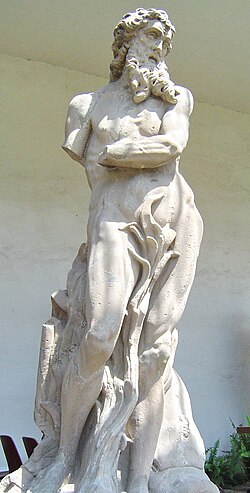
Statue of Poseidon in Germany by Johann David Räntz and Lorenz Wilhelm Räntz (1760).

Poseidon was born to the Titans Cronus and Rhea. Like his siblings, he was initially swallowed by his father to prevent a prophecy of overthrow, only to be rescued by his brother Zeus. Following the victory of the Olympians over the Titans, the three brothers—Zeus, Poseidon, and Hades—divided the realms of the universe. While Zeus claimed the sky and Hades the underworld, Poseidon was granted dominion over the oceans and all waters.
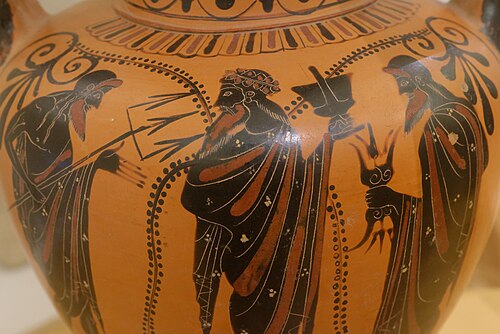
From left to right: Poseidon, Dionysos, Zeus. Black figured neck-amphora, 540 BC. National Museum of Denmark, Copenhagen

His family tree is vast, connecting him to nearly every major deity. He is the brother of the hearth-goddess Hestia and the agricultural goddess Demeter. His marriage to the sea-nymph Amphitrite solidified his rule over the aquatic depths, though myths frequently recount his numerous affairs and offspring with other nymphs and mortals.
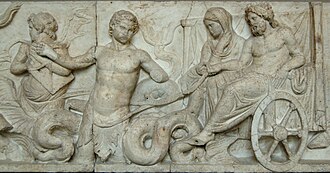
Sea thiasos depicting the wedding of Poseidon and Amphitrite, from the Altar of Domitius Ahenobarbus in the Field of Mars, bas-relief, Roman Republic, 2nd century BC

The Architecture of Devotion: Temples of Poseidon
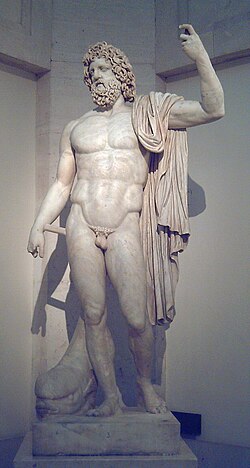
Colossal-type statue of Poseidon-Neptune, probably sculpted in a workshop in Aphrodisias (Asia Minor). It was at Palaemon's sanctuary in Isthmia, where it was described by Pausanias. Prado Museum, Madrid

The worship of Poseidon was widespread across the Greek world, resulting in the construction of magnificent temples that often pioneered architectural styles, particularly the Doric order (a simple, sturdy style of Greek column).

Sounion and the Edge of Attica

One of the most iconic sites is Cape Sounion. The first temple here, built around 490 BC, was destroyed by Persians. It was replaced in 425 BC by a second temple measuring 13.48 x 31.15 meters. This site likely housed a colossal bronze statue of the god, facing the entrance to welcome sailors.
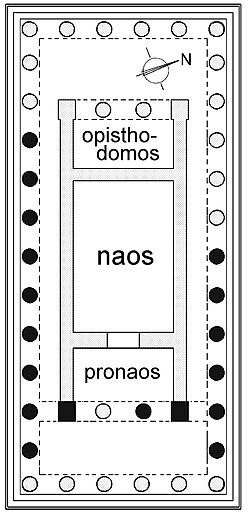
Sounionplan-Temple of Poseidon

Isthmia and the Birth of Doric Style

Near Corinth, the sanctuary at Isthmia is historically significant. A building constructed between 690-650 BC is considered a pioneering example of Doric architecture. Though destroyed in 470 BC, its layout was revolutionary for its time.
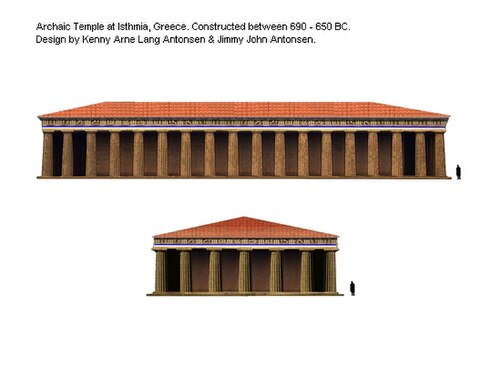
Archaic Temple of Poseidon at Isthmia, Greece (Assumed reconstruction)

Other Notable Sanctuaries

  • Paestum: Located in Italy (ancient Poseidonia), a temple traditionally attributed to Poseidon was built in the first half of the 5th century BC, though some evidence suggests dual dedication to Zeus and another deity.
  • Kalaureia: An island sanctuary featuring a Doric temple built in the middle of the 6th century BC, constructed primarily of poros stone.
  • Taranto: A peripteral Doric temple in Magna Graecia, likely dating to the 6th century BC.
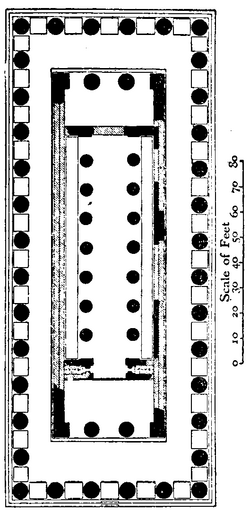
Plan of the second temple of Hera, Paestum (traditionally temple of Poseidon)

Mythology and Legendary Feats

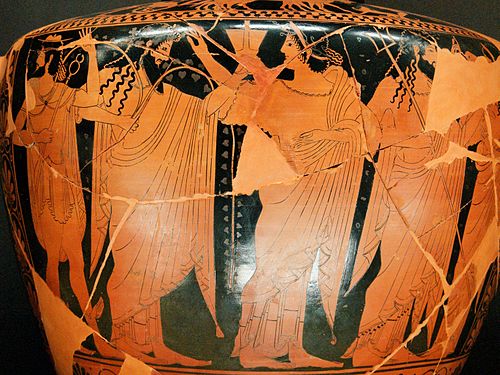
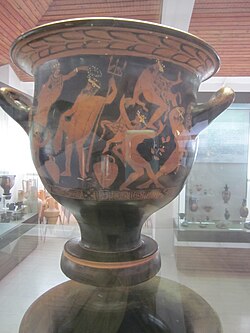
Hermes, Dionysos, Ariadne and Poseidon (Amphitrite is depicted on side B.). Detail from the belly of an Attic red-figure hydria, ca. 510 BC–500 BC. Louvre, Paris

Poseidon's myths often highlight his volatile temperament and his rivalry with other gods, most notably Athena. One of the most famous legends is the Foundation of Athens, where Poseidon and Athena competed for patronage of the city. While Poseidon struck the earth to create a saltwater spring, Athena offered the olive tree; the citizens chose Athena, leading to Poseidon's long-standing grudge against the city.
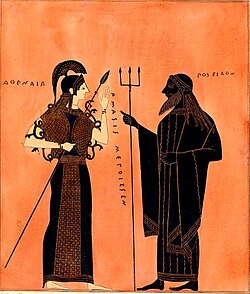
Poseidon (right) and Athena (identified with inscriptions). Black-figure vaise painting by Amasis Painter, 540 BC. BnF Museum (Cabinet des médailles), Paris

In the Gigantomachy (the battle between the gods and the giants), Poseidon played a crucial role. In one account, he defeated the giant Polybotes by breaking off a piece of the island of Kos—which became the island of Nisyros—and hurling it upon him.

A scene from the Gigantomachy: Poseidon fights Polybotes. The god broke off a piece of the island of Kos called Nisyros, and threw it on top of the giant.[68] Tondo of an Attic red-figure kylix, ca. 475-470 BC. Painter of the Paris Gigantomachy (eponymous vase), circle of the Brygos Painter found in Vulci BnF Museum (Cabinet des médailles), Paris .

Poseidon in Art and Culture

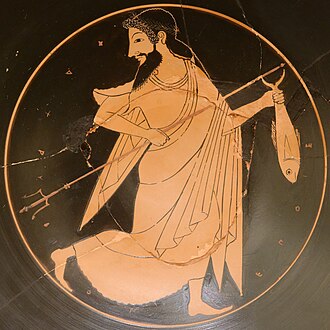
Poseidon with a trident and a fish. Tondo of an Attic red-figured kylix, 520-510 BC, from Etruria.National Museum of Denmark, Copenhagen.

From ancient pottery to modern cinema, Poseidon has been depicted as a symbol of raw power. Early Attic red-figure and black-figure pottery often show him with his trident, riding a hippocamp (a mythical sea-horse).
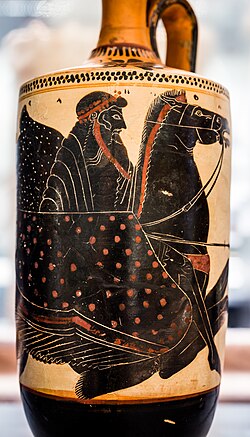
Poseidon with trident on hippocamp (sea-horse). Athenian black-figure white-ground pottery lekythos ca. 500-480 BC, by Athena Painter. Ashmolean Museum, Oxford

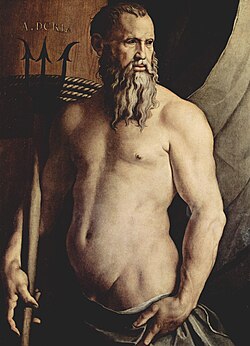
The Artemision Bronze (480-440 BC) is one of the most significant surviving sculptures, possibly dedicated as a thank-offering after the Battle of Artemision. In later eras, the Renaissance saw him reimagined as Neptune in works by artists like Angelo Bronzino and Jacob de Gheyn II.

Artemision Bronze, bronze statue probably of Poseidon, Severe style 480-440 BC. The statue was possibly a thank offering to the god after the battle of Artemision (480 BC).[54]National Archaeological Museum Athens.

Summary of Poseidon's Attributes and Sites
Category Details
Primary Symbols Trident, Horse, Bull, Dolphin
Key Epithets Earthshaker, Tamer of Horses
Major Temples Sounion, Isthmia, Kalaureia, Paestum
Roman Equivalent Neptune
Family Role Brother of Zeus and Hades

Frequently Asked Questions
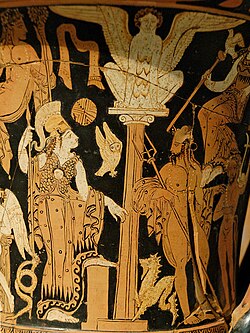
Poseidon Epoptes
Poseidon Epoptes
See caption
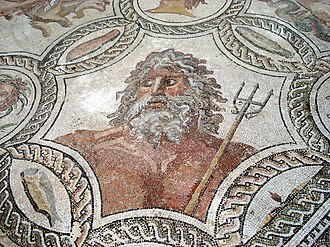
Poseidon- Neptune Detail from the "Mosaic of the Seasons", from the Roman era. Regional Archeological Museum Antonio Salinas, Palermo).
Poseidon surprises Anymone near a spring. Attic pelike in red figure, circle of the Polygnotus Painter, 440-430 BC. Archaeological Museum of Agrigento
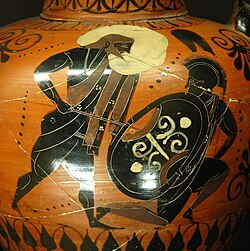
Poseidon fighting the Giant Polybotes. Attic black-figure neck amphora by Swing Painter, 540-530 BC, ca. 540 BC–530 BC. Louvre, Paris.
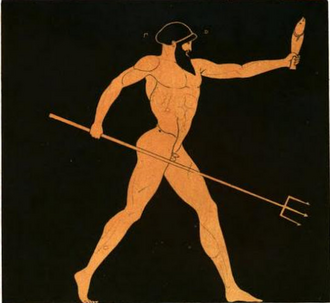
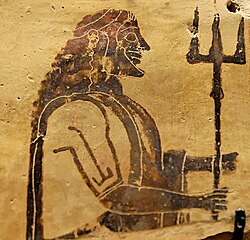
Poseidon carrying a trident. Corinthian plate 550-525 BC, from Pentescouphia, Louvre
Poseidon and Nike (victory). Terracotta Attic amphora by the Syracuse Painter, one of the last to decorate an amphora, 470-460 BC. Metropolitan Museum of Art, Manhattan, NY
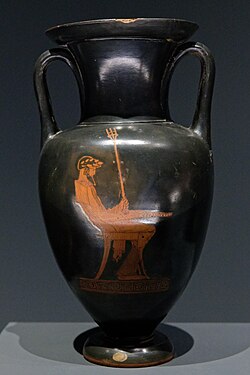
Libation scene: Poseidon seated on a chair, wearing a chiton and a himation, holding a trident and a phiale.450-440 BC red-figure Attic amphora.Louvre
Sozopol Archaeological Museum. Poseidon in the middle.
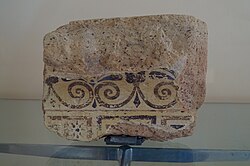
Architectural Terracotta Sanctuary of Poseidon Kalaureia
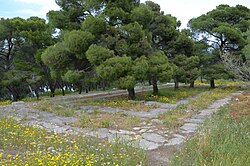
Temple of Poseidon, Hermione
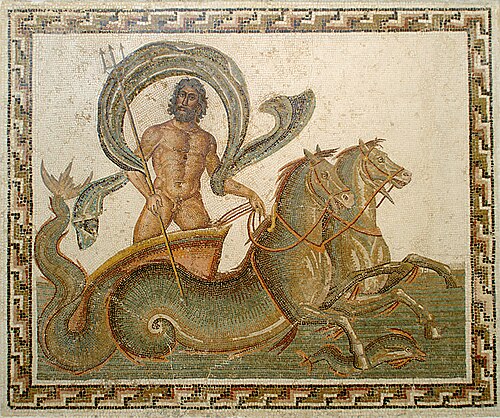
Poseidon-Neptune and triumphal chariot with a pair of sea-horses (Hippocamps). Mosaic, 3rd century. Sousse Archaeological Museum, Medina, Tunesia
Andrea Doria as Neptune, by Angelo Bronzino .1540-1530, Pinacoteca di Brera, Milan
Athena and Poseidon, Faliscan red-figure volute-krater, by Nazzano Painter, 360 BC. Louvre, Paris.
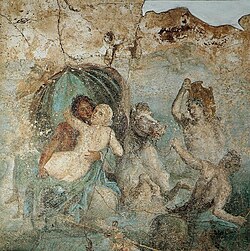
Poseidon and Amymone, fresco in Stabiae, Italy, 1st century AD
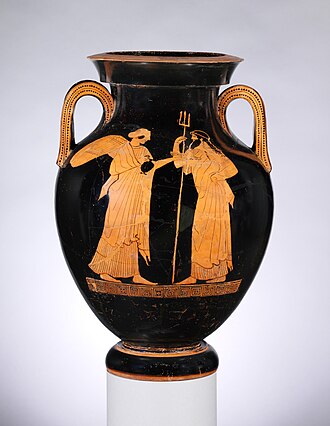
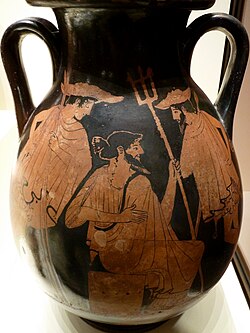
Poseidon and Theseus (on the left). Storage jar 470BC. J. Paul Getty Museum, Malibu, California
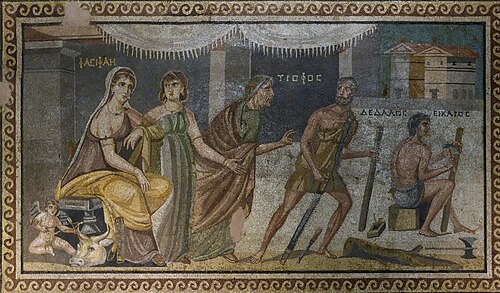
Pasiphae seated on a throne receives the wooden cow from Daidalos. Eros plays with the head of the crafted cow. Roman Mosaic, from Zeugma, Commagene. Zeugma Mosaic Museum, Gaziantep, Turkey
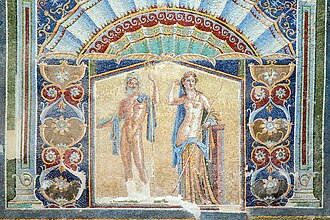
Poseidon-Neptune and Amphitrite. Roman Mosaic 1st century AD. House of Neptune, Herculanum. Metropolitan City of Naples
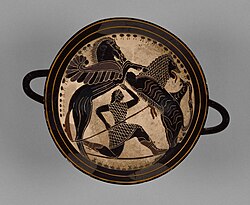
Bellerehron spears Chimera from underneath, while Pegasus strikes the monster with his hooves. Laconian Black Figure Kylix attributed to Boreads Painter, 570–565 B.C. J. Paul Getty Museum Malibu, California.
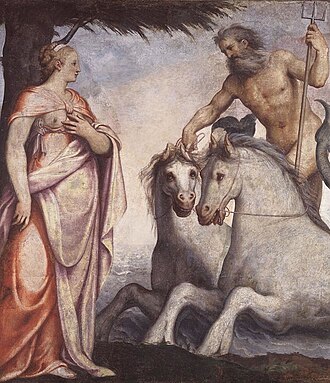
Lattanzio Gambara (c. 1530–Brescia 1574) - Poseidon-Neptune and Caenis
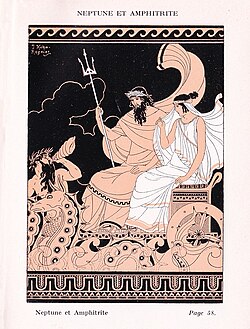
Poseidon and Amphitryte - Joseph Kuhn-Régnier
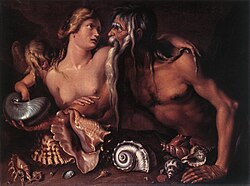
Neptune and Amphitrite by Jacob de Gheyn II (late 1500s)
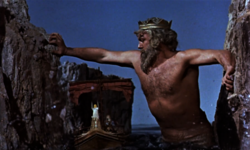
Poseidon as portrayed in the 1963 film Jason and the Argonauts
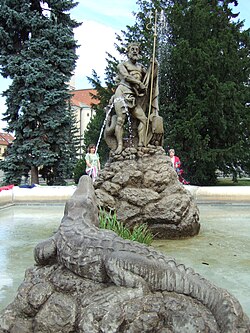
Neptune's fountain in Prešov, Slovakia.

Why is Poseidon called the "Earthshaker"?

Poseidon was believed to cause earthquakes by striking the ground with his trident, reflecting the ancient Greeks' observation of seismic activity in their region.

What is the significance of the horse in Poseidon's mythology?

Poseidon is regarded as the creator of horses and the "tamer of horses," making him the patron deity of equine animals and chariot racing.

How did Poseidon differ from Neptune?

While Neptune is the Roman adaptation of Poseidon, the Greek Poseidon had a broader range of influence, including a stronger association with earthquakes and freshwater springs, whereas Neptune became more focused on the sea.

Who is Amphitrite?

Amphitrite is a sea-nymph and the consort of Poseidon, serving as the Queen of the Sea.

Which temple of Poseidon is the most famous today?

The Temple of Poseidon at Sounion is among the most famous due to its dramatic cliffside location overlooking the Aegean Sea.

References

  1. Jones, Daniel (2003) [1917], Peter Roach; James Hartmann; Jane Setter (eds.), English Pronouncing Dictionary, Cambridge: Cambridge University Press, ISBN 978-3-12-539683-8
  2. Burkert 1985, pp. 136–139.
  3. Seneca quaest. Nat. VI 6 :Nilsson Vol. I, p. 450.
  4. Nilsson Vol. I, p. 450.
  5. Homer, Iliad. Book 15, ln. 187.