Portuguese People: A Journey Through History, Genetics, and Global Influence
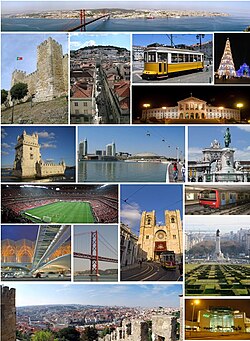
The Portuguese (Portuguese: Portugueses) are an ethnic group primarily native to Portugal, characterized by a rich tapestry of ancestral migrations, a dominant Latin Catholic faith, and a language that has spread to every corner of the globe. With a domestic population of approximately 9.2 million, the Portuguese identity extends far beyond the borders of the Iberian Peninsula, forming a vast global network known as the Lusophone world.
From the ancient tribes of the Atlantic coast to the modern digital influencers of the 21st century, the story of the Portuguese is one of resilience, exploration, and cultural synthesis.

Key Facts
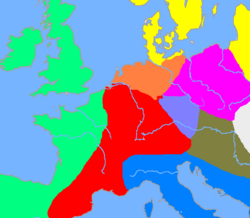
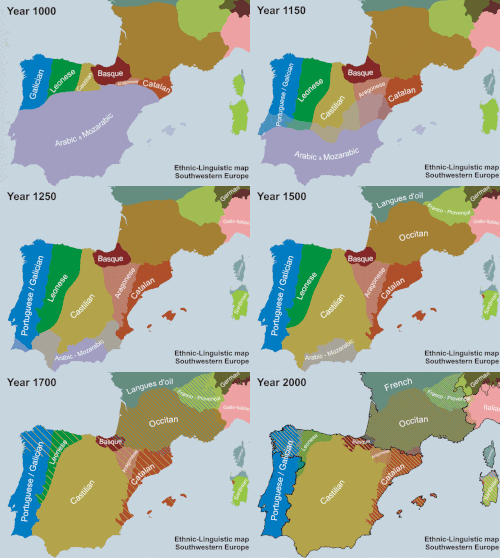
- Primary Language: Portuguese and Portuguese Sign Language (LGP).
- Dominant Religion: Latin Catholicism.
- Global Presence: A diaspora estimated at approximately 70 million people.
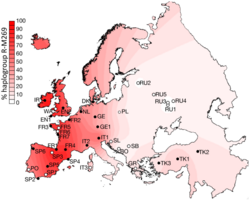
- Genetic Marker: High prevalence of Haplogroup R1b (56%).
- Most Common Surname: Silva, followed by Santos and Ferreira.
Ancestry and Early Inhabitants
![Ethnographic and Linguistic Map of the Iberian Peninsula at about 200 BC.[152]](/images/6e/3c/6e3c6f0adf181204268d87839bc3c7126abd2b49a10b8fc009a4e318bbcd509a.png)
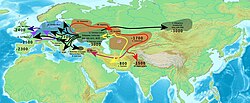
The genetic and cultural foundation of the Portuguese people was laid over millennia. Early traces of human history in Portugal date back 400,000 years, as evidenced by the Aroeira 3 skull of Homo heidelbergensis. Following the Neolithic period, the region saw the arrival of Indo-Europeans and Celts, who blended with existing populations to form a diverse pre-Roman landscape.
Pre-Roman Tribes
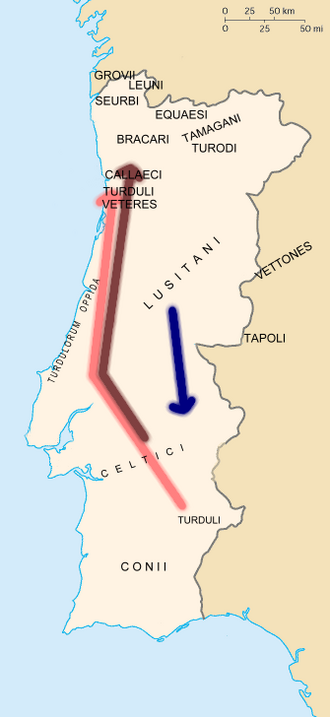
Before the Roman conquest, the territory was divided among various tribes, many of whom were loosely affiliated or dependent on the Lusitanians. Key groups included:
- Lusitanians: The dominant group in the interior and north.
- Celtici: Celts located in the Alentejo and northern mountainous regions.
- Turduli: Found in the Guadiana Valley and the Estremadura region.
- Cynetes (Conii): Inhabitants of the Algarve and southern Alentejo.
- Oestriminis: A tribe dependent on the Lusitanians, located between the Douro and Vouga rivers.
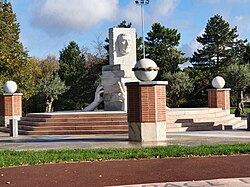
Resistance to Roman expansion was epitomized by Viriato (179–139 BC), who led a successful eight-year guerrilla war before being betrayed by his own ranks.
![Viriato (179 – 139 BC), led a guerilla war against the Romans for eight years. He was beheaded by traitors from his ranks, who killed him in his sleep for a bribe.[162] The statue depicted is in Viseu.](/images/ca/08/ca08ca70f4e8a99436dbb057b0ed3c12c210a4a374abc8fae1492ba2a8fe9ecd.jpg)
Genetics and Population Structure
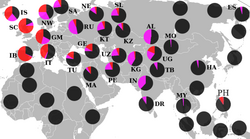
Modern genetic studies highlight the Portuguese as part of the broader Romance-speaking family, sharing close ties with Galicians, Spaniards, and other Southern Europeans. A defining characteristic of the Portuguese male lineage is the high frequency of Haplogroup R1b, which is present in 56% of the population.
| Country/Group | R1b | I1 | J2 | E1b1b |
|---|---|---|---|---|
| Portugal | 56 | 2 | 6.5 | 14 |
| Spain | 69 | 1.5 | 3 | 7 |
| France | 58.5 | 8.5 | 5.5 | 7.5 |
| Ireland | 81 | 6 | 1 | 0 |
| Sephardi Jews | 25 | 1 | 22 | 6 |
The Global Diaspora
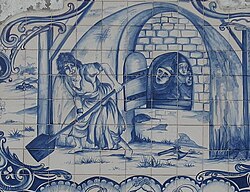
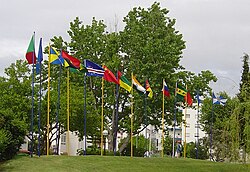
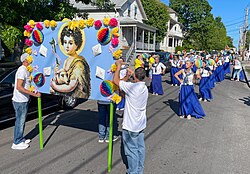
The Portuguese diaspora is one of the most widespread in the world, driven by the Age of Discovery, colonial expansion, and economic migration. The largest concentration of people with Portuguese ancestry is found in Brazil, where approximately 180 million people share this heritage.
The Americas and Oceania
Beyond Brazil, significant populations exist in Venezuela (1.3 million) and Peru (1.15 million). In North America, the United States hosts roughly 1.4 million people of Portuguese ancestry, while Canada has between 400,000 and 550,000.

Europe and Africa
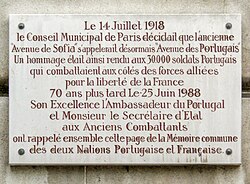
In Europe, France is a primary destination with up to 2 million people of Portuguese birth or ancestry. Other notable communities are found in Switzerland, Luxembourg, and Belgium. In Africa, significant populations remain in Angola, Mozambique, and Cape Verde.
The Sephardi Legacy
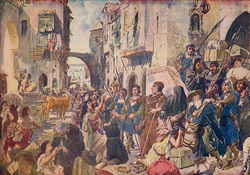
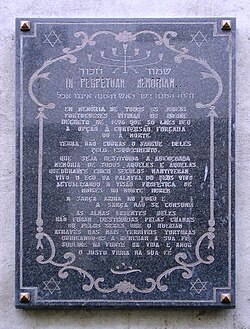
A poignant chapter of the diaspora involves the Sephardi Jews. Following their expulsion from Portugal, many established influential communities worldwide. Notable figures of Portuguese-Jewish descent include the philosopher Baruch Spinoza and the economist David Ricardo.
Culture and Contributions
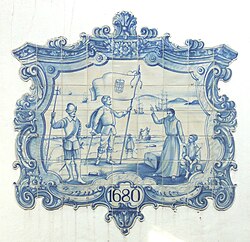
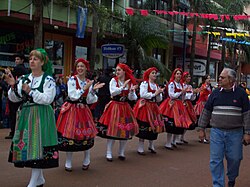
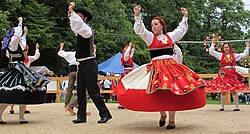
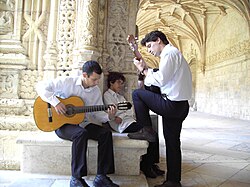
Portuguese influence is visible globally through architecture, cuisine, and the arts. The Azulejo (decorative ceramic tile) is a hallmark of Portuguese architecture, while Fado music captures the essence of the national soul.
![Azulejos are a distinctive feature of Portuguese architecture as it is the case with Capela das Almas [pt], in Porto](/images/4f/27/4f272c197a0a36879117e0074edc7b7438c00fb0291b836fd74c2179058127a1.jpg)
Culinary Influence
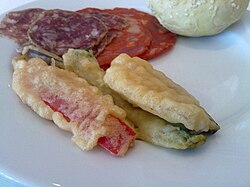
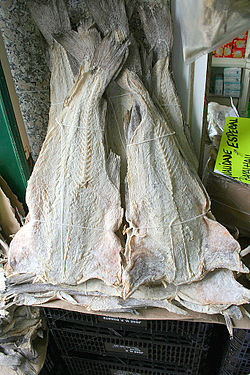
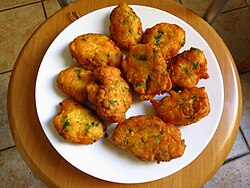
Portuguese cuisine is world-renowned, with Bacalhau (salted cod) serving as a national staple. Interestingly, the Japanese tempura is believed to have derived from the Portuguese dish Peixinhos da horta.
Science and Intellectualism
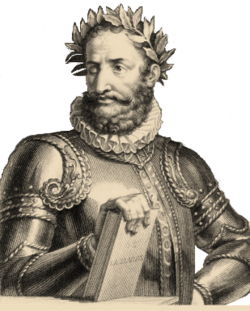
Portugal has contributed significantly to global knowledge. From the epic poetry of Luís de Camões to modern scientific breakthroughs—such as Odette Ferreira identifying HIV-2—the Portuguese intellectual tradition remains vibrant.
Modern Influence and Public Figures
In the digital age, the Portuguese identity is championed by global icons. Cristiano Ronaldo stands as the most followed person on Instagram, symbolizing the global reach of Portuguese talent. The modern Luso-Brazilian identity is also prominent in entertainment and sports, blending the cultures of the mainland and the Americas.
Frequently Asked Questions




What is the most common surname in Portugal?
The most common surname is Silva, held by approximately 9.44% of the population, followed by Santos and Ferreira.
How many people are part of the Portuguese diaspora?
The total diaspora is estimated at approximately 70 million people, with the largest population residing in Brazil.
What is the significance of Haplogroup R1b in Portugal?
Haplogroup R1b is the most prevalent Y-DNA lineage in Portugal, found in 56% of the population, which aligns them closely with other Western European populations.
Which Portuguese dish influenced Japanese tempura?
The dish Peixinhos da horta (fried green beans) is the precursor to what is now known as Japanese tempura.
Who was Viriato?
Viriato was a leader of the Lusitanians who led a guerrilla war against the Roman Empire for eight years before his death in 139 BC.