António Ramalho Eanes: The General Who Shaped Portuguese Democracy
António Ramalho Eanes is a towering figure in Portuguese history, recognized not only for his tenure as the President of Portugal from 1976 to 1986 but also for his pivotal role in stabilizing the nation's transition to democracy. A career military officer who rose to the rank of General, Eanes is widely respected for his humility, civic duty, and commitment to the democratic process during one of Portugal's most volatile eras.
Born on January 25, 1935, in Alcains, Castelo Branco, Eanes was the son of a general contractor and Maria do Rosário Ramalho. His early professional life was defined by his service in the Portuguese Army, specifically during the Portuguese Colonial War, a series of conflicts fought by Portugal to maintain its overseas territories.
Key Facts
- Presidency: Served as President of Portugal from July 14, 1976, to March 9, 1986.
- Military Rank: General of the Portuguese Army.
- Political Influence: Led the military counter-coup on November 25, 1975, which ended the "hot summer" (Verão quente) and marginalized pro-communist factions.
- Party Leadership: Founded and presided over the Democratic Renewal Party (PRD) from 1986 to 1987.
- Reputation: Known for extreme humility, having refused the title of Marshal and significant financial backpay.
Rise to Power and the Transition to Democracy
During the 25 April revolution of 1974, Eanes was stationed in Angola. He joined the Movimento das Forças Armadas (MFA, or Armed Forces Movement), the military organization that spearheaded the overthrow of the Estado Novo regime. Upon returning to Portugal, he was appointed chair of the Radio and Television of Portugal (RTP).
By early 1975, Eanes emerged as a leader of the "operationals" faction, representing the professional interests of the officer corps. During this period, he developed ties with the United States embassy, specifically with Frank Carlucci and NATO training programs. These connections reinforced his image as a defender of democratic stability.
The defining moment of his early political career occurred on November 25, 1975. Eanes ordered a military counter-coup against the radical pro-communist wing of the MFA, effectively steering Portugal away from a communist trajectory and paving the way for a representative democracy.
The Presidency (1976–1986)
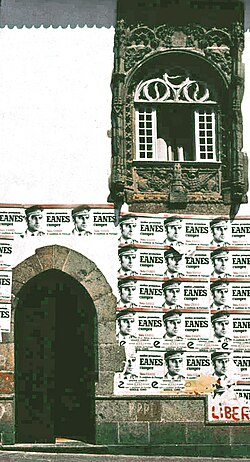
In June 1976, Eanes was elected President with broad support from nearly all political parties, excluding the Communists. His early presidency was characterized by a concentration of power; he simultaneously served as the commander-in-chief of the Armed Forces, chief of the Armed Forces General Staff, and head of the Council of the Revolution (a military body that oversaw the transition).
His governance was marked by a preference for stability and technical expertise. After dismissing Prime Minister Mário Soares in 1978, Eanes appointed three successive technocratic cabinets—governments led by experts rather than career politicians—under Alfredo Nobre da Costa, Carlos Mota Pinto, and Maria de Lurdes Pintasilgo.
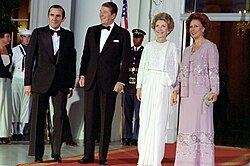
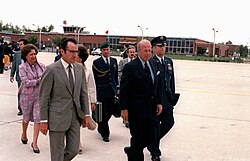
Eanes was re-elected in 1980, continuing his leadership until March 1986. His international relations were robust, maintaining strong ties with global leaders, including U.S. President Ronald Reagan.
Post-Presidency and Political Legacy
Following his presidency, Eanes entered partisan politics as the President of the Democratic Renewal Party (PRD) from August 1986 to August 1987. However, after a defeat by the Social Democratic Party (PSD) in the 1987 legislative elections, he resigned from the party leadership. He later served as a member of the Assembly of the Republic for the Lisbon constituency from 1987 to 1991.
Beyond his political titles, Eanes is remembered for his personal integrity. He famously refused the honorary title of Marshal and, as recently as February 2025, declined a 100,000 euro prize, stating that the Fatherland does not owe anyone anything. He also previously refused over one million euros in military backpay.
Summary of Political and Military Career
| Role | Period | Key Detail |
|---|---|---|
| Chair of RTP | 1974–1975 | Public television leadership |
| Chief of Army General Staff | 1975–1976 | Military leadership |
| President of Portugal | 1976–1986 | Two terms; stabilized democracy |
| President of the PRD | 1986–1987 | Political party leadership |
| Member of Assembly of the Republic | 1987–1991 | Represented Lisbon |
Frequently Asked Questions
What was Eanes' role in the November 25, 1975 coup?
António Ramalho Eanes ordered the military counter-coup on November 25, 1975, to stop the pro-communist radical faction of the MFA, which effectively ended the "hot summer" and secured a democratic path for Portugal.
Which political party did Eanes lead after his presidency?
He served as the President of the Democratic Renewal Party (Partido Renovador Democrático or PRD) from August 1986 to August 1987.
Why is Eanes considered a figure of high integrity in Portugal?
He is admired for his humility and civic duty, evidenced by his refusal of the title of Marshal, his refusal of over one million euros in military backpay, and his recent refusal of a 100,000 euro prize in 2025.
Who succeeded Eanes as President of Portugal?
António Ramalho Eanes was succeeded by Mário Soares in March 1986.
What was the "operationals" faction?
The "operationals" were a group within the Portuguese military, led by Eanes, who represented the professional interests of the officer corps as opposed to the more radical political factions of the MFA.