Polo: The History, Rules, and Evolution of the Sport of Kings
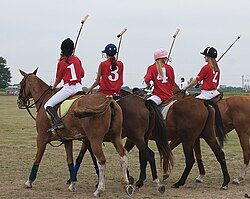
Often referred to as the Sport of Kings, polo is a high-energy equestrian team sport that combines athletic precision with the power of horseback riding. From its ancient roots among the nomadic peoples of Central Asia to its current status as a global spectator sport, polo has long been associated with high society and royal patronage. Today, the sport is governed by the Federation of International Polo, with professional play established in 16 countries and over 100 member nations worldwide.
Whether played on the vast grass fields of Argentina or in specialized indoor arenas, polo remains a test of endurance, strategy, and the deep bond between rider and horse.
Key Facts
- Origins: Developed between the 6th century BCE and 1st century CE by Eurasian nomadic peoples.
- Governing Body: Federation of International Polo.
- Team Size: 4 players for field polo; 3 players for arena polo.
- Olympic History: Featured in the Olympic Games in 1900, 1908, 1920–1924, and 1936.
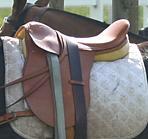
- Core Equipment: Polo pony, mallet, ball, and protective gear.
The Evolution of Polo
Ancient Origins and Early Development
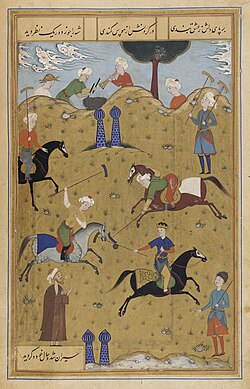
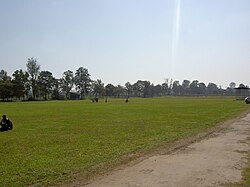
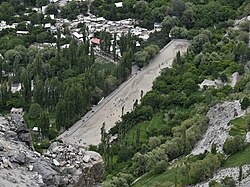
Polo is believed to have originated from equestrian games played by Iranian and Turkic nomadic peoples of Central Asia. Between the 1st century BCE and the 7th century CE, the sport was formalized in Greater Iran under the Parthian and Sasanian Empires. This early version of the game served not only as recreation but as a means of training cavalry.
![Naqsh-e Jahan Square in Isfahan, Iran, is the site of a medieval royal polo field[25]](/images/d3/47/d347db8f1ff98621ff3afe68a452bdf5f4c07c69134e9b35f6368597a5f91642.jpg)
Global Expansion
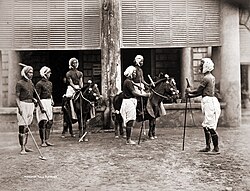
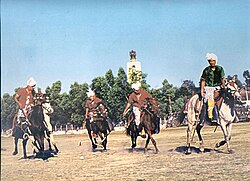
The sport spread across Asia and into Europe. In India, polo became deeply ingrained in the culture, particularly in Manipur, where the Mapal Kangjeibung is recognized as the world's oldest polo playground. British influence later helped export the game to other colonies, including Malaysia and Singapore, where clubs like the Royal Johor Polo Club (1884) and Singapore Polo Club (1886) were established.
The Rise of Modern Polo
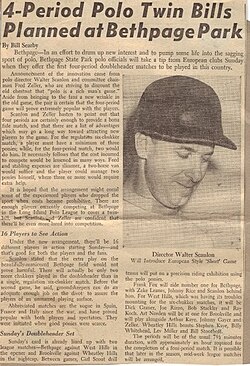
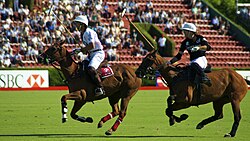
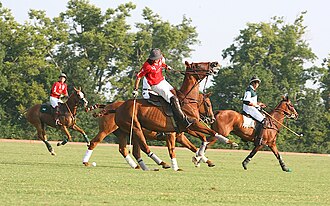
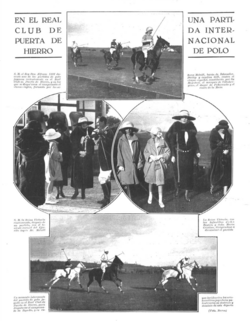
In the West, Argentina has emerged as a global powerhouse in the sport, known for its high-season championships and elite breeding of polo ponies. In the United States, the sport gained traction in the late 19th century, with the Westchester Club and the New York Polo Grounds becoming early hubs of activity.
Rules and Gameplay
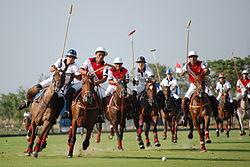
The Field and Equipment
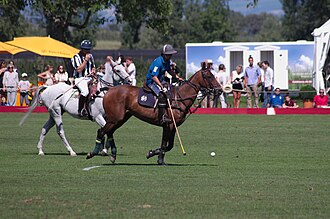
Field polo is played on a large grass expanse, significantly larger than a standard association football ground. The regulation outdoor ball measures between 3 and 3.5 inches in diameter and weighs between 3.5 and 4.5 ounces. Players use a mallet to strike the ball and must wear protective gear, including a helmet with a face guard and mandatory knee pads.
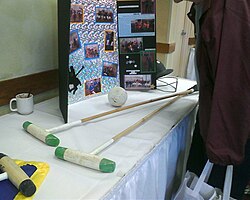

Match Dynamics and Penalties
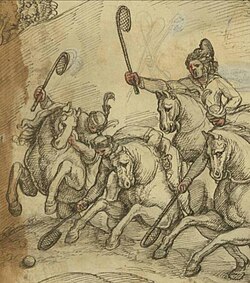
Polo is a contact sport where players may use "ride-offs" (pushing an opponent off their line) and "hooks" (using the mallet to block an opponent's shot). To maintain safety and fairness, fouls are punished via a graduated system of free hits:
| Penalty | Severity | Outcome |
|---|---|---|
| 1 | Most Severe | Automatic goal awarded |
| 2 | Very Severe | Undefended free hit from 30 yards |
| 3 | Severe | Undefended free hit from 40 yards |
| 4 | Moderate-Severe | Defended free hit from 60 yards |
| 5a/5b | Moderate | Free hit from spot of foul or center field |
| 6 | Minor (Safety) | Free hit awarded after ball crosses back line |
| 7 | Procedural | Retake of a previously incorrect penalty |
The Polo Pony
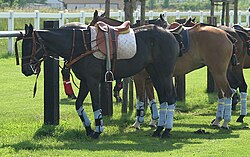
The polo pony is the heart of the sport. Training typically begins at age 3 and lasts up to two years. While these horses reach physical maturity around age 5, they are generally at their athletic peak between ages 6 and 7. With proper care, a polo pony can remain active in the sport until they are 18 to 20 years old.
Variants of the Game
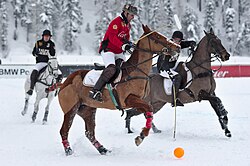
While grass polo is the standard, several variations have emerged to adapt the sport to different environments and animals:
- Arena Polo: Played in a smaller enclosed space with 3 players per team.
- Snow Polo: Played on snow, notably in locations like St. Moritz.
- Camel Polo: A variation played in Mongolia.
- Vehicle Polo: Modern adaptations include golf cart polo and Roda Polo (played on electric unicycles).
![An old polocart displayed at City Palace, Jaipur. The museum also displays a "night polo ball" with a rotating platform on which a candle is placed.[105]](/images/91/00/9100aee3eca617cd3a6804c1d034e1a159086833fa04ab6f800c7da31deb145a.jpg)
Frequently Asked Questions
How many players are on a polo team?
In standard field polo, each team consists of four players. In arena polo, the team size is reduced to three players.
What is the "Sport of Kings"?
This is the common nickname for polo, reflecting its historical association with royalty, high society, and the significant cost of maintaining the horses required for the game.
At what age do polo ponies start training?
Polo pony training generally begins at age 3 and continues for six months to two years, with the horses reaching their athletic peak around age 6 or 7.
Was polo ever an Olympic sport?
Yes, polo was featured in the Olympic Games during several periods: 1900, 1908, from 1920 to 1924, and again in 1936.
What is the difference between a Penalty 1 and a Penalty 6?
A Penalty 1 is the most severe foul and results in an automatic goal. A Penalty 6 is a minor safety foul awarded when a defending player hits the ball over their own back line.