Polish Language: History, Phonetics, and Global Distribution
The Polish language (polski) is a West Slavic language within the Indo-European family. Primarily spoken in Poland, it also has significant presence in Lithuania and surrounding regions. As a member of the Lechitic subgroup, Polish serves as the official language of Poland and the European Union, while maintaining recognized minority status in several countries, including Brazil, Ukraine, and the Czech Republic.
With approximately 40 million native speakers and over 2 million second-language speakers as of 2021, Polish is a vibrant linguistic system regulated by the Polish Language Council of the Polish Academy of Sciences.
Key Facts
- Total Speakers: Approximately 43 million worldwide (2021).
- Language Family: Indo-European → Balto-Slavic → Slavic → West Slavic → Lechitic.
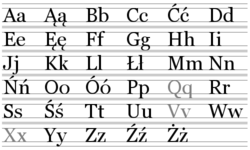
- Writing System: Latin script with a specialized 32-letter alphabet.
- Global Reach: Significant populations in the UK (over 500,000 in England and Wales) and Canada (over 242,000).
- Literary Prestige: Five Polish-language authors have received the Nobel Prize in Literature.
Historical Evolution and Literature
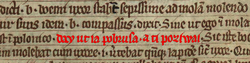
The development of Polish is traced through stages of Old Polish and Middle Polish. One of the most significant early milestones is the Book of Henryków, which contains the earliest known sentence written entirely in a form interpreted as Old Polish.
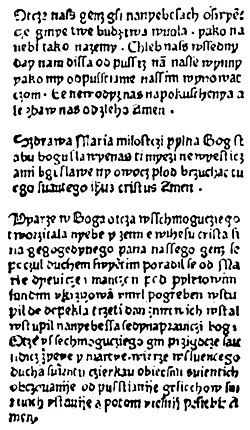
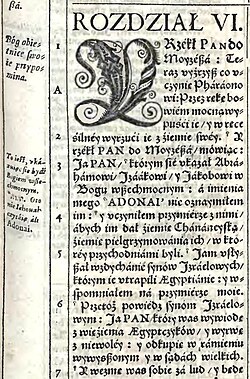
The transition to printed text occurred in the late 15th century, notably with the Statuta synodalia Episcoporum Wratislaviensis printed in 1475 in Wrocław. Over time, the orthography evolved; for instance, the Jakub Wujek Bible of 1599 utilized letters like á and é, which were later abolished in Polish though they remain in Czech.
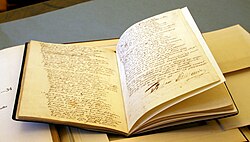
Polish literature has achieved global acclaim, producing Nobel laureates such as Henryk Sienkiewicz, Władysław Reymont, Czesław Miłosz, Wisława Szymborska, and Olga Tokarczuk. A crowning achievement of Polish romanticism is the manuscript of Pan Tadeusz by Adam Mickiewicz.
Phonology and Writing System
The Polish alphabet consists of 32 letters. While it uses the Latin script, it excludes the letters Q, V, and X, which appear only in loanwords.
Vowels and Consonants
Polish phonology is characterized by a complex system of vowels and consonants. The vowel system includes nasal diphthongs and various allophones—positional variations of a sound—that change based on the surrounding phonetic context.
![Polish oral vowels depicted on a vowel chart. Main allophones (in black) are in broad transcription, whereas positional allophones (in red and green) are in narrow transcription. Allophones with red dots appear in palatal contexts. The central vowel [ɐ] is an unstressed allophone of /ɛ, ɔ, a/ in certain contexts](/images/b8/70/b870a0641b1880d7823a388b9fa77a97c97210a0a6d6a67e913345451777f4cb.webp)
The consonant inventory is diverse, featuring a wide array of plosives, affricates, and fricatives. The language utilizes a mixture of long, medium, and short syllables to create its distinct rhythmic flow.
Orthography and Special Characters
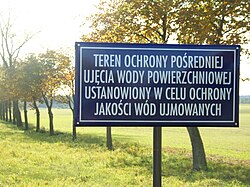
To represent its unique sounds, Polish employs diacritics (marks added to letters) and combinations of letters known as digraphs and trigraphs. For example, the sound /t͡ʂ/ can be written as cz or c depending on whether it precedes a vowel.
Dialects and Geographic Distribution
Traditionally, Polish is divided into three to five main regional dialects:
- Greater Polish: Spoken in the west.
- Lesser Polish: Spoken in the south and southeast.
- Masovian: Spoken in central and eastern regions.
Other specialized dialects include Goral, Silesian (sometimes considered a separate language), and various Borderland dialects in the north and south.
Vocabulary and External Influences
Loanwords constitute approximately 26.2% of the Polish vocabulary. The language has been shaped by centuries of contact with neighboring cultures and political shifts.
| Source Language | Percentage of Loanwords |
|---|---|
| Latin | 36.3% |
| German | 19.7% |
| French | 15.9% |
| Czech | 7.1% |
| Greek | 3.8% |
| English | 3.5% |
| Italian | 3.1% |
| Ukrainian and Belarusian | 1.9% |
| Russian | 1.4% |
Historical influences include Latin (10th–18th centuries), Czech, Italian, French, and German. Turkish loanwords also entered the language due to Poland's long border with the Ottoman Empire.
![Common handbag in Polish is called a torba, a word directly derived from the Turkish language. Turkish loanwords are common as Poland bordered the Ottoman Empire for centuries.[failed verification]](/images/1a/fd/1afd62b2ef7bf02eedc1c87c96eb48f2b0e672772fc4e9ac51f4becf93f323c8.jpg)
Additionally, there is a strong mutual influence between Polish and Yiddish. Because of the large Jewish minority that once lived in Poland, many words are near-identical; for example, the Yiddish word for fishing rod, ventke, was borrowed directly from the Polish wędka.

Frequently Asked Questions
Which letters are not used in the native Polish alphabet?
The letters Q, V, and X are not part of the standard Polish alphabet and are only found in loanwords from other languages.
How many Nobel Prizes in Literature have been won by Polish authors?
Five authors writing in Polish have been awarded the Nobel Prize in Literature: Henryk Sienkiewicz, Władysław Reymont, Czesław Miłosz, Wisława Szymborska, and Olga Tokarczuk.
What are the primary regional dialects of Polish?
The primary dialects are Greater Polish (west), Lesser Polish (south/southeast), and Masovian (central/east).
Which language has had the greatest influence on Polish vocabulary?
Latin has had the most significant impact, accounting for 36.3% of all loanwords in the Polish language.
Where is Polish spoken outside of Poland?
It is spoken by significant populations in Lithuania, the United Kingdom, Canada (particularly Toronto and Montreal), and is a recognized minority language in countries like Brazil and Ukraine.