Sorbian Languages: The Slavic Heritage of Lusatia
In the heart of eastern Germany lies a unique linguistic enclave known as Lusatia (Łužica in Upper Sorbian; Łužyca in Lower Sorbian). This region is the home of the Sorbs, a Slavic minority whose languages provide a fascinating glimpse into the West Slavic linguistic branch. Sorbian is not a single tongue but consists of two distinct literary standards: Upper Sorbian and Lower Sorbian.
While these languages share a common ancestor, they have evolved separately, reflecting the complex history of settlement and cultural interaction in Central Europe.
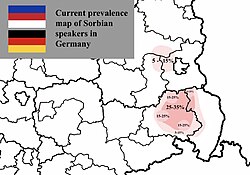
Key Facts
- Classification: Indo-European > Balto-Slavic > Slavic > West Slavic.
- Speakers: Approximately 20,000 to 25,000 speak Upper Sorbian; about 7,000 speak Lower Sorbian.
- Location: Lusatia, spanning the German states of Saxony (Upper Sorbian) and Brandenburg (Lower Sorbian).
- Status: Classified as "Definitely Endangered" by the UNESCO Atlas of the World's Languages in Danger.
- Ethnicity: Around 60,000 people identify as Sorbs in Germany.
Historical and Geographic Distribution
The Sorbian presence in Germany is a remnant of early Slavic migrations. Historically, the Limes sorabicus marked the settlement boundary bordering East Francia during the medieval period.
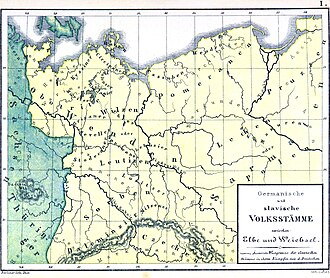
Today, the population is divided primarily by state lines. Approximately 40,000 Sorbs live in Saxony, where Upper Sorbian is the dominant minority language. In Brandenburg, about 20,000 Sorbs reside, maintaining the use of Lower Sorbian. Because national affiliation is voluntary and not officially recorded in German censuses, these figures remain estimates.
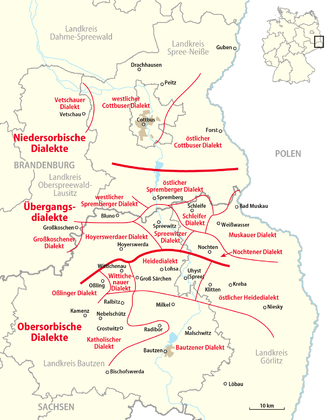
Endangered Status and Survival
The survival prospects for the two languages differ significantly. Lower Sorbian is considered critically endangered; experts project it could become extinct within 20 to 30 years. In contrast, Upper Sorbian is expected to survive well into the 21st century, supported by a larger base of approximately 13,000 active speakers.
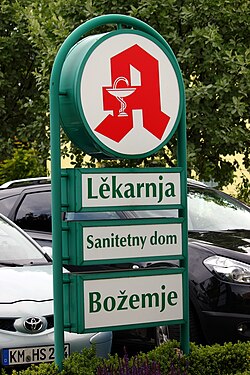
Efforts to preserve these languages are visible in the public sphere, where bilingual signage is common in towns like Bautzen (Budyšin) and Cottbus (Chóśebuz).
Linguistic Features and Grammar
Sorbian languages are characterized by a complex grammatical structure. Both languages utilize a system of declension (changing the form of a noun or adjective to indicate its grammatical function) across several cases.
The Case System
Both languages use the following cases, though Upper Sorbian uniquely retains the Vocative (used for direct address):
- Nominative
- Accusative
- Genitive
- Dative
- Locative
- Instrumental
- Vocative (Upper Sorbian only)
Grammatical Number
A notable feature of Sorbian is the preservation of the dual number. While most languages only distinguish between singular (one) and plural (more than one), Sorbian has a specific grammatical form for exactly two items.
Comparing Upper and Lower Sorbian
Despite their similarities, the two languages exhibit distinct phonetic and vocabulary differences. One of the most prominent shifts is the g > h transition in Upper Sorbian, where the plosive "g" became a fricative "h" (similar to developments in Czech and Ukrainian).
| Feature | Upper Sorbian (hornjoserbsce) | Lower Sorbian (dolnoserbski) |
|---|---|---|
| Primary Region | Saxony | Brandenburg |
| Estimated Speakers | 13,000 - 25,000 | ~7,000 |
| Consonant Shift | g becomes h (e.g., hora) | Retains g (e.g., góra) |
| Vocative Case | Present | Absent |
| Endangerment Level | Endangered | Critically Endangered |
Vocabulary Divergence
Vocabulary often reflects different external influences. For example, the word for "tree" in Lower Sorbian (bom) is derived from the German Baum, whereas the Upper Sorbian term (štom) comes from the German Stamm.
Frequently Asked Questions
What is the difference between Upper and Lower Sorbian?
Upper Sorbian is spoken primarily in Saxony and is more stable, while Lower Sorbian is spoken in Brandenburg and is critically endangered. They differ in phonetics (such as the g/h shift), vocabulary, and the presence of the vocative case in Upper Sorbian.
Are Sorbian languages related to Polish or Czech?
Yes, they are all part of the West Slavic branch of the Indo-European language family. They share many cognates and grammatical similarities, such as the use of multiple noun cases.
How many people still speak Sorbian?
It is estimated that about 20,000 to 25,000 people speak Upper Sorbian and approximately 7,000 speak Lower Sorbian, though the number of active daily speakers may be lower.
What is the "dual" number in Sorbian grammar?
The dual is a grammatical category used specifically for pairs of things. For example, the word for "hand" has a different form for one hand (singular), two hands (dual), and three or more hands (plural).
Where can I see Sorbian used today?
Sorbian is most visible in the Lusatia region of Germany, particularly on bilingual street signs, town markers, and information boards in cities like Bautzen and Cottbus.